
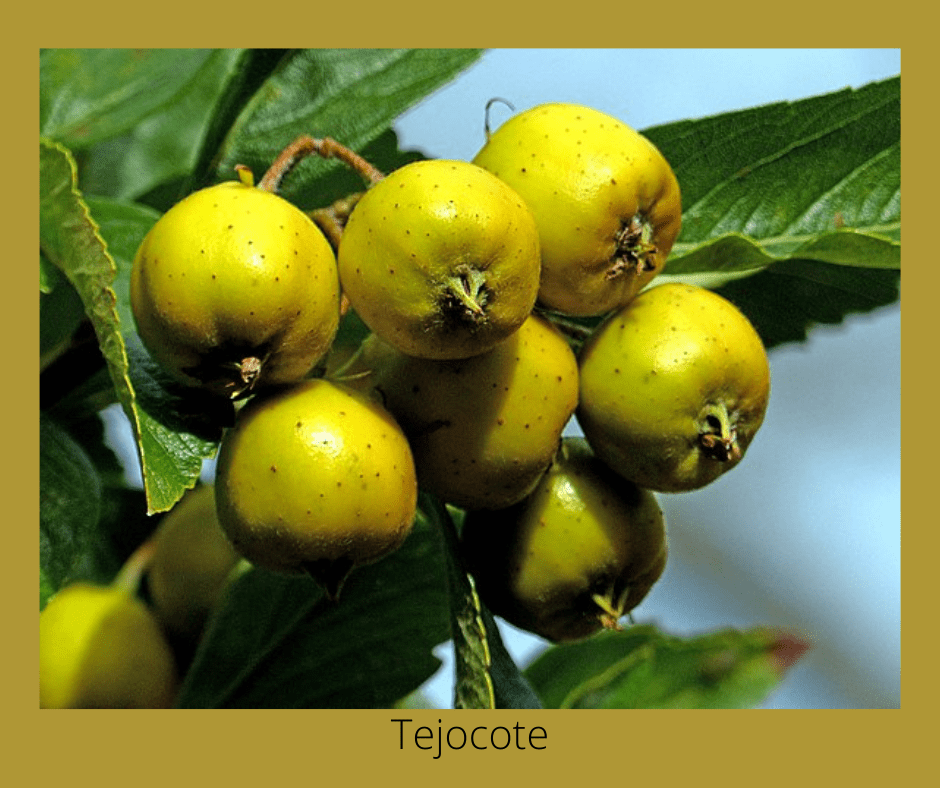
Tejocote (Crataegus mexicana) is Mexican hawthorn and is found in the mountainous regions of central Mexico. There are some herbal guides that list this tree as Crataegus pubescens Steud, but it is not considered a synonym according to botanists. However, Crataegus gracilior J.B.Phipps and Crataegus pubescens Steud are considered the same variety of hawthorn also native to Mexico. Crataegus oxyacantha is yet another hawthorn variety known as el espino blanco, espino albar, or majuelo. It is estimated that there are at least 13 native Mexican hawthorn species.
In Mexico, these fruit-bearing species tend to be used interchangeably as medicine, although only Crataegus mexicana is known as tejocote. This name is the Spanishized version of the Nahuatl word texocotl, which means “sour stone fruit” and refers to the fact that the small apple-like fruit typically contains three or more pits and is sour when eaten raw. Other names include kanal chiste in Chiapas, npeni in otomí, and karhasi in Purhépecha.
In general, the leaves, seeds, flowers, fruit, bark, and roots of the Crataegus varieties found in Mexico are used to treat heart disease, hypertension, diabetes, and respiratory diseases. A root infusion is used as a diuretic and diarrhea remedy. An infusion made from the leaves and flowers to treat intestinal parasites.
Interestingly, in the state of Michoacán, tejocote is given to children for “chipil.” This is a condition a child gets when his or her mother is pregnant. It is characterized by excessive crying, loss of appetite, and slight yellowing of the skin. A mild tea made from the leaves is made to help alleviate the condition which disappears on its own when the sibling is born. Also, in Michoacán, adult-onset diabetes is treated with a tea made from the leaves, roots, or bark.
Tejocote is enjoyed raw, cooked, canned, in liquors, traditional sweets, jams, and preserves. It’s a main ingredient in ponche Navideño (Christmas punch). It is also prominent in Día de Muertos altar offerings.
For respiratory issues, including bronchitis and cough, tejocote fruit is boiled and then eaten. An infusion made from the leaves and bark is prescribed for stomach issues. Another diabetes remedy calls for crushing the root, then boiling it, after which it is left to steep in aguardiente (alcohol) and drunk. Tea made from the roots or leaves is drunk three times a day for kidney problems.
Alipotec is a diet supplement available in many Spanish-speaking countries (and Amazon) that reportedly contains tejocote root. Because of the side effects users were experiencing, several scientists decided to look into its composition. What they found was that there was no evidence of tejocote in the capsules. Instead, they found yellow oleander (Cascabela thevetia), which is poisonous. Tejocote root is also mildly toxic and can cause respiratory depression and irregular heartbeat.
The Crataegus species studied have been found to contain quercetin which has antioxidant and anti-inflammatory effects, kills cancer cells, controls blood sugar, and helps prevent heart disease. Crataegus mexicana is antioxidant, toxic to liver flukes, and immunostimulatory. The leaves and stems from the Crataegus gracilior J. B. Phipps are anticancer, and the flowers, leaves, and fruit are potent vasorelaxants. It is also hyperglycemic, supporting its traditional use in the treatment of diabetes. Crataegus oxyacantha leaf and bark extracts have also been shown to be effective in treating cardiovascular diseases.
Dulce de Tejocote for Cough
- 8 tejocotes (Crataegus mexicana)
- 1 pinocillo cone (or 3/4 cup packed brown sugar)
- 1 tablespoon vainilla extract (Vanilla planifolia)
- 1 stick of canela (Cinnamomum zeylanicum)
Wash the tejocotes. Bring 1 liter of water to a boil. Add the tejocotes and boil for 3 minutes. Remove the tejocotes and place them in cold water. The skins will pucker so that you can peel them. Add the piloncillo cone, canela, vainilla, and peeled tejocotes back to the pot. Boil for 40 minutes, stirring continuously. Allow to cool for 2 hours before serving.
***
Interested in natural remedies? Uncover herbal remedies from traditional Mexican sources for healing and wellness in the Exploring Traditional Herbal Remedies in Mexico series.


 Surviving Mexico
.jpg)