
Algodoncillos (Asclepias spp.)
There are approximately 200 species of Asclepias worldwide, 75 of which are found in Mexico, and at least 17 of those have reported medicinal uses. The plants in this genus are most often referred to as algodoncillos, talayotes, or venenillos in general, although some varieties are known by other names by local populations. Unfortunately, as is common with plant names in Mexico, many of the names are also used to identify unrelated plants, making positive identification difficult.
Most Asclepias are toxic, although certain varieties are used medicinally, and others are essential to the lifecycle of the monarch butterfly. A few have edible fruit or leaves.
Inmortal (Asclepias asperula)

Photo credit: Zion National Park
Asclepias asperula ssp. Asperula is known as antelope horns or spider milkweed in English and algodoncillo and cuerno de antílope in addition to inmortal in Spanish. Bernardino de Sahagún reported that inmortal was used as a laxative by the Aztecs. An Aztec Herbal: The Classic Codex of 1552 included it in a chest congestion remedy as well.
As a tonic, laxative, or expectorant, a teaspoon of powdered root is added to a glass of water first thing in the morning. The root powder is also used in a tincture to bring on menstruation. A stronger dose is employed to strengthen labor pains and quicken delivery. Additionally, the ground root is soaked in water and rubbed on the laboring mother’s abdomen. As an aid to expel the placenta, a tea is made from inmortal ground root and epazote leaves (Dysphania ambrosioides).
Asclepias asperula is a favorite of monarch butterfly caterpillars. It contains cardiac glycosides, which are toxic. The butterfly retains this toxicity, making them poisonous to predators. Inmortal is toxic to humans and livestock as well, and extreme care should be exercised when employing this plant for any remedy.
Asclepias asperula ssp. Capricornu is a second subspecies of Asclepias asperula also known by the name inmortal. The leaves of the capricornu are broader, and the floral crowns are whiter than subspecies asperula. Accepted synonyms for Asclepias asperula ssp. Capricornu include Asclepias asperula var. Decumbens, Asclepias capricornu, Asclepias capricornu ssp. Occidentalis, Asclepias decumbens, Asclepiodora decumbens, and Aceratos asperula. Asclepias asperula ssp. Capricornu is prescribed in some areas as an abortifacient.
Quiebra muelas (Asclepias curassavica)
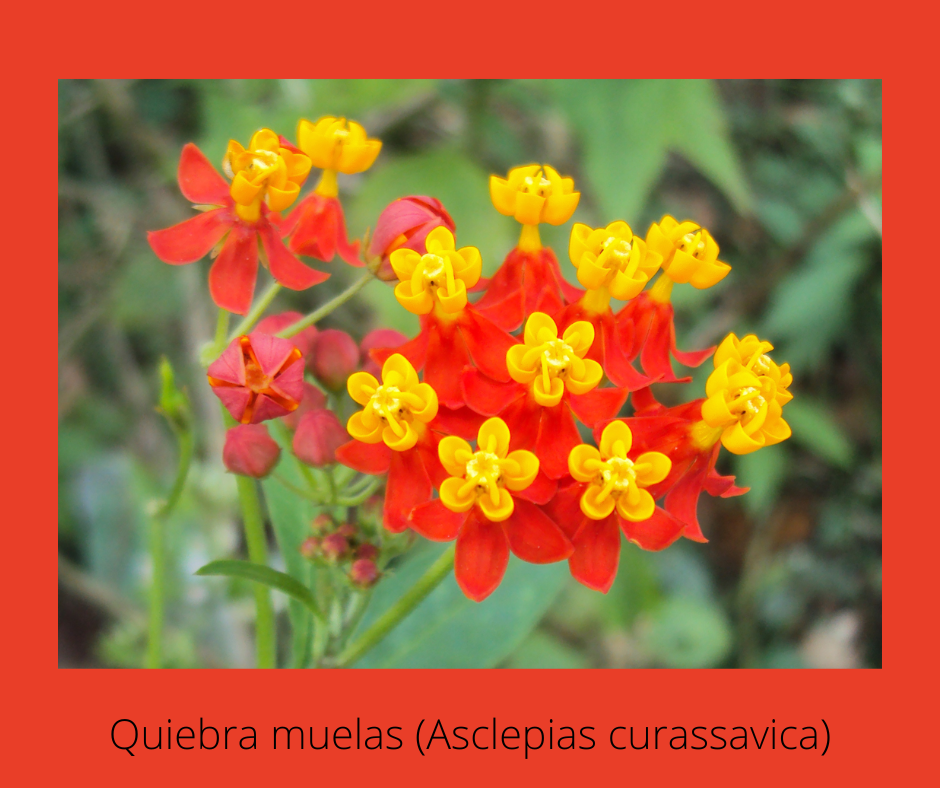
Photo credit Vinayaraj
Asclepias curassavica has a whole host of names including flor de sangre, burladora, mata ganado, cancerillo or cancerina, cresta de gallo, and quiebra muelas. Indigenous names include pameyat warnal (Tzeltal), xpamal yat (tzotzil), tesuchi-potei (otomí), chac anal or x-anal (Maya), and punchix huítz (Tenek).
Throughout Mexico, the latex sap is most often prescribed for tooth problems, especially as pain relief from cavities or during tooth extraction. In the state of Tabasco, the plant’s seed is placed on the painful tooth. Asclepias curassavica has been shown to be anti-inflammatory and possess an antinociceptive effect.
In other areas, the sap is applied to the skin for various ailments such as acne, gonorrhea, warts, cold sores, and erysipelas (bacterial skin infections). Pus-filled sores are covered in a poultice of crushed leaves. Bacterial skin infections call for 25 to 30 ground leaves made into a paste with a little salt water and applied three or four times daily for two days. Leaves boiled with salt and added to a bath for a pimple treatment.
In the state of Puebla, an acne decoction employed as a wash is made with quieba muelas, flor tocada (Lobelia laxiflora), and gobernadora (Lantana camara). Also, in Puebla, snake bites, scorpion stings, and embedded thorns are treated with a quiebra muelas plant decoction. A wound wash is made by boiling the branches and leaves from quiebra muelas, epazote (Dysphania ambrosioides), escoba amargosa (Parthenium hysterophorus), and salt.
The flowers are made into a tincture for headaches and rheumatism relief. Pain in the spleen is treated with half a glass of water and four drops of latex drunk several times a day. A root decoction is prescribed for painful urination.
Quiebra muelas is used as an anti-parastic compouns and purgative. It’s recommended for bilis (rage). It’s considered a “hot” plant.
Asclepias curassavica demonstrates antioxidant, antitumor, cytotoxic, and pro-apoptotic activity, making it useful in cancer treatments.
As a respiratory aid for congestion from colds and flu, the latex is liberally applied to a cotton cloth, allowed to dry, and then sniffed, which causes sneezing, in effect clearing out the nasal passages temporarily. One study has suggested quiebra muelas is effective in treating COVID-19 as it increases respiratory capacity and reduces symptoms.
Hierba del chicle (Asclepias notha)
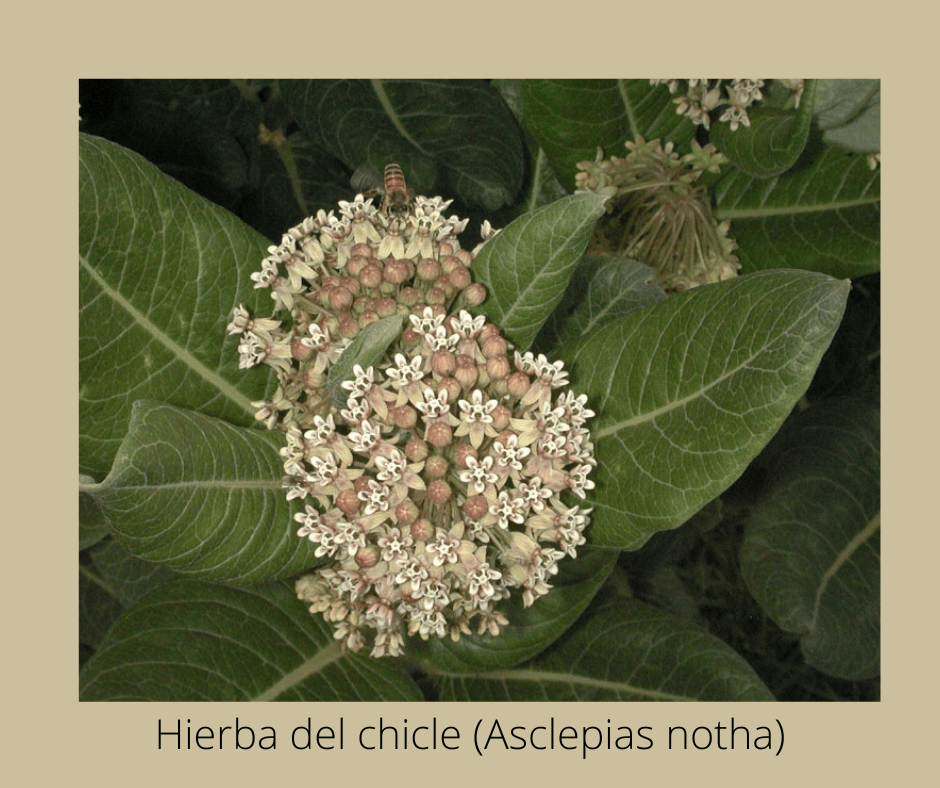
Photo credit: Pedro Tenorio Lezama
Asclepias notha and Asclepias lanuginosa are considered botanical synonyms. Other names for the hierba de chicle include hierba de leche, ita kutu, and chicle guizh guts in Zapotec. The sap is used to made chicle (chewing gum) by the Chocho, a Mixtec group in Oaxaca.
***
Interested in natural remedies? Uncover herbal remedies from traditional Mexican sources for healing and wellness in the Exploring Traditional Herbal Remedies in Mexico series.


 Surviving Mexico
.jpg)
