Tag Archives: Mexican Holidays

May Holidays in Mexico–El Natalicio de Miguel Hidalgo–Birthday of Miguel Hidalgo

May 8 is an official civic holiday in Mexico, although no one in our area seems to know that. There is even a street in Uriangato (el 8 de mayo) in honor of this holiday, but no one could tell me what was so special about this day that it got its own street name.

But, doing a little research, I found that May 8 is the birthday of Miguel Hidalgo, a revolutionary priest born in 1753, and the day Mexico and the day the US first engaged in battle in the Mexican-American War (1846-1848). Fancy that!
hidalgo

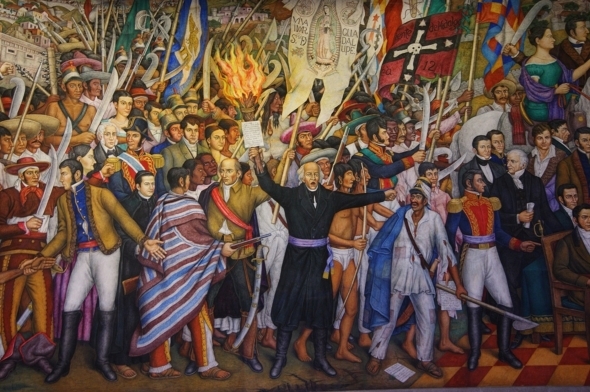
Don Miguel Gregorio Antonio Ignacio Hidalgo-Costilla y Gallaga Mandarte Villaseñor holds the dubious triple title of Father. Once as a priest in the Catholic church, secondly, as a biological father since he had at least 5 illegitimate children with two different women while serving as a priest and third as the Father of Mexico, although he didn’t live to see Mexican independence. Despite his less than orthodox lifestyle (he liked to drink and gamble too), Hidalgo was a champion of class equality and worked tirelessly to better the lives of the oppressed indigenous and mestizo people of Mexico.

alhondiga-02

The alhondiga in Guanajuato where the decapitated heads were hung.

For his efforts, he was betrayed and sent to the bishop of Durango who defrocked and excommunicated Hidalgo in 1811. He was then tried by a military court, found guilty of treason and executed. His body, along with the bodies of military leaders Ignacio Allende, Juan Aldama, and Jose Mariano Jimenez, was decapitated. The heads were displayed on the four corners of the Ahondiga de Granaditas in Guanajuato for 10 years.
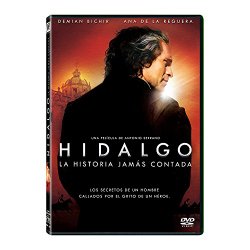
hidalgo movie

For more information about the life of Miguel Hidalgo, watch the movie Hidalgo--la historia jamas contada
The movie does a good job of portraying the humanity rather than sainthood of Hidalgo.
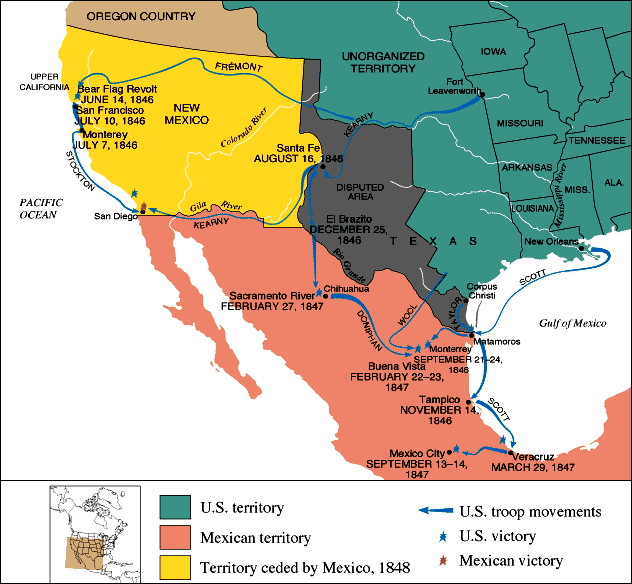
mexicanwarmap

The second historic event was the first major battle of the Mexican-American War, although the U.S. did not officially declare war on Mexico until May 13. On May 8, 1846, Zachary Taylor and 2,400 U.S. troops arrived at Fort Texas. The Mexican forces were defeated and forced north of the Rio Grande. This war resulted from the refusal of Mexico to recognize Texas as part of the United States

Mexico refers to this war as La Intervención Estadounidense (The United States Invasion) and did not acknowledge the annexation of Texas by the United States in 1845. After all, Mexico had claimed this area from the Spanish Empire after the Revolution in 1821, and more than 80,000 Mexicans lived in California, New Mexico, Arizona, and Texas. Mexico felt the annexation was a hostile action against its borders and declared war on the United States.

Like I mentioned, no one seems to know about these particular events in our area, much less make a big festive deal about them, although I am sure that both events are thoroughly covered in history class.

May is quite the month here in Mexico. Every time you turn around there is another celebration! For other Mexican May holidays see: El Día de Los Trabajadores, Conmemoración del Escuadron de Pelea 201El Dia de la Santa Cruz y El Dia del AlbañilLa Batalla de PueblaNatalicio de Miguel HidalgoEl Dia de las Madres, El Jueves de la AscensiónnPascua de PentecostésEl Día del Maestro, and El Dia del Estudiante

*******************

Learn about other people in Mexican history!
cover holidays

14 Comments

Filed under Mexican Holidays

May Holidays in Mexico– La Batalla de Puebla–The Battle of Puebla

batalla-puebla

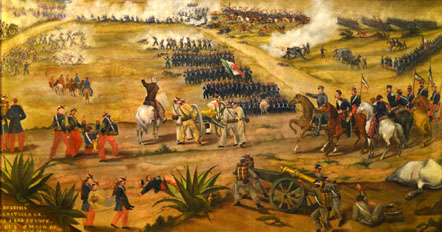
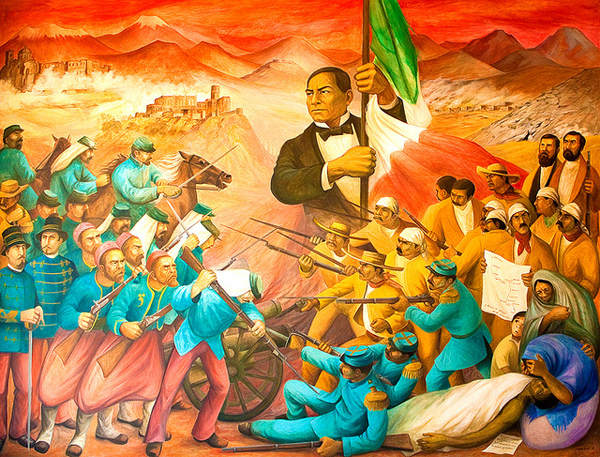
Commonly known as Cinco de Mayo, this day is mistakenly thought to be Mexican Independence day. However, May 5 is officially known as La Batalla de Puebla (The Battle of Puebla)and commemorates the Mexican victory over the French in 1862. In Puebla, there is a reenactment of the battle and is more of a big tadoo than in the rest of Mexico, but it is an official day off with most, but not all, businesses and schools closed.

There remains quite a bit of ignorance about the holiday.  Mexico’s own president, Enrique Pena Nieto, believes the battle to have taken place a mere 20 years ago!

cinco-de-mayo

So here’s the lowdown…

When President Benito Juarez defaulted on loans made by France, Britain, and Spain, the European countries sent forces to Veracruz to collect. Britain and Spain came to terms with Mexico and left. France decided to invade.

Six thousand French troops set out to attack Puebla de Los Angeles. Juarez sent 2,000 untrained indigenous and mixed-blood men under the command of General Ignacio Zaragoza. The French lost nearly 500 soldiers in the attack and retreated. Less than 100 Mexicans were killed.

It wasn’t the end of the invasion, however. France didn’t withdraw its forces for 6 more years. Puebla de Los Angeles was renamed Puebla de Zaragoza after the General who led that rag-tag band to victory but died of typhoid a few months later.

battle of puebla

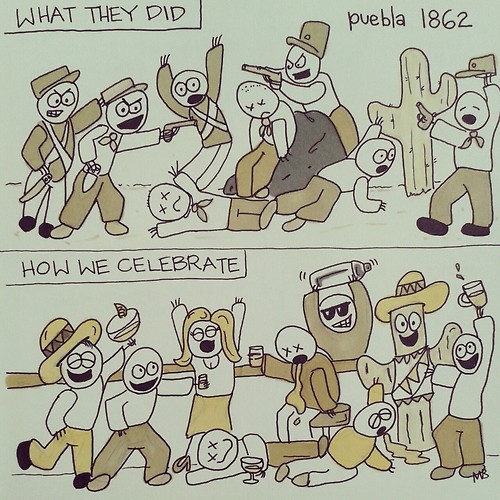
The U.S. has adopted Cinco de Mayo much as it did with St. Patrick’s Day. Most north of the border celebrations are centered around drinking and maracas rather than any real resemblance to traditional Mexican festivities.

Does that really surprise anyone?

President Obama decided to use Cinco de Mayo in 2015 as a platform for his proposed immigration reform.  Check out the video clip at:

cinco movie

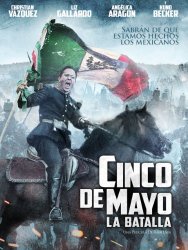
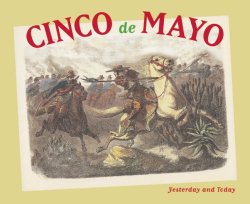
For a better understanding of the complex events surrounding this battle, watch the movie Cinco De Mayo: La Batalla (English Subtitled)or Cinco de Mayo: Yesterday and Today for kids.

cinco de mayo

May is quite the month here in Mexico. Every time you turn around there is another celebration! For other Mexican May holidays see: El Día de Los TrabajadoresConmemoración del Escuadron de Pelea 201El Dia de La Santa Cruz y El Dia del AlbañilLa Batalla de Puebla, Natalicio de Miguel HidalgoEl Dia de la MadrenPascua de PentecostésEl Día del Maestro, and El Dia del Estudiante


***************

Did you know all that about this NOT independence day in Mexico?

cover holidays

11 Comments

Filed under Mexican Holidays

Christmas in México–La Virgen de Guadalupe

virgen

The Virgen de Guadalupe (Virgin of Guadalupe), a.k.a. Nuestra Reina de México, La Empresa de las Americas and The Protectress of Unborn Children, is the most revered religious and political image in México and her feast day on December 12 kicks off the Christmas season in grand style.

So who is the Virgin of Guadalupe? According to Catholic sources, on December 9, 1531, a peasant by the name of Juan Diego, saw a vision on the Hill of Tepeyac, outside of Mexico City. The site was formerly a shrine in honor of the goddess Tonantzin, “Our Sacred Mother” but had been burnt to the ground by the Catholic missionaries. The reported vision was in the form of a young dark-skinned girl and spoke Nahuatl, an indigenous language. She instructed Juan Diego to build a shrine in her honor at this site. Juan Diego went and told the Archbishop this story. Juan Diego insisted that this vision was the La Virgen María (the Virgin Mary), but the Archbishop wanted proof, so Juan Diego returned to the site and asked for a miracle. The vision told Juan Diego to gather flowers, and the apparition arranged them on his poncho. When Juan Diego opened his poncho in front of the Archbishop on December 12, the flowers fell to the floor, and the fabric showed an imprint of the image known today as the Virgen de Guadalupe. (LA VIRGEN DE GUADALUPE)

Juan Diego was given sainthood, and the Catholics were given México.The poncho (tilma) is on display in the Basilica of Our Lady of Guadalupe behind bulletproof, climate-controlled glass, for any who wish to see but not touch. So basically, La Virgen de Guadalupe is Mary, the mother of Jesus, but not.

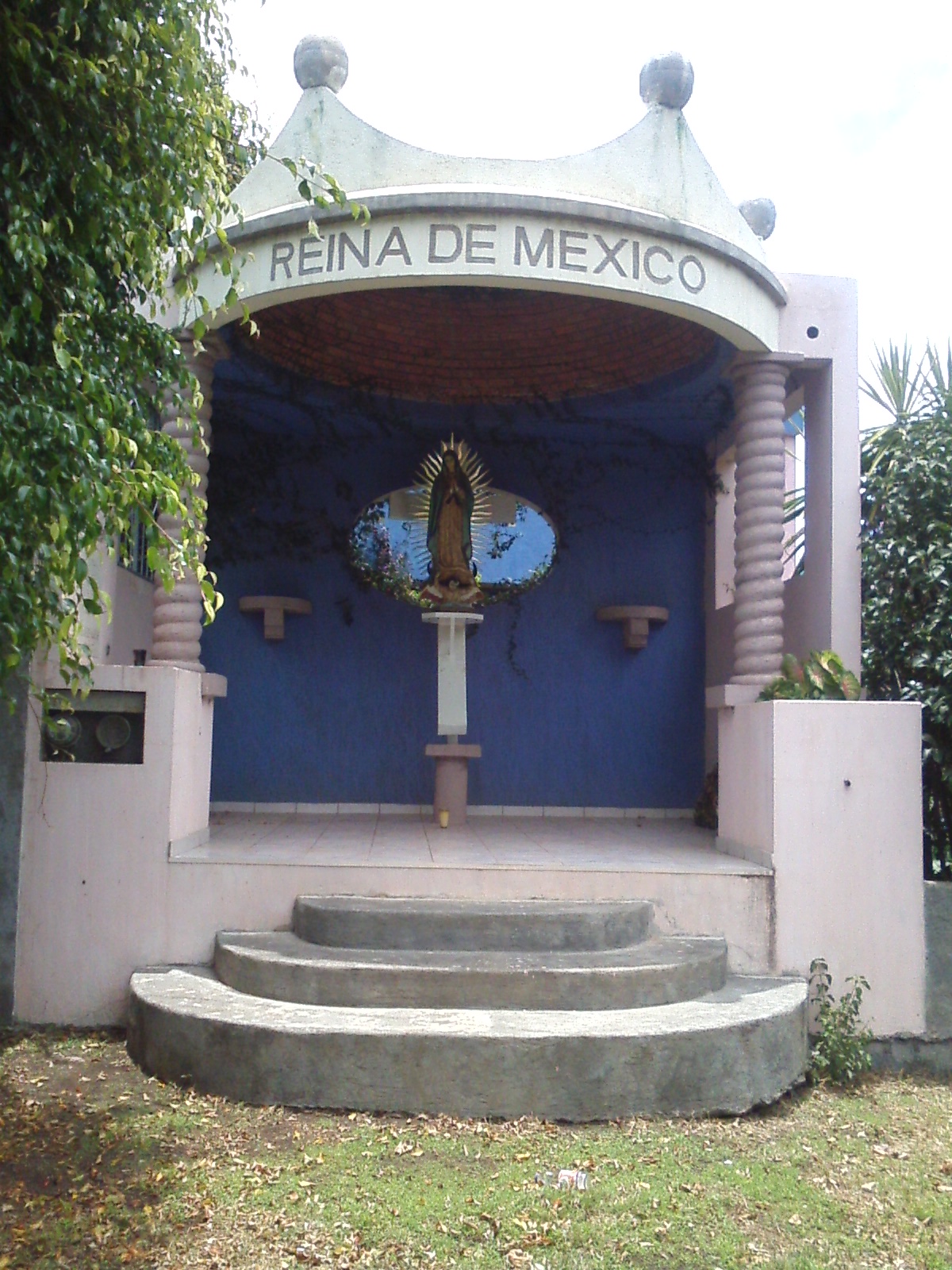
la reina de mexico

Even more than the religious influence, the image of La Virgen de Guadalupe has been a unifying political force in México. The first president of México, José Miguel Ramón Adaucto Fernández y Félix changed his name to Guadalupe Victoria (Victory of Guadalupe) in her honor. Father Miguel Hidalgo, in the Mexican War of Independence (1810), and Emiliano Zapata, in the Mexican Revolution (1910), led their armies with Guadalupan flags emblazoned with an image of Our Lady of Guadalupe. El Grito de Dolores, (See Mexican Independence Day) ends with the passionate cry of “Death to the Spaniards and long live the Virgin of Guadalupe. José María Morelos adopted the Virgin as the seal of his Congress of Chilpancingo. All because her blessing guarantees success like no other to a true Mexican.

This holds true for namesakes as well. There is no end to the men and women (Lupes, Lupillos, Lupitas, Lupillas) that carry the sacred name of La Virgen as their personal Saint and enjoy the festivities on December 12 as their Saint Day.

tepeyac

So how is La Virgen’s de Guadalupe’s feast day celebrated? Beginning on December 3, there is a 9-day novena (See La Novena) which ends on December 12th. If you need special intervention for a personal cause, you can make the pilgrimage to México City to lay your plea at her feet during this time. If you are not able to make the trip, shrines pop up all over México, so you still get a chance no matter where you are, although the surest and most direct route for prayer answering remains at the shrine in the Basilica. Don’t worry about oversleeping, fireworks in her honor begin before the sun shines. On the morning of December 12, home and church shrines are serenaded with Las Mañanitas as you would any other Mexican on his or her Saint day and birthday.(NOVENA A LA VIRGEN DE GUADALUPE)(Mananitas a La Virgen De Guadalupe: La Reina)

virgen church

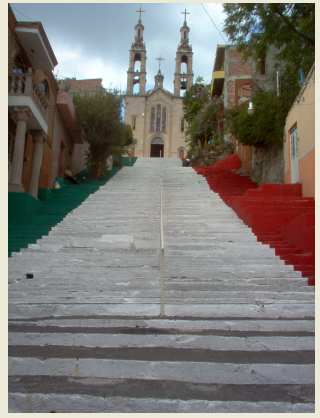
In Moroleón, the street Tepeyac is closed and a sort of tianguis (See Failing at your own business-Tianguis) street fair is set up. Street vendors sell their things, kiddie rides are available, and at the end of it all, up a long, long flight of stairs, you can attend mass at the templo (church) in Uriangato.

The Virgin of Guadalupe Religious Statue

********************

disclosure

16 Comments

Filed under Mexican Holidays, Religion