
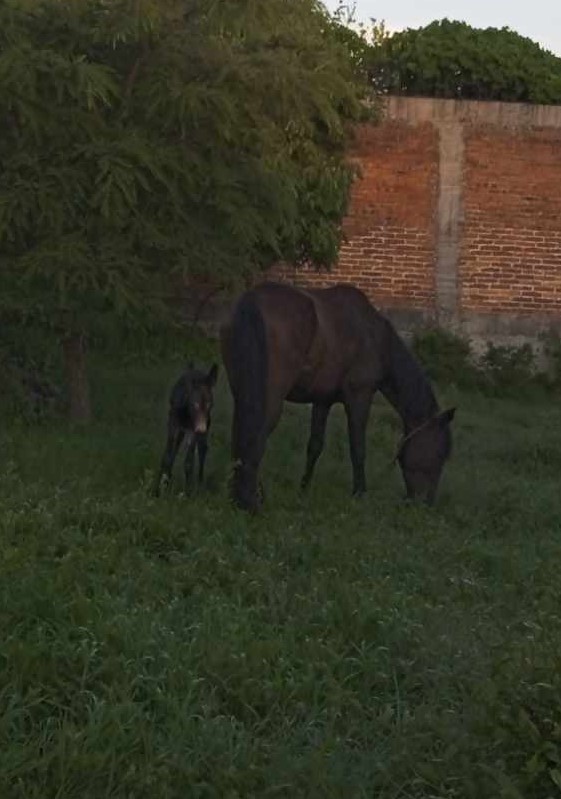
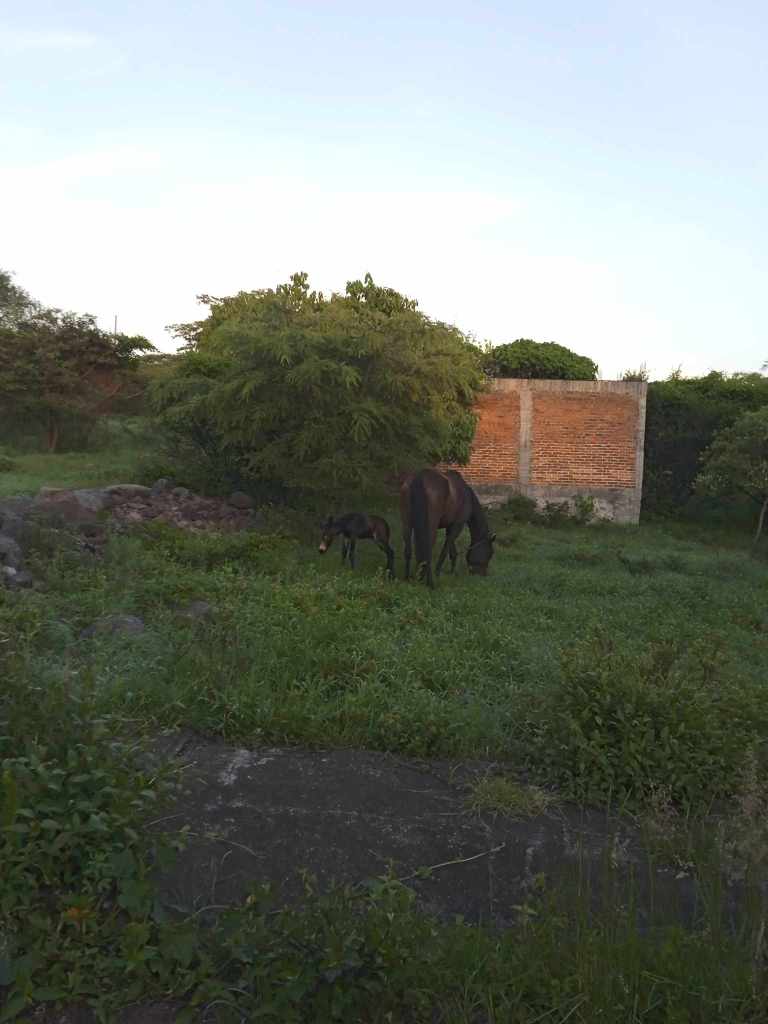
This morning, we were awakened by the sound of a little whinny that did not belong to Lady. It seemed that little Miss Rosie Mula had arrived.
Obviously, by her surname, you can guess that Rosie is a mule, not a colt. My husband bred Lady to a donkey last year, the date coinciding with one of the annual cabalgatas (community horse rides). He’d been waiting impatiently for three months or more, not completely convinced that Lady was actually pregnant, even though she had the obvious signs of pregnancy, a swollen abdomen and udder. He kept doing the calculations and said that she was way overdue, as horse pregnancies are typically 11 months. Then he did the calculations again and swore that a mare’s first pregnancy always lasts 12 months, just like a woman’s first pregnancy is ten months. I told him he was full of hooey since a human’s pregnancy is always 40 weeks (or ten months), whether it’s the first pregnancy or last. But remember, his mother swore her pregnancies (all 11 of them) only lasted eight months.
Anyway, I did a little research and discovered that the gestation period for a mare carrying a mule foal is typically around 11 to 12 months, whereas a colt pregnancy is, on average, 340 days. So, Lady’s pregnancy was just as long as it needed to be, which ended up being 12 months and a week if my husband’s calculations were correct, which I’m not entirely convinced they were.
I also learned a little bit more about mules and will share this information with you because I know you’re dying to know. A mule results from breeding a male donkey, known as a jack, to a female mare. Mules typically have the body shape and size of a horse but with long ears, a tufted tail, and sturdy, compact body of the donkey dad. They can vary in size depending on the breeds of the horse and donkey parents but are generally similar in size to horses and come in various colors.
Female mules, like our Rosie, are called mollies and are generally sterile due to the difference in chromosome numbers between horses (64 chromosomes) and donkeys (62 chromosomes), resulting in mules having 63 chromosomes. This odd number typically prevents the formation of viable eggs or sperm. Although extremely rare, there have been cases of mollies reproducing when bred with a horse or donkey. Hmmm.
Mules are known for their intelligence, patience, endurance, and sure-footedness. They are often considered more cautious and less flighty than horses. They also often have superior strength and stamina than horses of similar size. Lady is an excellent work-horse, plowing the fields until this last week. She’s also incredibly smart. Remember the goat door opening incident? We’ll see how these characteristics develop in Rosie.
Lady has already proven to have all the hallmarks of an excellent mother. She nickers at Rosie, and Rosie obeys. Over the years, some of our nanny goats have totally failed at motherhood, but not one of our mares.
It’s always nice to have a baby around, no matter what the breed.
**********
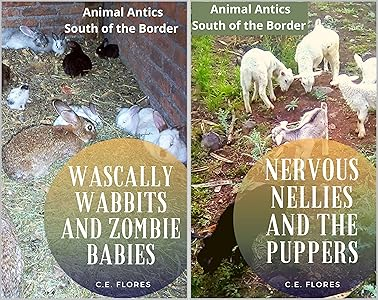
Want more homestead animal stories? Check out the Animal Antics South of the Border series!






 Surviving Mexico