Tag Archives: homesteading

Rosie Mula

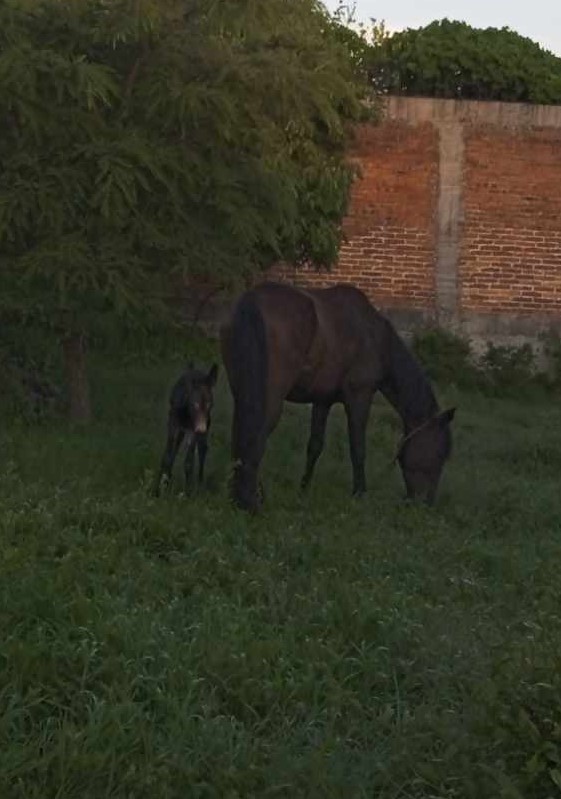
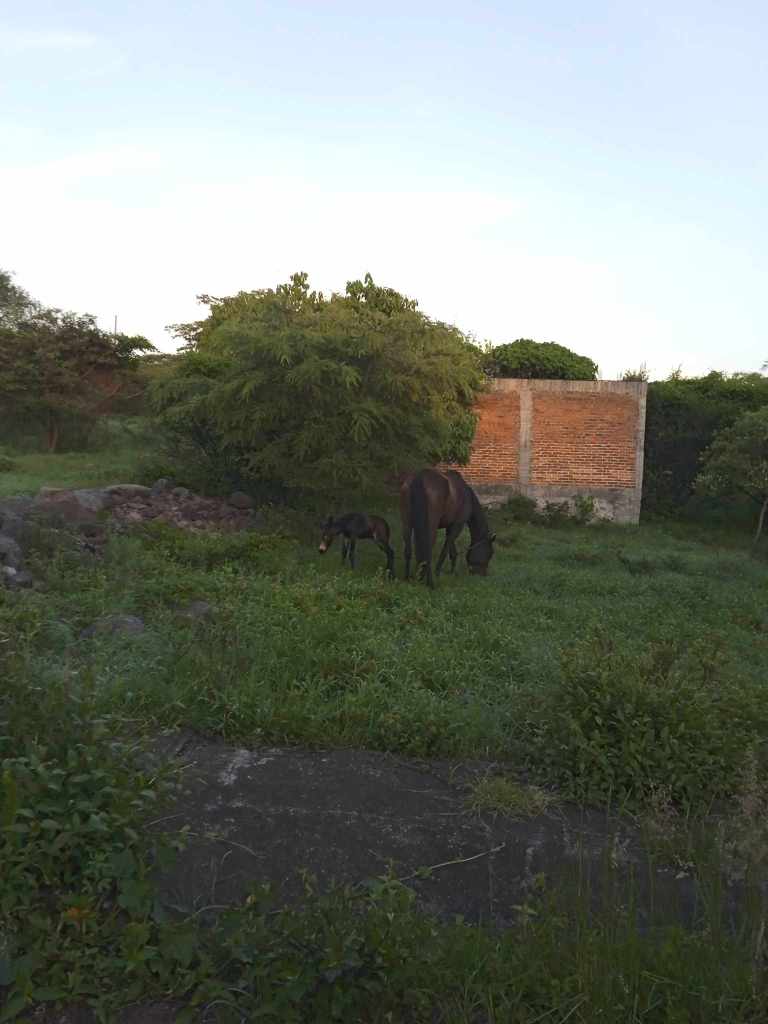
This morning, we were awakened by the sound of a little whinny that did not belong to Lady. It seemed that little Miss Rosie Mula had arrived. 

Obviously, by her surname, you can guess that Rosie is a mule, not a colt. My husband bred Lady to a donkey last year, the date coinciding with one of the annual cabalgatas (community horse rides). He’d been waiting impatiently for three months or more, not completely convinced that Lady was actually pregnant, even though she had the obvious signs of pregnancy, a swollen abdomen and udder. He kept doing the calculations and said that she was way overdue, as horse pregnancies are typically 11 months. Then he did the calculations again and swore that a mare’s first pregnancy always lasts 12 months, just like a woman’s first pregnancy is ten months. I told him he was full of hooey since a human’s pregnancy is always 40 weeks (or ten months), whether it’s the first pregnancy or last. But remember, his mother swore her pregnancies (all 11 of them) only lasted eight months. 

Anyway, I did a little research and discovered that the gestation period for a mare carrying a mule foal is typically around 11 to 12 months, whereas a colt pregnancy is, on average, 340 days. So, Lady’s pregnancy was just as long as it needed to be, which ended up being 12 months and a week if my husband’s calculations were correct, which I’m not entirely convinced they were.

I also learned a little bit more about mules and will share this information with you because I know you’re dying to know. A mule results from breeding a male donkey, known as a jack, to a female mare. Mules typically have the body shape and size of a horse but with long ears, a tufted tail, and sturdy, compact body of the donkey dad. They can vary in size depending on the breeds of the horse and donkey parents but are generally similar in size to horses and come in various colors. 

Female mules, like our Rosie, are called mollies and are generally sterile due to the difference in chromosome numbers between horses (64 chromosomes) and donkeys (62 chromosomes), resulting in mules having 63 chromosomes. This odd number typically prevents the formation of viable eggs or sperm. Although extremely rare, there have been cases of mollies reproducing when bred with a horse or donkey. Hmmm.

Mules are known for their intelligence, patience, endurance, and sure-footedness. They are often considered more cautious and less flighty than horses. They also often have superior strength and stamina than horses of similar size. Lady is an excellent work-horse, plowing the fields until this last week. She’s also incredibly smart. Remember the goat door opening incident? We’ll see how these characteristics develop in Rosie. 

Lady has already proven to have all the hallmarks of an excellent mother. She nickers at Rosie, and Rosie obeys. Over the years, some of our nanny goats have totally failed at motherhood, but not one of our mares. 

It’s always nice to have a baby around, no matter what the breed. 
**********

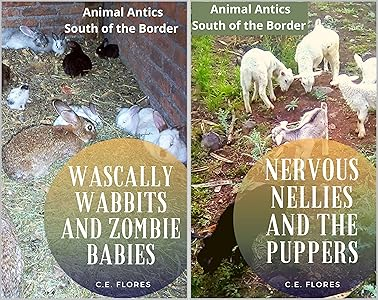
Want more homestead animal stories? Check out the Animal Antics South of the Border series!
Leave a comment

Filed under Animal Husbandry, Homesteading

Insurrection in La Yacata – Letter to the Governor Part 1

Since FE Guanajuato was designed to assist rural communities in various ways, I decided it was time to ask for their advice on who we could contact and what we could ask for. The representative suggested that we compose a letter to be sent to both the governor of Guanajuato and the Mexican president, AMLO. She said these letters should be handwritten, and she would get us the correct address.

SuperPrez wasn’t as gungho as I was on this project. He felt that if it was as simple as writing a letter, everybody would do it. I wanted to give this assignment to another community member to get more individuals involved because I didn’t have the time. However, after considering the different options and their literacy level, I opted to just write it myself. 

My goal was to make the reader cry. I know that seems counterintuitive, but we had to find a way to stand out from other petitioners. If we appealed to their emotions and told a good story, that would be a good publicity opportunity since it was an election year, well, then maybe, just maybe, we’d get some assistance. 

I spent over a week on the letter’s composition. Then I sent it to Super Prez, who made some suggestions, most importantly to ensure that we did not mention or refer to the current municipio administration. Finally, I had my son double-check my Spanish, making sure I wasn’t accidentally using translated English idioms or phrases that could be misconstrued. I also told him to ranch-ify it a bit. Although it remained extremely formal, as in all written correspondence in Mexico, certain phrases were more often used in this area than others. I wanted to include as many of those as possible. 

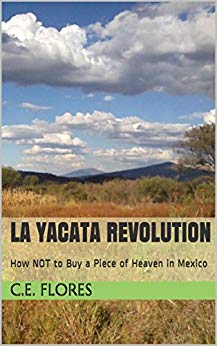
So, to sum up, the letter provided a condensed version of how the former person in charge had defrauded and then sued the colonos de La Yacata, which you can read in glorious detail in La Yacata Revolution: How NOT to Buy a Piece of Heaven in Mexico.

Then, I highlighted the difficulties encountered by some colonos, such as health problems, poverty, robberies, and, most importantly, the lack of basic utilities in La Yacata. Next was a list of those colonos who have died without their Yacata dreams being fulfilled, like my mother-in-law, and included the Actas de Defunción (death certificates) I had on file. I told you, I wanted to make the reader cry.

The next section discussed how La Yacata had been trying to meet the standards necessary for regularización for years and included the packet of papers from the muncipio that proved that. I also emphasized that we had never asked for financial support from any organization before. Then, at Super Prez’s suggestion, I briefly outlined our water, sewer, and electricity projects.

I ended the letter with a final plea for recognition and access to whatever support was available. Super Prez and I added our names, addresses, and emails. Then, it was time to present this to the colonos and get their signatures.

****

Dreaming of a serene life in Mexico? Think again! La Yacata Revolution: How NOT to Buy a Piece of Heaven in Mexico is a gripping narrative that unveils the challenges of navigating bureaucracy, securing basic services, and facing the unexpected realities of rural living. Join the courageous community of La Yacata as they defy the odds, sparking a revolution to reshape their world. Get ready for a riveting journey of resilience, rebellion, and the pursuit of a better tomorrow. Viva la Revolución!

4 Comments

Filed under La Yacata Revolution

Bruce Goodboy and the Puppers Move House

A few months ago, my husband decided that Bruce needed to move out of my sister-in-law’s backyard, where he’d been living since he found and adopted us earlier in the year. It’s not that she minded. In fact, she liked having a dog around, discouraging “rateros” from any B&E. She hasn’t moved out to La Yacata yet, and the house, nearing compilation, is sitting empty. And Bruce, well, he’s imposing, to say the least. His bark is resounding, his size is eye-widening, and anyone who didn’t know any better would think he’s a threat to their safety and wellbeing.

However, we know that Bruce is a good boy and isn’t interested in attacking anyone. 

Anyway, my husband would do things like take the house keys, which are supposed to be hanging in the kitchen, so we couldn’t get in to feed, water, or walk Bruce. After about a week of these shenanigans, we moved Bruce over to my son’s house. 

That, of course, caused even more lamentations because now, how could my husband possibly cook on his barrica (barrel) stove with a DOG on the premises? Whatever.

His next rant was about Fred and George Pupper in the backyard. They’d been living there for more than five years, but now all of a sudden, it was an issue. If my husband couldn’t cook at my son’s, then he’d move the barrica to the backyard and cook there, but the dogs had to go. It’s not like we don’t have a perfectly servable kitchen AND a grill area on the back porch upstairs or anything. 

Ok. Fine. Fred and George moved over to my son’s house too. No barrica has been installed for cooking in the backyard because the CHICKENS shit all over the place. But whatever.

Walk-time became more complicated. Now, when the boys go out for their promenade, it’s like the three-headed Cerberus emerging from Hell. Bruce, being really still a puppy, is so impatient and pulls at the leash, which disturbs the sanctity of the walk imposed by George and interferes with Fred sniffing new scents along the way. I’m sure though, everyone will get the hang of walking in tandem eventually. 

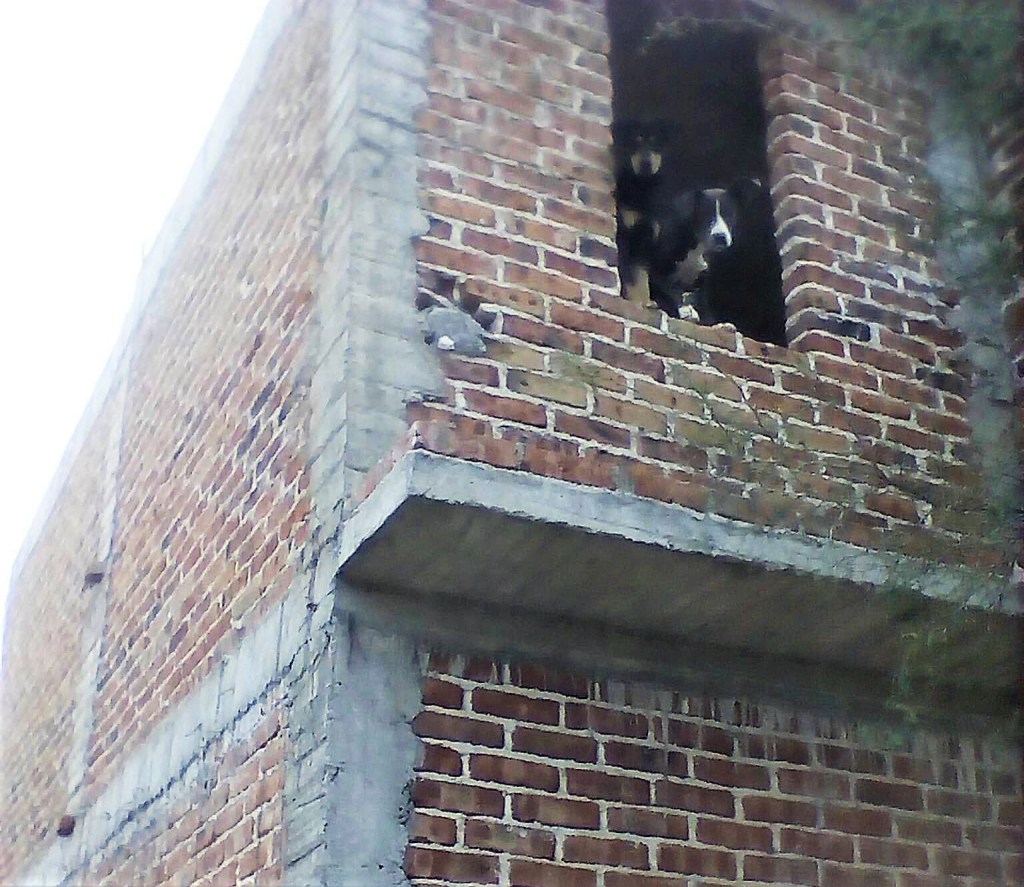
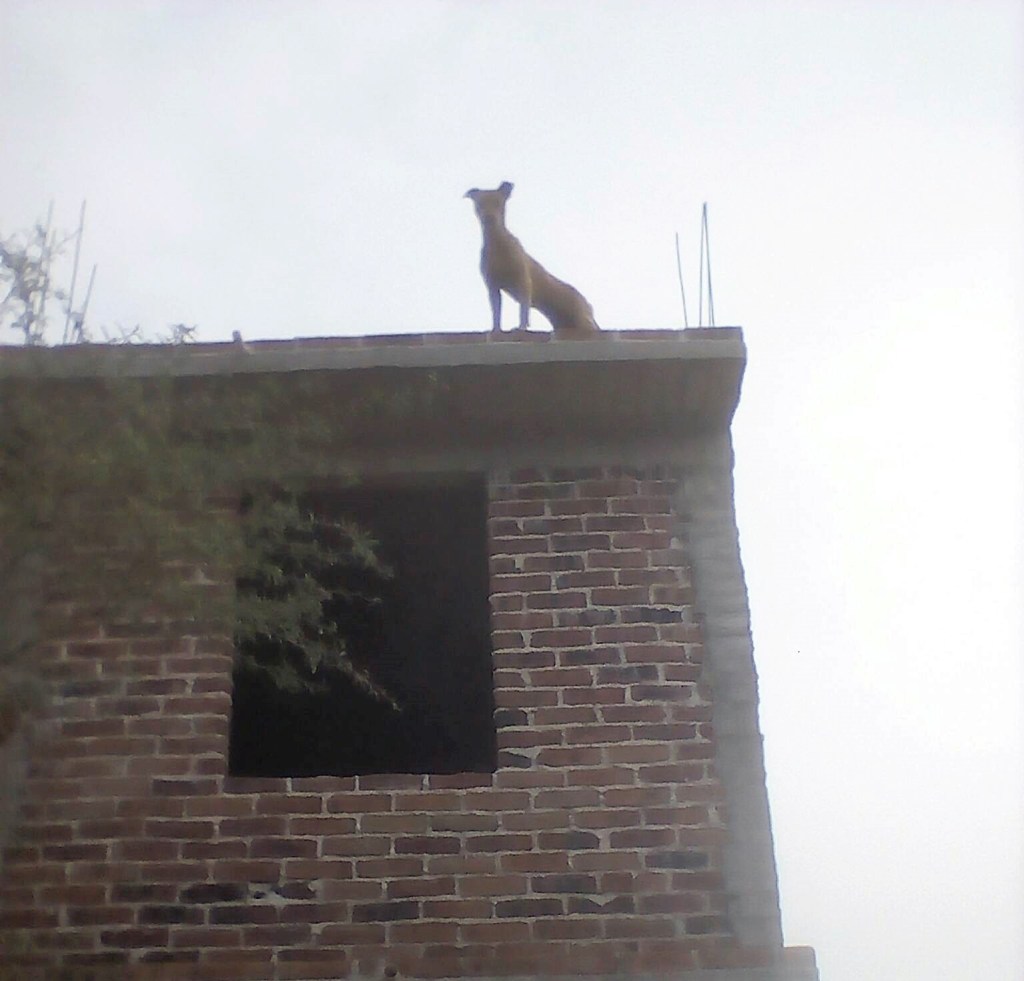
There have been some mishaps as well. George fell off the roof and onto the first-floor ledge and had to be coaxed back in. Bruce fell out the second-floor window onto the ground but was fine. Fred is mighty cautious and hasn’t fallen yet, but he did drop his skunk toy on the ledge and whined until it was returned to him. 

They also had to go “camping” back in my sister-in-law’s yard while the steps to the roof were being installed. However, all things considered, it’s been a positive change. The Puppers don’t have to deal with all the chickens crowding them out of their house. Bruce isn’t by himself anymore. Everyone got a thorough bathing before the move to the FLEA-FREE abode and are a lot more comfortable because of that. 

There’s been some fighting, mostly over my son’s attention when he’s over there. Everybody wants head pats and to crawl into his lap, although no one fits anymore and hasn’t for some time. In the early evenings, my son takes his guitar over and treats the boys to some music while they dine. 

My son has even introduced his boys to the girl he is sort of dating. Bruce behaved so well that it was like he was a different dog. He sat and allowed his leash to be put on, and on the walk, he didn’t pull at all. He’s such a good boy, you see! 

As it will probably take another year to complete the house, having the boys there isn’t a problem. Once the doors and windows go on though, some housebreaking might be in order. I’ve tried to encourage my son to start on that now, but he hasn’t. Oh well, he’ll have to do the cleanup.

***

You know you want to read more about our animals!! And you can in the Animal Antics South of the Border series.

1 Comment

Filed under Animal Husbandry