
Explaining the significance of this festival to someone who has not experienced El Día de Los Muertos is challenging. The facts are there, easy to find in Wikipedia or other “impartial” sources, but until you stand in front of an altar built for someone you know, you won’t understand.
There are actually 2 days in the festival known as El Día de Los Muertos. During these days, it is believed that the door between the living and the dead is opened for a time and the spirits of the dead come to visit those that remain behind.
November 1st is known in the area that we live in as El Día de Los Angelitos (The day of the Little Angels) and is a day to remember children that have died. As these are private, family gatherings, there is little to note except that there is typically a mass held for the deceased child (See Luctuoso) and toys are brought to the crypt or tomb and left. Special prayers are directed to La Virgen, who lost her own child, in this time of remembrance.

A Zapotec figure representing the duality of death and life.
The more public and better-known festival is November 2, El Día de Los Muertos and its traditions have more to do with the indigenous Mexican than any supposed Catholicism influence. The prehispanic goddess Mictecacihuatl was known as the Lady of the Dead. She was honored during harvest rituals with fire and incense, images of the dead, food offerings in ceramic vessels and flowers. From these traditions comes the modern Mexican belief that souls continue to exist after death in an area similar to the Catholic Purgatory but once called Mictlan, a place of silence and rest. There the souls waited, not for reward or punishment, but for this day when they can return home to visit their loved ones.

(La Muerte) Death is still a Lady in México, now personified as La Catrina. Most Mexicans like to think that the popular image of the Catrina is ancient, but the truth is this caricature of vanity was first drawn by cartoonist José Guadalupe Posada about 100 years ago to poke fun at mestizos (mixed-blood) or indigenas (native people) that pretended to be European. Diego Rivera first used the name Catrina and helped popularize her in his mural, Sueño de una tarde dominical en la Alameda Central.

Regardless of her origin, La Catrina reigns during los días de los muertos.

Another Catrina-related tradition is the writing of calaveras literarias (death poems) that poke fun at death. In these short, rhyming verses, La Muerte comes and indiscriminately passes by or takes those mentioned by name in the poem.

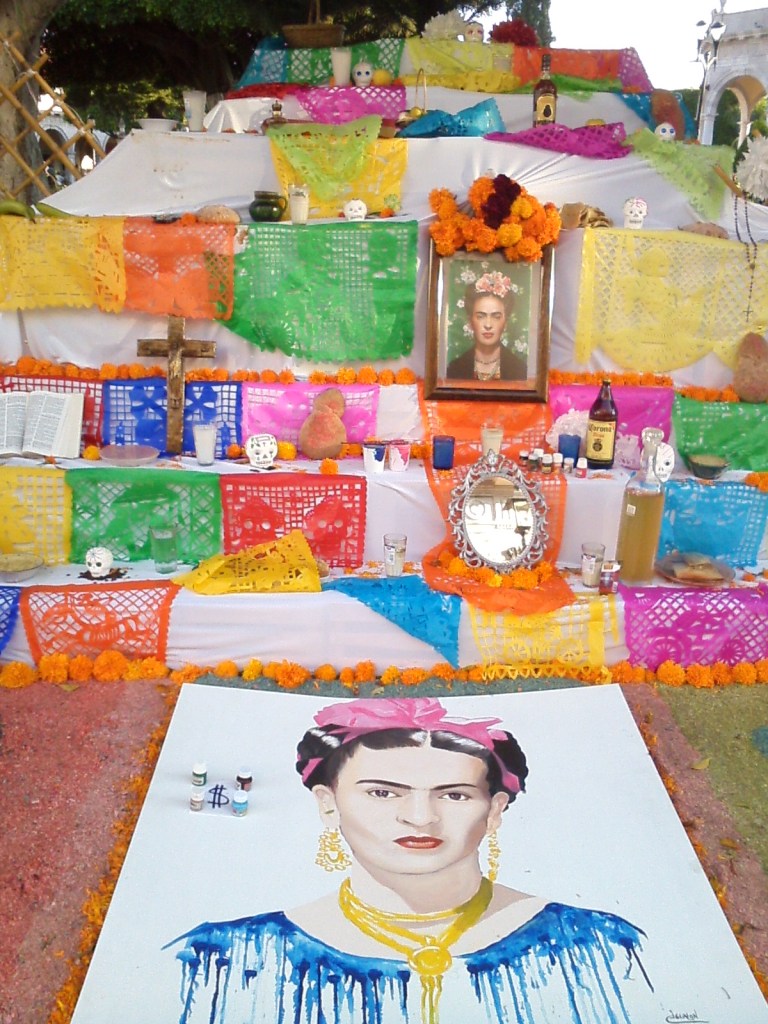
An altar in honor of Frida Kahlo.
In Moroléon, deceased national and local public figures are honored with altars built in El Centro. More often, altars are built in the homes or at the panteón (cemetery).

An altar in honor of a recently deceased local baker including pan de muerto.

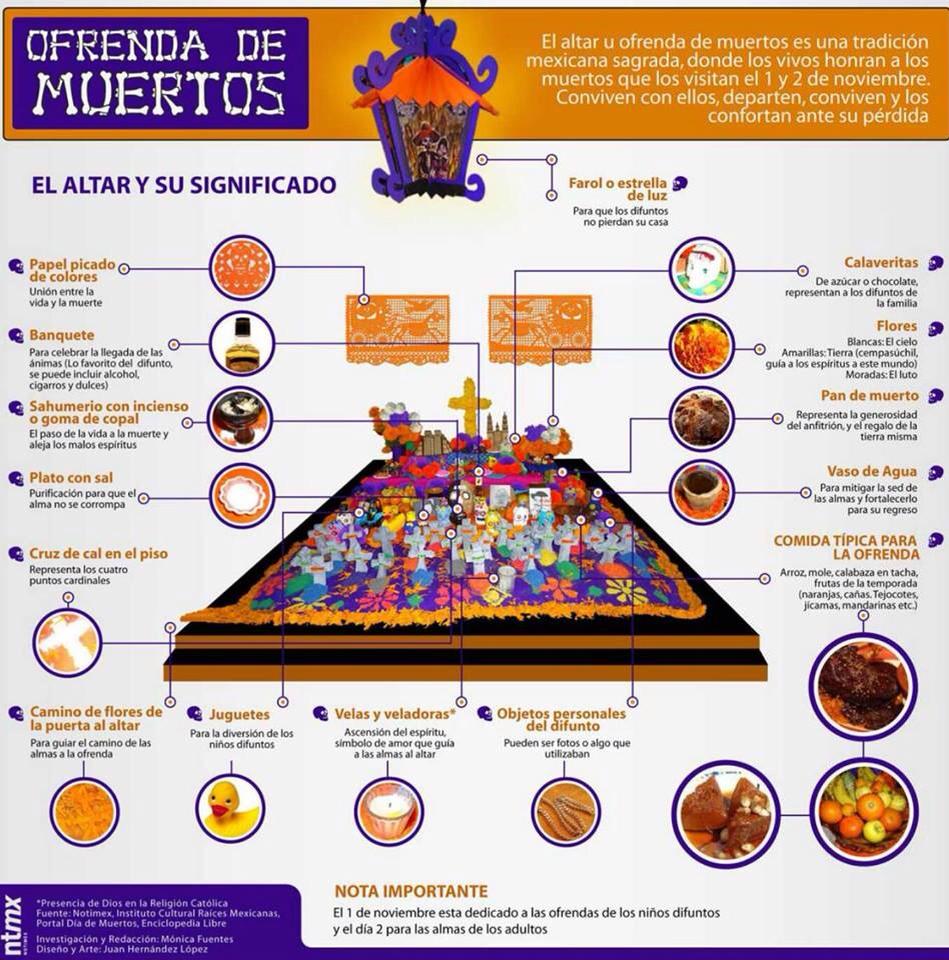
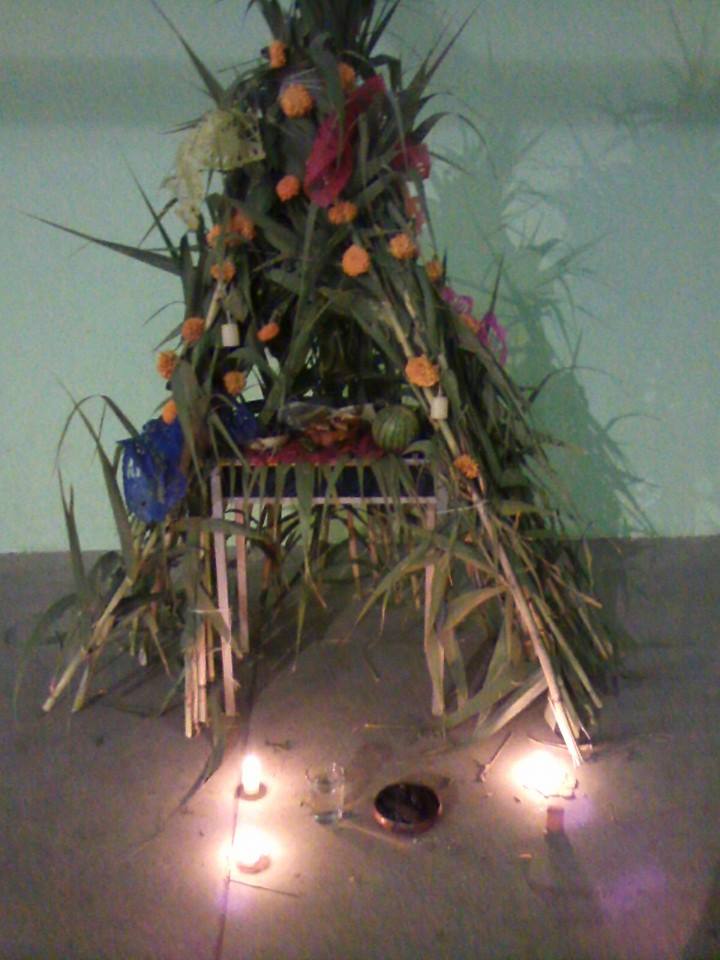
The altars may include marigolds, salt, favorite foods presented in ceramic dishes, pan de muerto (a luxurious sugar bread only available during these days) tequila, candles, incense and special personal items.
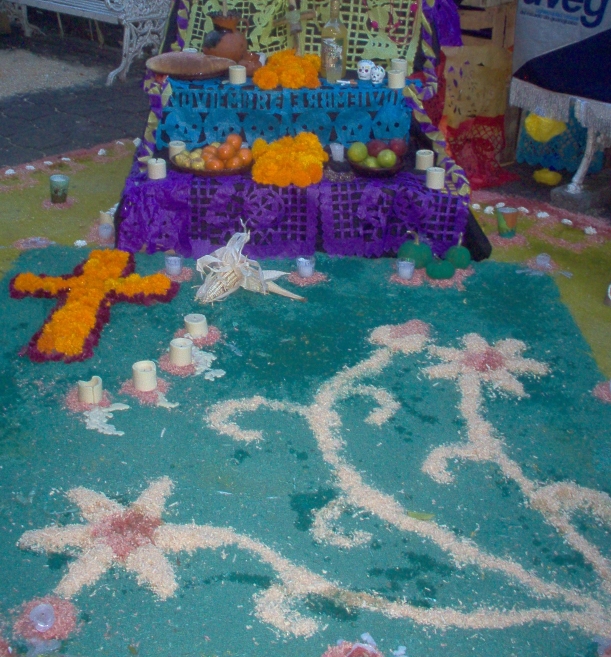
Each item has its own special meaning and reason for inclusion.
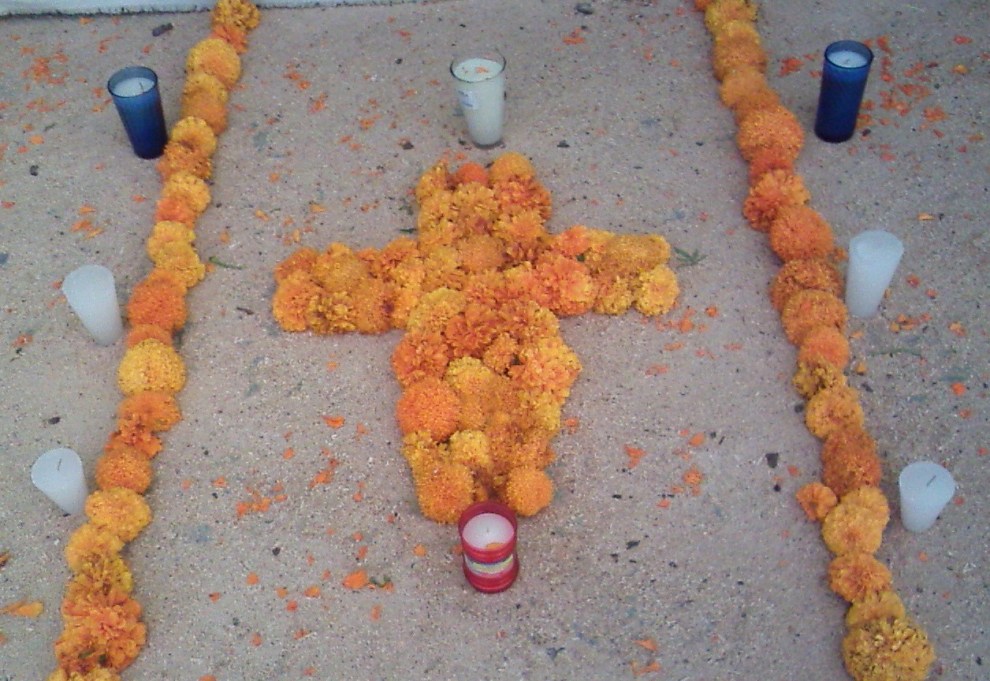
Marigolds are called Flor de Muerto (Flower of the Dead) or cempasuchil (Flower of 400 lives). I imagine it came by its name due to the fact that each petal has the potential to become a future marigold plant, hence each blossom can have many future lives. The strong scent of the flower is thought to lead the spirits home. Sometimes paths of petals lead from the cemetery to the home.

A dirt cross is included at times to remind the living that “From dust we are and to dust we will return.” (See La Novena)

Copal is the resinous sap of a tree and has been burned as incense since the time of the Aztecs as an offering to the gods. On the Day of the Dead altar, the scent attracts spirits, drawing them home. It is also used to cleanse the area and to ward off evil.

An altar in honor of the deceased Mexican comedian Cantiflas.
Colorful tissue paper, papel picado, is cut into intricate designs and strung to flutter over around the altar. Holydays throughout the year are marked with papal picado strung over processional routes, reminiscent of their use during prehispanic rituals.
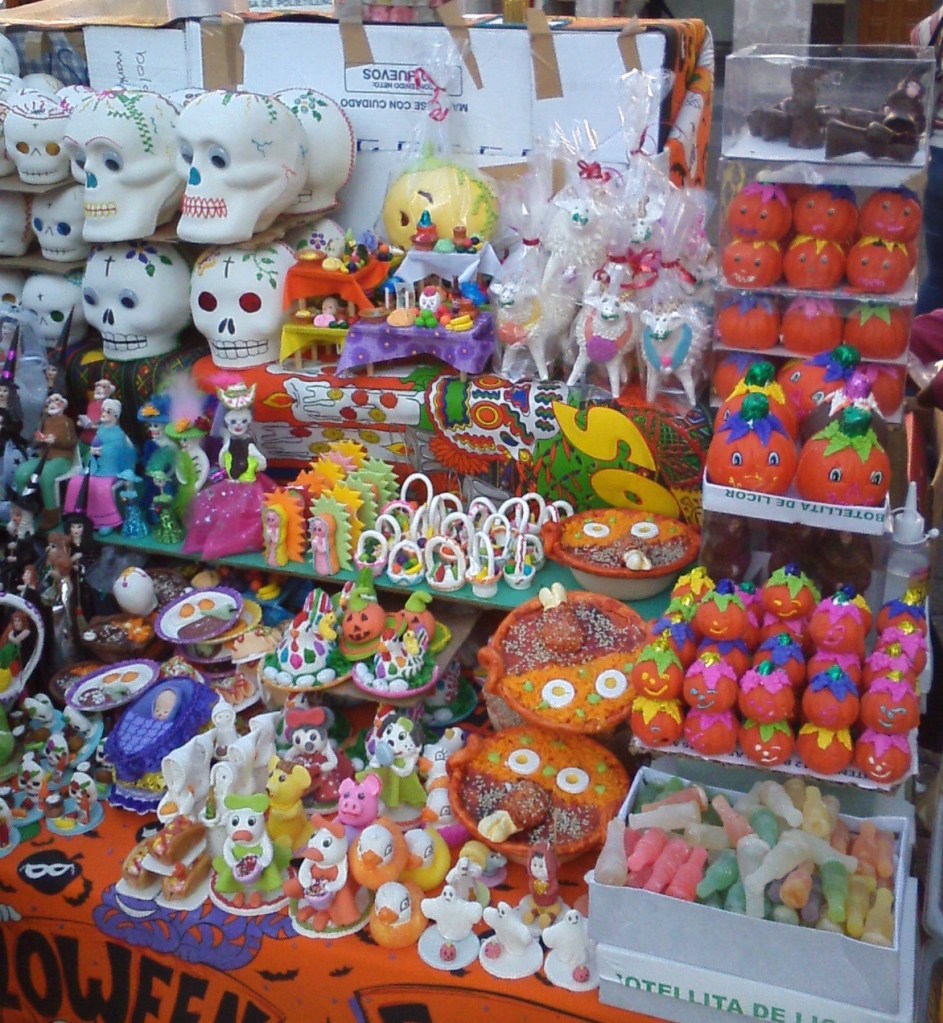
Sugar skulls and figures on sale in el Centro.
You may also find calacas and calaveras on the altars. Calacas (skeletons) are carved wooden or ceramic skeletons often presented in joyous or lewd activities. Calaveras, are sugar skulls made with the name of the dead person written in sugar icing on the forehead and eaten by a relative or friend in honor of the dead.

A crypt decorated for El Dia de los Muertos.
At the panteón (cemetery), during this two-day period, families usually clean and decorate graves with ofrendas (offerings). In our case, it meant a trip to my mother-in-law’s crypt, bringing marigolds, candles and a bottle of coke, her favorite beverage. There were hundreds of people at the cemetery, some with lonas (tarps) set up and camp chairs, others perched on buckets playing cards. The families stay long into the night beside the tombs of loved ones telling stories and remembering, weeping and laughing. Some even brought mirrors in hopes of getting a glimpse of the soul as it stops by for a visit. For this one night, the dead are not gone but brought back through the memories of those that remain.
************************************
Have a Day of the Dead themed blog post?
Link it up here! An InLinkz Link-up








 Surviving Mexico