Tag Archives: estafiate

Natural Healing — Estafiate

Photo credit: Kenraiz

Estafiate (Artemisia ludoviciana) is another herb with problematic common names that hamper positive identification. In Mexico, Artemisia ludoviciana is sometimes called ajenjo or hierba maestra, which is Artemisa absinthium as well. It is also known as altamisa, another name for artemisia franserioides. And then, cola de zorrillo and epazote are other names for Dysphania ambrosioides.

There is just as much diversity in English in this herb’s name, which include silver wormwood, western mugwort, white sagebrush, and gray sagewort.

Artemisia ludoviciana subsp. mexicana is a plant native to Mexico. Using that knowledge, it’s slightly less complicated to come up with names that aren’t used for other non-native plants. In Nahuatl, it is iztauhyatl, and in Maya zizm. Other names include istafieta and azumate de Puebla. The Otomí call this plant ambfe. In Quintana Roo, it is known by haway, kaway si’ isim ts’tsim or osomiate. The indigenous of San Luís Potosí use the terms tsakam ten huitz, ten ts’ojol. In Veracruz, it is xun. To the Rarámuri it is ros’sabl’i and for the Popoloca, it is kamaistra.

Estafiate has long been considered a sacred plant. It was associated with the water god Tláloc and used to remedy conditions believed to be caused by water, including gout, leprosy, and epilepsy. During celebrations to honor the god, children were brushed with the plant as a protective charm against parasites. In some areas, estafiate is still used as part of limpia (cleansing) rituals. Other traditional uses include fever, asthma, tuberculosis, cough, kidney stones, stomach gas, menstrual cramps, bruises, arthritis, mal de ojo (evil eye), susto (sudden fear), and hemorrhoids.

This bitter herb is more potent fresh. It is often used in conjunction with ruda (Ruta graveolens), manzanilla (Matricaria chamomilla), epazote (Dysphania ambrosioides), and yerba buena (Mentha spicata). Estafiate is toxic in high doses and should not be ingested by pregnant or nursing mothers.

For respiratory issues, including cough and flu, an infusion is made from the stems and leaves and gargled or rubbed on the throat and chest areas. The dried leaves can be smoked to help with asthma. An Inhalation can also be prepared by boiling the leaves and breathing in the steam. Children are given fresh estafiate wrapped in a cloth to suck on for cough.

A tea made with equal parts epazote (Dysphania ambrosioides), and estafiate is prescribed for stomach gas. Allow the herbs to steep for 10 minutes. Flavor with canela (Cinnamomum zeylanicum) and miel (honey) as the tea will taste extremely bitter. For stomach pain caused by parasites, 20 flowers that have been dried in the shade are added to a cup of water.

To treat bilis (excessive rage thought to gather in the liver), chew on a fresh estafiate sprig. Another remedy for bilis calls for an infusion of nopal root (Opuntia ficus-indica) and the leaves of albahaca (Ocimum basilicum), estafiate, yerba buena (Mentha spicata), Orégano de monte (Lippia graveolens), drunk every morning before breakfast for nine days.

An infusion of fresh leaves or a single sprig is given for fever. For arthritis and other muscle pain, crushed leaves are rubbed on the affected joints. A wash for hemorrhoids is made with four teaspoons of leaves of stem boiled in a one-half liter of water and steeped for 15 minutes. Stain and allow it to cool to room temperature.

Estafiate has shown gastroprotective, antispasmodic, antibacterial, antimicrobial, antiparasitic, and anti-inflammatory activities supporting its use as a stomach remedy and cholera treatment. It also possesses properties that suggest it may be beneficial in treating diabetes, cancer, Alzheimer’s, and Muscular dystrophy. It has a significant antinociceptive effect and thus is useful in reducing pain in certain instances. It also has hypoglycemic and antihyperglycemic effects. Artemisia ludoviciana has antimycobacterial activity, indicating that it can be used in addition to antibiotic treatments for tuberculosis. It also demonstrates antifungal activity.

***

Interested in natural remedies? Uncover herbal remedies from traditional Mexican sources for healing and wellness in the Exploring Traditional Herbal Remedies in Mexico series.
Leave a comment

Filed under Health, Native fauna and flora, Natural Healing

Playing Tourist–Valle de Santiago, Guanajuato

craterThe other week we headed to the town on the other side of the Lake Yuriria, Valle de Santiago. The town itself doesn’t have any of the magic that Yuriria or Cuitzeo have, but what it does have is a kick-ass tianguis (flea market) on Sunday. We were able to buy two pairs of Levi’s jeans for my son, a pair of Dockers Corduroy Pants and Caterpillar Work Boots for my husband and a Spider Plant
for me, all at totally reasonable prices. AND since we had to go through Yuriria to get to Valle de Santiago, we stopped for a fabulous lunch in el mercado (market). Since the weather had turned chilly, I had an excuse to purchase my first ever rebozo. Wearing a rebozo is like wearing a blanket–and totally acceptable in public. My husband and son called me granny the rest of the day, but I was a warm granny!

So a little history here…

estafiate

Valle de Santiago and the surrounding area was first settled about 2,000 years ago by the Purepechas and most likely conquered or otherwise absorbed by the Tarascos. Back then it was called Kamenbarhu (or Camembaro) which translates as roughly “lugar del estafiate” which then translates as “place of the estafiate plant.” Estafiate is also known as Western Mugwort, Western Wormwood, Louisiana Sagewort, Prairie Sagewort, Mountain Sage, Simonillo, and Itzauhyatl in Nahuatl and is used for digestive issues, as an analgesic, a decongestant, a sedative, a diuretic, an expectorant and an antioxidant, among other uses.

Kamenbarhu (or Camembaro) was renamed Valle de Santiago (Saint James’ Valley) and officially “founded” in 1607 by a bunch of Spaniards. In 1997, the state of Guanajuato declared the area a natural preserve.

tianguis

Valle de Santiago

While the town of Valle de Santiago isn’t much to brag about–the drive there and back is spectacular. We already knew that Lake Yuriria is formed from an extinct volcano crater, so it was not much of a stretch of the imagination to see that the surrounding landscape also had a volcanic look to it. When we got home, I did some internet research–because asking the locals never gets us anywhere–and lo and behold, the area all around Valle de Santiago is known as the Siete Luminarias (7 lights) which refer to 7 distinct craters, although there are more than 30 craters formed by now extinct volcanoes in the immediate area.

Astroarchaeology (the study of how people have understood the phenomena in the sky and the role that understanding played in their culture) suggests that the Siete Luminarias align with the constellation La Osa Mayor (the Big Dipper) every 1040 or 40,000 years (there seemed to be a bit of a discrepancy on when that event actually happens) hence the name Siete Luminarias. It does appear to make the rough outline of the Big Dipper if you look at the map below.

forming the big dipper

The 7 craters are named as follows:

La Alberca, formerly known as Tallacua

Hoya del Rincon de Parangueo, formerly known as Liricua

Hoya de Flores, formerly known as Membereca

Hoya de Cintora, formerly known as Andaracua

Hoya de San Nicolas

Hoya de Alvarez

Several of these craters have been the site of strange phenomenon. The lake in the Hoya de San Nicolas turns red, much like Lake Yuririra does, and probably for the same reason.

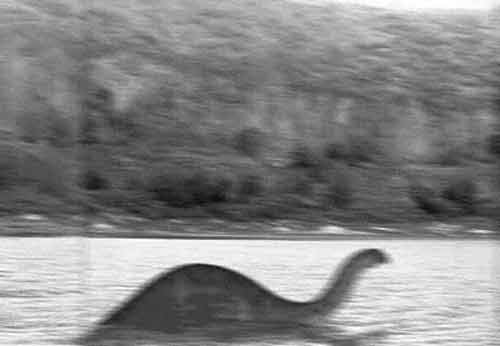
chan bw

La Alberca is reportedly home to Chac (or Chan), the Loch Ness monster’s cousin. This creature is said to live in the underground tunnels that connect the craters. It supposedly resembles a sauropod dinosaur.The only picture of the creature was taken in 1956 from a plane, and it seems far from conclusive to me. But maybe you want to believe????

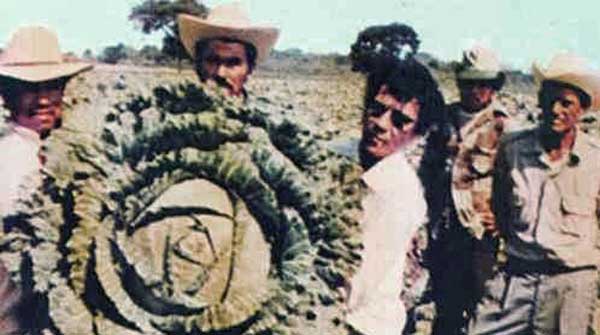
giant cabbage

There have even been various reports of extraterrestrial contact and UFO sitings in the area of the Hoya de Flores. A local resident riding his donkey saw strange lights in 1987. Crop circles were later discovered in the area (although I haven’t been able to find any pictures of them online.) Some UFO-ologists reported contact with a glowing silvery-blue man there. The most famous contact was with a local farmer, Jose Carmen Garcia Martinez, who grew enormous vegetables in La Hoya de Flores in the 1970s. He claimed that his astronomical success in creating his astronomical sized vegetables was based on agricultural methods he received from astral messages.

Well, I wouldn’t have expected aliens and monsters from our pleasant day in Valle…but then I have learned that Mexico is often not what it appears to be.

wpid-cam03936-1.jpg

******************************************

disclosure

4 Comments

Filed under Mexican Cultural Stories, Tourist Sites in Mexico