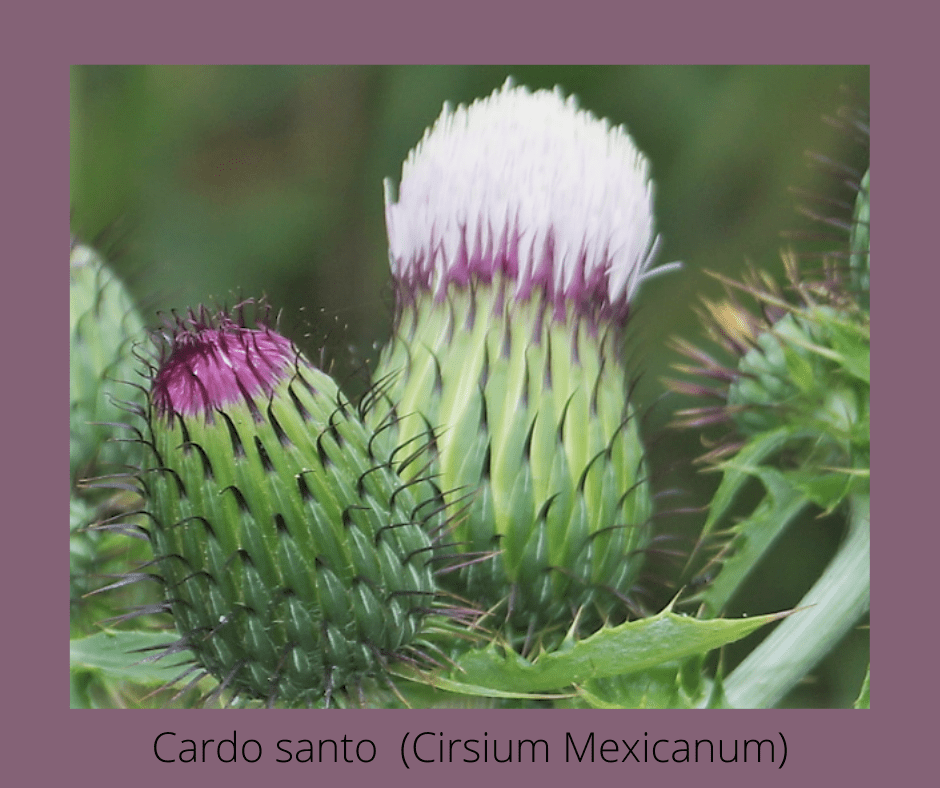
Photo Credit: Erick Noe Tapia Banda
The genus Cirsium, known as cardos, has around 300 species, 75 of which are native to North American and another 35 native to tropical Central and South America.
Cardo santo (Cirsium Mexicanum), holy thistle, should not be confused with cardo bendito (blessed thistle/Centaurea benedicta), which is not native to Mexico, or chicalote (Argemone Mexicana / Mexican Prickle Poppy). Both plants are commonly called cardo santo.
There is also some issue with spelling. Nicolás Monardes recorded several uses for “carlo santo” in his book Joyfull Newes Out of the Newfound World, which subsequent herbalists have used to refer to this plant. However, in Mexico, the term most commonly employed is the Spanish cardo (not carlo) santo. Traditional remedies recorded in Monardes’ book included chronic stomach distress, bad breath, and flatulence.
According to The Classic Codex of 1552, the general Nahuatl term for thistles (cardos) was huitz-quilitl, meaning thorny (huitz) edible (quilitl), and they were used in remedies for black blood (bilis), scurf (dandruff), excessive heat (fever), and inflammation.
However, these days, cardo santo (Cirsium Mexicanum / Mexican Thistle) is generally prescribed to treat digestive ailments, toothache, rheumatism, heart pain, and anxiety. Other uses include fever reduction, cancer treatment, and diabetes regulation. The Zapotecs, Mixtecs, and Totonacs include cardo santo in remedies to combat el susto (fear-induced infirmities).
The roots are boiled for a tea to reduce stomach inflammation. An infusion of the flowers is made for diarrhea. Another diarrhea remedy calls for a large pinch of chopped cardo santo roots boiled in a liter of water for 15 minutes. Allow it to cool slightly, strain, and serve. An infusion from the entire plant is made as a laxative.
For toothache, a small piece of root is boiled. The liquid is then swished through the mouth for a few minutes to alleviate the pain.
In Michoacán, small root segments and a piece of tejocote (Crataegus mexicana) are brewed for urinary tract infections. An infusion made from the flowers is prescribed for the same ailment in the states of Mexico and Puebla.
An infusion made from the leaves is administered as a diabetes treatment. However, studies have found that there is no scientific support for cardo santo’s use in the treatment of cancer or diabetes.
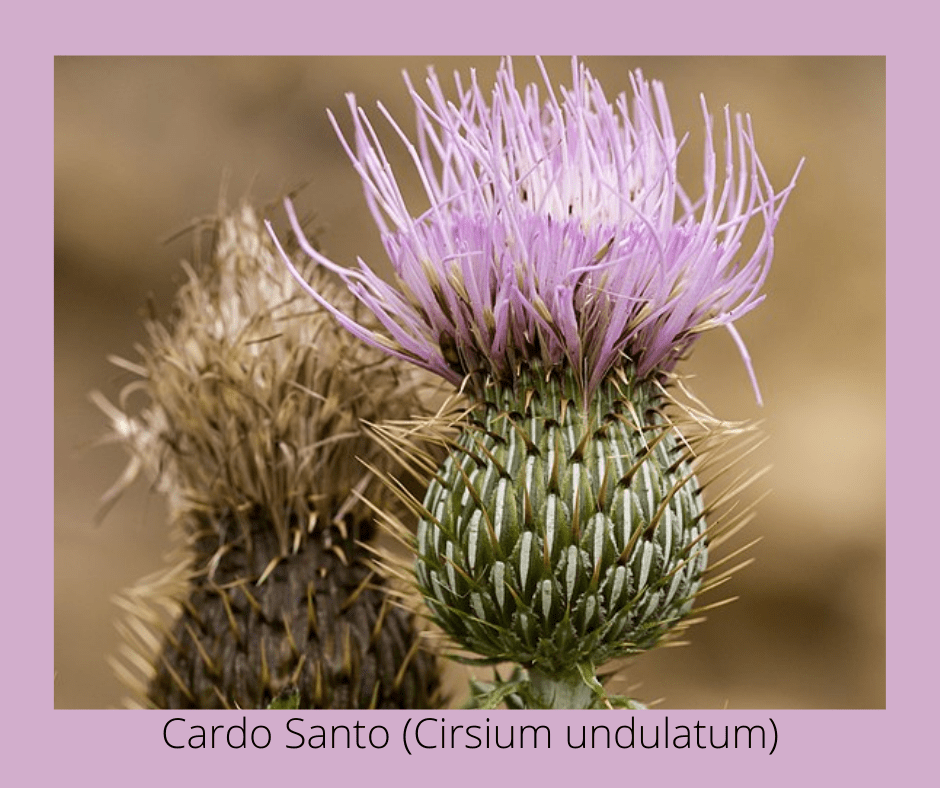
Photo credit: Patrick Alexander
Cirsium undulatum (wavyleaf thistle) is another native thistle that is commonly referred to as cardo santo in Mexico. It is used interchangeably with Cirsium Mexicanum in most remedies.
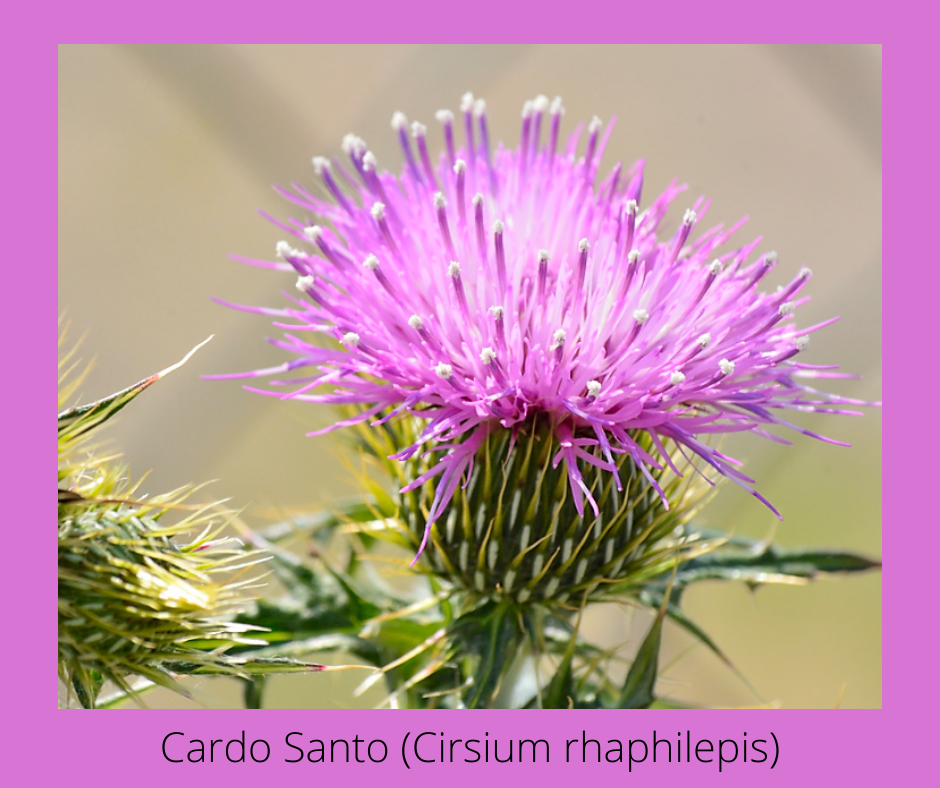
Photo credit: Ricardo Arredondo
Another thistle commonly referred to as cardo santo is Cirsium rhaphilepis.
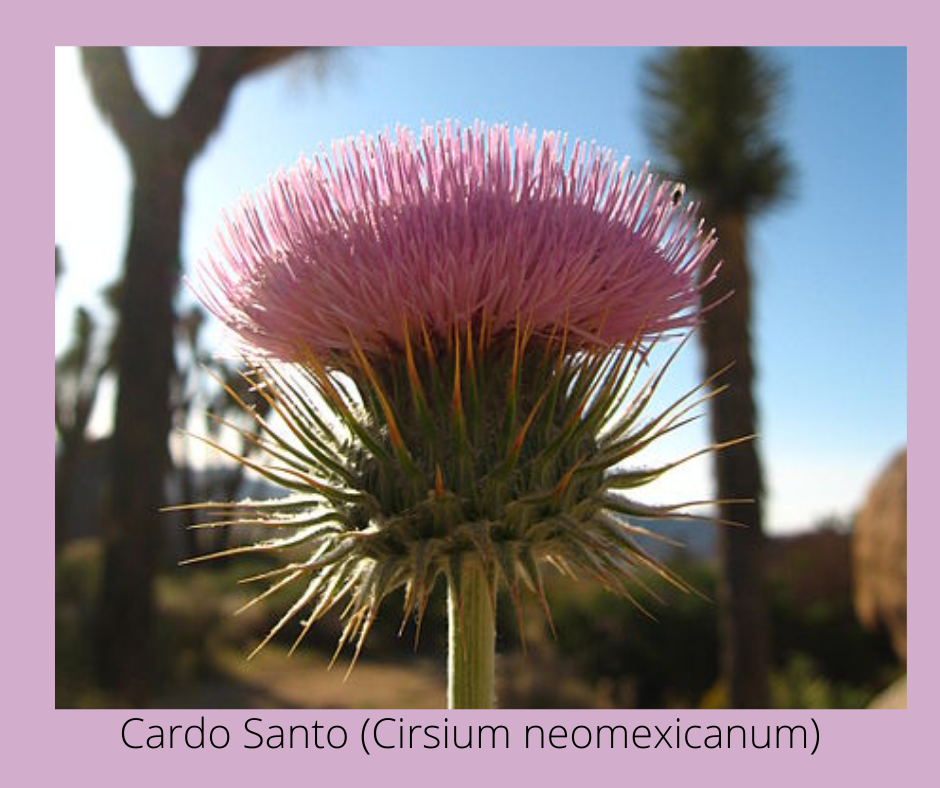
Photo credit: Robb Hannawacker
Cirsium neomexicanum (desert thistle) is also known as cardo santo. The stems and roots are edible when harvested early, before blossoming. Stems over two feet tall are too tough to eat.
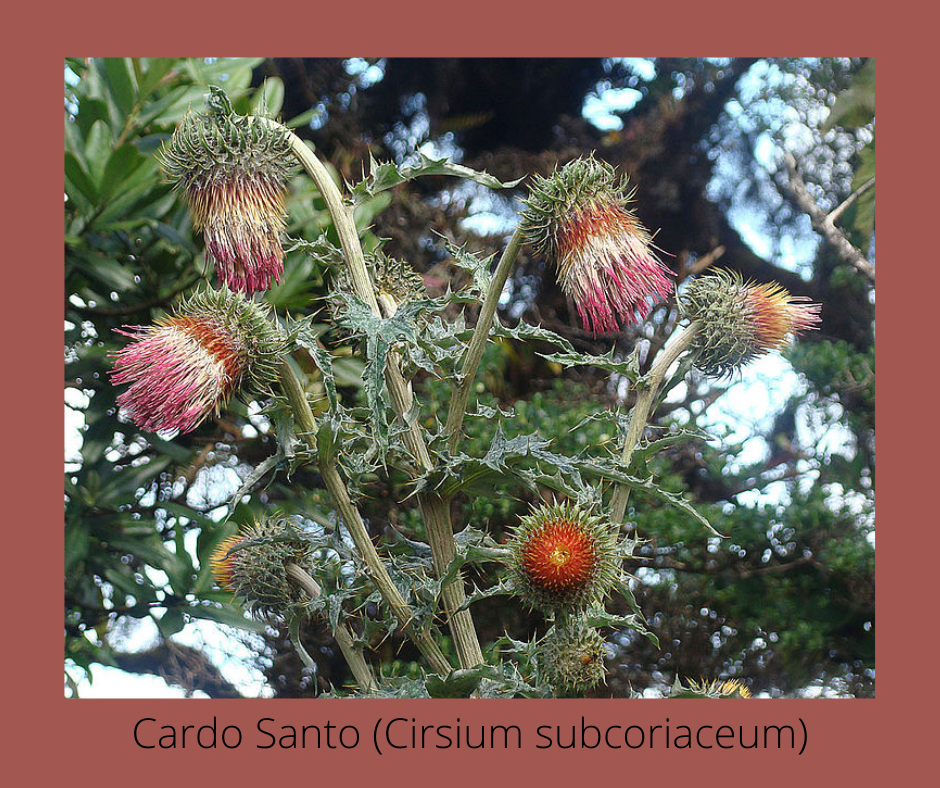
Photo credit: Dick Culbert
Cirsium subcoriaceum, yet another cardo santo, is prescribed for liver, heart, and respiratory ailments. Typically, the remedy calls for five grams of root and flowers boiled to make a strong decoction. One cup is drunk every 6 hours for 15 days, followed by a 15-day abstinence. The treatment is repeated every 15 days until symptoms improve. Studies have shown Cirsium subcoriaceum to be anti-inflammatory and analgesic.
***
Interested in natural remedies? Uncover herbal remedies from traditional Mexican sources for healing and wellness in the Exploring Traditional Herbal Remedies in Mexico series.


 Surviving Mexico

;_Cap_Rock.jpg)
.jpg)