Category Archives: Teaching

Failing at your own business (or not) –Saturday School

small poppins

Featured as a Creative Problem Solver at Inspired Livelihood.

Somewhere between my last teaching position and my current teaching position, I found myself unemployed. Not just unemployed, but destitute. My husband and I had separated and I rented an apartment in town for my son and myself. A decided benefit to the situation was that we now had 24-hour access to electricity, which our home in the Middle of Nowhere, Mexico was without. The downside being that now I had to pay for it. And being unemployed, I wasn’t sure what to do.

Taking advantage of the electricity, I made some English language games. I soon had requests from moms and teachers for Spanish and bible games too. But these occasional sales weren’t enough to get the bills paid.

So, I approached the owners of the school where I had hoped to work but wasn’t because the school hadn’t opened that year. I asked if they would consider allowing me to use the school on Saturdays for English classes. Generously, they said that would be fine and wouldn’t even hear of me paying them rent for the use. I went one step further in my grandiose plan and asked an art teacher if she would be interested in giving art classes on Saturdays as well. Then we started with the publicity. The school had a Facebook page and we uploaded our class offerings there. Then we went about town and posted announcements on the telephone poles and in front of schools. We also went to each of our students, present and past, and gave them the information.

So it began. I can’t say it was an instant success. We each started with 3 classes with two or three students in each class. Some days there were cancellations and we were discouraged. The art teacher began to miss classes and her students stopped coming. But I kept at it. Most Saturdays I earned a whopping $75 (which is less than $6 USD) pesos. Other days I earned upwards to $600 (about $50 USD) pesos, but those days were few and far between.

I taught whatever was asked of me. I taught classes for TOEFL exam preparation, classes for the U.S. citizenship exam, regularization classes for failing students, conversation classes for those planning on heading norte (to the U.S.), listening, reading, and grammar classes from beginner to advanced levels, kindergarten classes, adult classes and classes for every age in between. I even taught a few beginning piano classes.

mototeacher

It’s been 2 years since I began the Saturday classes and I now have classes scheduled from 8 am to 5:30 pm nearly every Saturday. I look forward to cancellations for a little down time in my day. Some of my Saturday classes have converted into weekday classes, so I now teach 2-4 classes in the afternoons Monday thru Friday. I also have an ESL teaching position from 9:20 am until 2:30 pm at the school that finally did open.

Some students have disappeared but have sent friends, relatives or classmates to me in their stead. Others have just disappeared. I’ve learned to be more selective with the classes I teach and the students I take on. I’ve actually had to say no to new students several times this year. I give preference to students that have been with me since the beginning when setting up my schedule and when cancellations occur. I have a waiting list for both the afternoon classes and Saturday classes, but the students that I have currently are not in a hurry to give up their places, for which I am incredibly grateful.

I love that I don’t teach the same old thing over and over again. Each class is more or less individual, sometimes with 2 or 3 students, and I am able to concentrate on what would be most beneficial for the student or students. The process of inventing such individualized classes has been challenging but rewarding. I enjoy seeing my students’ progress and watching them master tricky language skills. I am who they recommend when an English expertise is needed. Although I won’t ever become wealthy teaching on such a small scale, I have become rich in experience and it does get the bills paid.

*************************************

ForTeachersOnly.com

Shop now 

disclosure

14 Comments

Filed under Education, Employment, Teaching

Parenting Challenge—Inspiring Learning

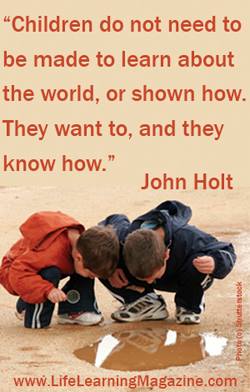
learn about the world

Some people are incredulous when I tell them that we live without electricity at our home. Whatever do we do all day? These astonished souls comment they would just die without TV. That’s a sad commentary really. There are so many other things to do besides sitting mindlessly in front of the boob tube waiting to be entertained or enriched with essential knowledge that supposedly can only be had by watching the nightly news. I can guarantee that we are never bored. We have animals antics to watch, chores to do, gardens to plant, inventions to create, tables to dust, books to read, building to do and so on. I am not saying television viewing is all bad. There are all sorts of educational programs out there. And we enjoy a good movie or two. We do have the capacity to watch movies despite not having electricity. We have a Portable DVD Player, and it is such a sweet treat for us at the end of the day to curl up and watch a movie together. Because of years of use, the power never lasts for more than one full-length movie, so our viewing time is limited, but who really has time for hours of movies anyway?

 We are more ready to be done unto than to do; we do not care for the labour of ordering our own lives in this direction or in that; they must be conducted for us; a press of engagements must compel us into what next, and what next after. We crave for spectacular entertainment, whether in the way of pageants in the streets, or spectacles on the boards. … There is nothing intentionally vicious in all this; it is simply our effort to escape from the ennui that results from a one-sided view of education,––that education is an atmosphere only.–Charlotte Mason

My family in the U.S. sends us one box chocked full of goodies, things hard to come by where we live, once a year, usually in January. We tear into it with gleeful anticipation. This year was no exception. In fact, I believe they outdid themselves this year. In addition to a Kindle with more than 300 books on it, oh how many hours of pure bliss there, they sent my son some projects. When we laid out the boxes, I told him that regular class would be suspended and he could build one project a day. He was delighted.

There were several Lego sets, a music box kit, and a solar educational kit. He could barely wait to finish breakfast the next morning before he got started. After he put to together the boxed sets according to the instructions and marveled at them a few days, he set about taking them apart and designing his own stuff. He analyzed how much solar power he would need to charge his cell phone and tried tweaking the kit to fit that purpose. It wasn’t strong enough for the task at hand, and he was disappointed, but he kept up with his experiments. No boredom here!

Education is a World Business.––Next, we may have poetry, or art, or philosophy; we cannot tell; but two things are incumbent upon us,––to keep ourselves and our children in touch with the great thoughts by which the world has been educated in the past, and to keep ourselves and them in the right attitude towards the great ideas of the present. It is our temptation to make too personal a matter of education, to lose sight of the fact that education is a world business, that the lessons of the ages have been duly set, and that each age is concerned, not only with its own particular page, but with every preceding page.–Charlotte Mason

I had been trying to get my son interested in reading some of the books on my shelf to expand his understanding of the world. One of the books I wanted him to pick up was about Greek mythology, but he wasn’t interested, and I didn’t want to force the issue. One day, I brought home a movie, Lightning Thief, that I thought he would enjoy. Well, the next morning, he was still going on about the characters and the film. So I casually tossed my mythology book on his bed and said that he might find this book useful in understanding the movie better. He spent the better part of the day devouring the book and then watched the movie again, absolutely delighted with the information he now had. I didn’t feel that we needed to have a “proper” lesson on the subject since my mission had been so easily accomplished.

A Wider Curriculum.––Give children a wide range of subjects, with the end in view of establishing in each case some one or more of the relations I have indicated. Let them learn from first-hand sources of information––really good books, the best going, on the subject they are engaged upon. Let them get at the books themselves, and do not let them be flooded with a warm diluent at the lips of their teacher. The teacher’s business is to indicate, stimulate, direct and constrain to the acquirement of knowledge, but by no means to be the fountain-head and source of all knowledge in his or her own person. The less parents and teachers talk-in and expound their rations of knowledge and thought to the children they are educating, the better for the children. Peptonised food for a healthy stomach does not tend to a vigorous digestion. Children must be allowed to ruminate, must be left alone with their own thoughts. They will ask for help if they want it.–Charlotte Mason

The next movie I am going to recommend to my son is The Patriot and then toss Johnny Tremain on his bed and see what he makes of it. World History includes U.S. History after all.  And this inspiring learning bit, rather than formal lessons is a walk in the park for both of us.  How enjoyable!

**********************************************************


disclosure

2 Comments

Filed under Education, Parenting Challenges and Cultural Norms, Teaching

Getting Legal–Working Papers

paperwork lady

Just so you know, I have been working most of the 7 years I have lived here, but apparently not legally. It was easier for me to obtain my permanent residency through a dependent status, as there is no minimum income requirement. But this year, feeling frisky, I decided to tackle the work permit business.

When I went to pick up my residency card (See Getting Legal-Trip 5) I asked at the desk what I needed to do to work legally now. The clerk printed out a little paper and said that I would need to fill out electronically the form “notificacion de cambio de lugar de trabajo” (job location change notification), then write a letter indicating the change bajo de protesto de decir la verdad (swearing to tell the truth) and return to the office with my residency card and a copy. I had to ask a second time if that was all, just to be sure. That seemed so easy–it had to be a mistake. The clerk emphasized that it needed to be done within 90 days of the change. Okie Dokie.

However, when I applied for a job teaching English at a private elementary school, that was a horse of a different color. I sent my diploma, notarized, apostillado (apostille), and traducido por un perito traductor (translated into Spanish by an authorized agent) that indicated that I had a Bachelor’s in Science in Education with specialties in English and English as a Second Language. Who better qualified to teach the children of México but me, I thought.

But my own high opinion and a Bachelor’s degree weren’t enough for SEP (Secretaria de Educacion Primaria). I received, with my rejection letter, a list of 10 requirements and a request for payment in the amount of $758 pesos, plus 11 pesos for each document sent, to re-evaluate my documents.

I was requested to send:

1–Formato de Solicitud original (a form requesting my reevaluation)

2–Acta de nacimiento original y copia, traducida y apostillada (birth certificate with an apostille and translated into Spanish and copy)

3–Pago de derechos clave 85-20 (payment to the state of Guanajuato)

4–Pago Correspondente (the $758 and 11 pesos per document)

5–copia de CURP (copy of my identification number issued by federal government)

6–Documento original y copia oficial que acredite las calificaciones finales de los grados a revalidar apostillado y traducido (the original and a legal copy of my high school transcripts translated and with an apostille)

7–Titulo o diploma original y copia del grado a revalidar apostillado y traducido (High School diploma and copy, translated and with an apostille)

8–Documento original y copia migratorio que acredite al legal estancia en el país (my permanent residency card and copy)

9–Certificado original y copia o Diploma de Bachillerato cuando los estudios a revalidar sean de nivel Licenciatura apostillado y traducido por un perito autorizado (my diploma from the University with an apostille and translated into Spanish by an authorized person)

10–Plan y programa que ampare los estudios realizados en el extranjero original y 2 copias traducidas (my college transcripts and 2 copies translated into Spanish)

What the….? Not even immigration asked for so much documentation. I was upset and asked around to see if it was just because I was not born a Mexican–and yep, it was.

Obtaining even this information was as difficult as prying state secrets from a loyalist. I honestly was perplexed at what SEP was requesting, as in my opinion, a diploma from a University was sufficient proof of my qualifications. So I asked around, specifically currently employed English teachers or people working at Universities that might know a foreign-born English teacher. Some didn’t respond. Some said they would get back to me. Some said that I needed to fix my own problems myself. These same people who didn’t hesitate to call me up when they needed to cram for the IELTS, Trinity or TOEFL exams, or had a question about U.S. Social Security benefits, or who sent me desperate people with difficult U.S. questions who then never paid me for my time or effort. These people I thought were my friends! Silly me.

So then I asked the Spanish teachers for information and discovered the astonishing fact that most teachers here in México have never attended a University to become teachers. The law requiring a University education is quite recent, hence teachers who did not attend a University are allowed to continue teaching because of their years in the field are seen to be the equivalent of actual studies. Newer teachers who have not completed their studies, often use a diploma prestado (borrowed) from someone who has completed his or her studies.

But not me, noooo. I would have to complete these requirements and take them to Guanajuato personally in order to be given a teaching position.

**************************

disclosure

3 Comments

Filed under Employment, Getting Legal, Teaching