
Lest you think that the Christmas season was enough partying to last for several weeks, the festivities continue here with Las Fiestas de Enero (January Festivals) in Moroleón that begin on or about January 15 and continues until January 31.
This festival, or rather series of festivals, is in honor of a sacred statue that somewhat accidently found itself in Moroleón more than 200 years ago.
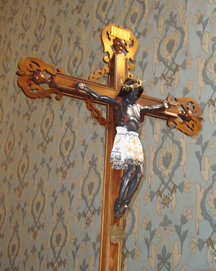
In 1802, Father Alonso de Velasco was taking the image to the Bethlehem Temple in Guanajuato, but became sick and died before he could deliver the goods. In gratitude for the care he received in Moroleón, Father Alonso donated the image of Cristo Negro (Black Christ) to the local church as he lay dying. This little black Jésus statue is said to be an exact replica of the statue that is venerated in the town Esquipulas, Guatemala. The figure is known as El Señor de Esquipulas.
On January 15, 1806, Father Francisco de la Quinta Ana y Aguilar celebrated Misa Solemne en honor del Señor de Esquipulitas (solemn mass in honor of the image) in Moroleón. This is the same day as it is celebrated in Guatemala. A jaripeo (rodeo) and other festival events occurred after the mass. For this reason, the main iglesia (church) in the centro of Moroleón is known as El Señor de Esquipulitas, and the festival de Moroleón takes place in January.
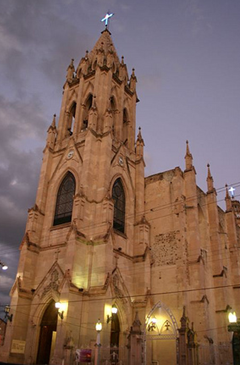
So the fun kicks off with a fabulous mass and an obra de teatro pública (public play downtown). Then there are bandas (bands) and singers that perform until the wee hours of the morning every night for the next week or so. I am not sure how the local population can party so hard. El grupo Garcia (The Garcia group) brings their amusement park rides. A traveling circus and artesenía vendors also set up. There are so many ways to spend your money!
We always pass on the bandas. They never start playing until after dark, and in January it’s still quite cold, so not a pleasant evening. Of course, there is plenty of drinking, so I expect that keeps the party-goers from feeling the chill so much. When we passed through the centro in the morning, there were piles of rubbish knee-high and the entire area smelled like one giant vat of beer. Must have been some party.
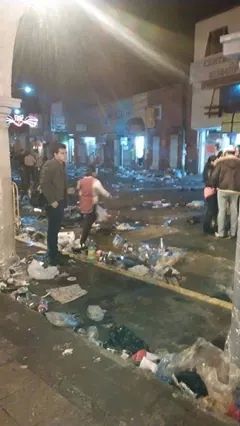
After the festivities in Moroleon.
There are also jaripeos (rodeos) at several Lienzo Charros (rodeo places) on various days during the festivities, but we tend to pass on those as well, pretty much for the same reason. Most attendees are obnoxiously inebriated and not pleasant to be around.
We do, however, make a concerted effort to get to la feria (the fair) and the circus, even if it means eating beans for the next several weeks. The last few years, the circus and the fair have set up in the same area and charged only one fee for both—a mere $35 pesos per person. However, it didn’t work out so cheaply for us last time.
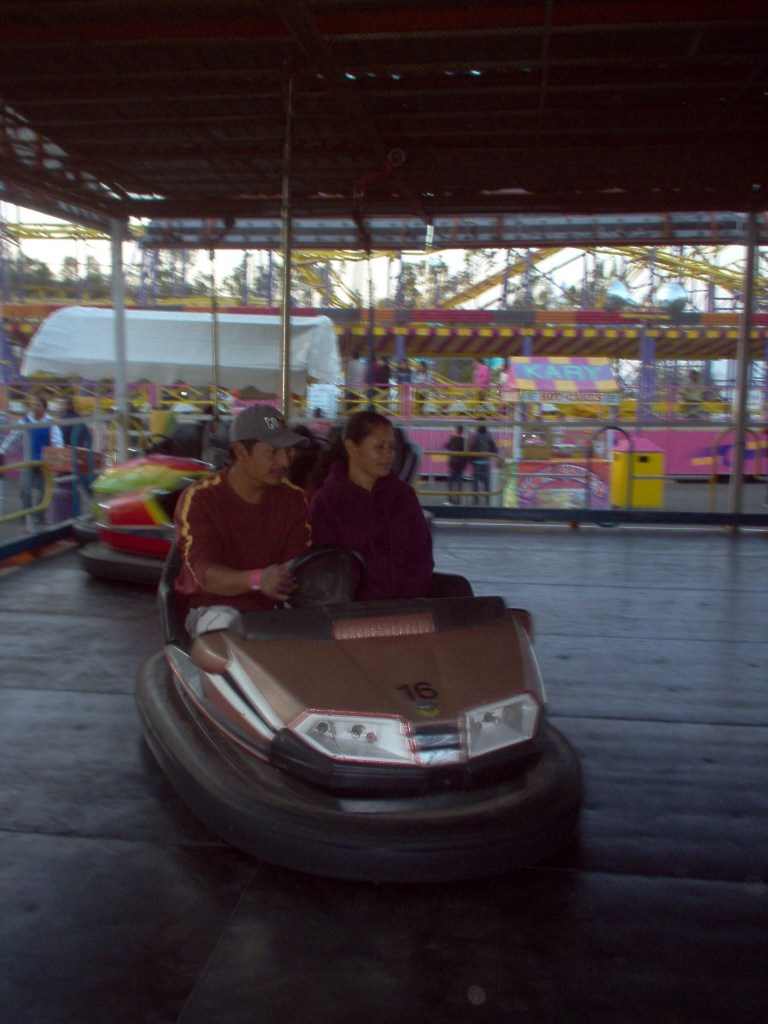
Bumper cars are always a favorite!
Last year, my sister-in-law T treated us to tickets one night. She and I had a blast reliving our youth and listening to Bon Jovi rock on! Must have been quite a sight for the kiddies, watching two 40-something old ladies, screaming bloody Mary as the roller coaster dropped, but we had a nauseatingly good time. We went on Friday but found that the circus had yet to set up and that there were only a handful of concession and artesenía stands.

La feria in Moroleon. View from above!
Because of the lack of selection, we ended up eating at a little taco cart which offered 5 tacos for 25 pesos. Unfortunately, I can say for a fact that my tacos were not bistek. If I were to hazard a guess, I would say they were made of ground turkey, but they say that there are vendors that sell tacos made from ground dog meat and it’s entirely possible that that is what I ate. My sister-in-law didn’t have the pseudo-bisteck but ordered chorizo and broke out in hives the next day. You would think we would have learned…
So, since we couldn’t miss the circus, we went again on Sunday evening. We paid 35 pesos for the entrance and hurried into the big top. We had just finished watching the hula hoop girl and the trained llamas when the electricity went out. So much for that show.
We then went to look at the artesenía shops. There were still quite a few open spaces, but there were some interesting things to see. Unfortunately, the prices were too high for us to buy much of anything. I noticed that many of the stalls had a little saint image with a lit candle, I expect to bless sales. When my sister-in-law purchased a purse at one booth, the worker/owner crossed himself and offered up a prayer. Seems the economic crisis is affecting everyone these days and when all else fails, turn to God.
After that, we went to the nearly empty food stands and were lured into one that offered 5 tacos for 35 pesos. Here we experienced the old adage “A fool and his money are soon parted.” My husband ordered the 5 chorizo tacos for 35 pesos but was served a plate full of tacos de bistek (beef tacos). He sent it back. The plate he was then given was so measly that he complained. The server said that single layer mini-taco and a sprinkling of meat was because it was a special price. My sister-in-law ordered 3 tacos de bisteck and 2 of chorizo. She received my husband’s returned order with a sprinkle of chorizo on 2 of the tacos. I had ordered a gringa made with beef instead of chorizo (apparently called a pirata), and it was huge but not very tasty. The biggest surprise of all was the bill–$305 pesos. WHAT?? Well, apparently my order cost $95 pesos, my son and T, each had a plate of $45 pesos, although my husband’s plate really did only cost $35 pesos. Then we had ordered a can of soda each–$20 pesos each. Well, as PT Barnum said, “A sucker is born every minute.” That will teach us to eat concession ever again.
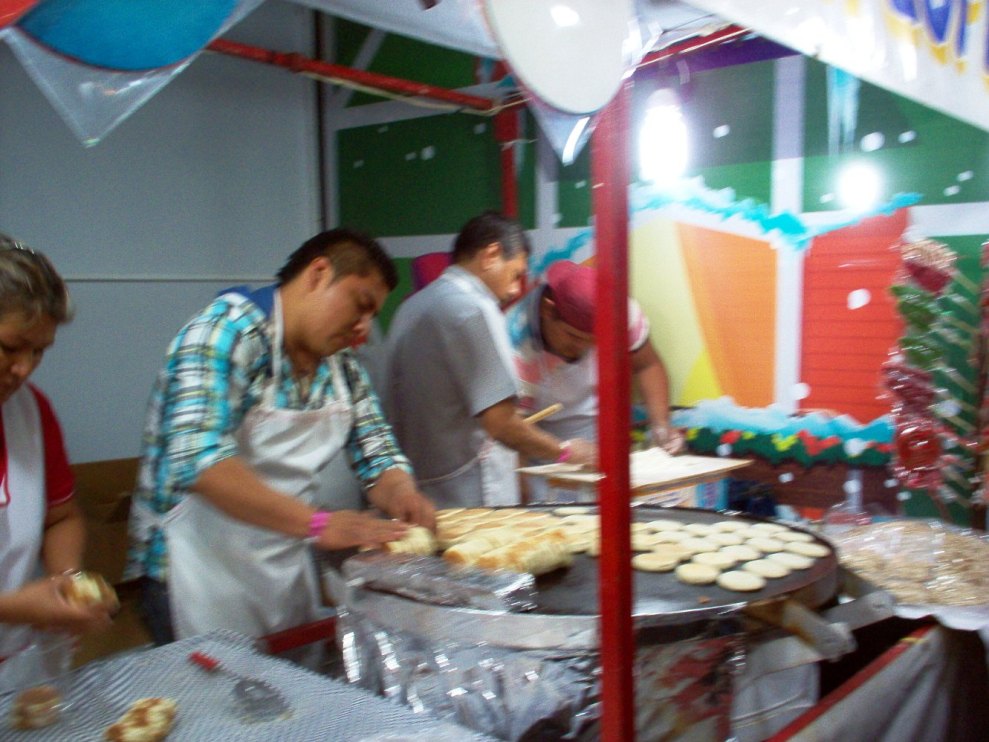
Gorditas de nata and freshly toasted pumpkin seeds!
We did find a stand that sold toasted pumpkin seeds and gorditas de nata (bread made from the skimmed cream of cow’s milk) and enjoyed those tasty delights. There was also a stand of pan de Acambaro (bread from Acambaro) which is tasty, but the pink dye used in the bread makes you pee pink for several days. It’s really quite alarming the first time it happens.
The lines for the rides were 100 people long, weaving under yon and over dale. Although we wanted to get the full value of our tickets, it wasn’t even tempting to get in the endless snake line.
We were determined to see the circus, so we lined up at 8:15 for the 9:00 show. Just before we were allowed to go in, some hoity-toity chick line jumped and pulled her charro husband and child with her. Then the suegra (mother-in-law) tried to squeeze her enormous bulk right in front of us as well. Suddenly, the quiet, geeky guy that had been standing in front of us the whole time becomes Defender of the Space and shouts them out of line. So we kept our place in line, but as we approached the doors, a mass of teenagers rushed the gate and pushed their way in front of us. Talk about mostrando su cultura (demonstrating their culture). I’m not sure what the big deal was since the big top was A BIG TOP and there were plenty of seats left open when the performance began, but, hey, what do I know.
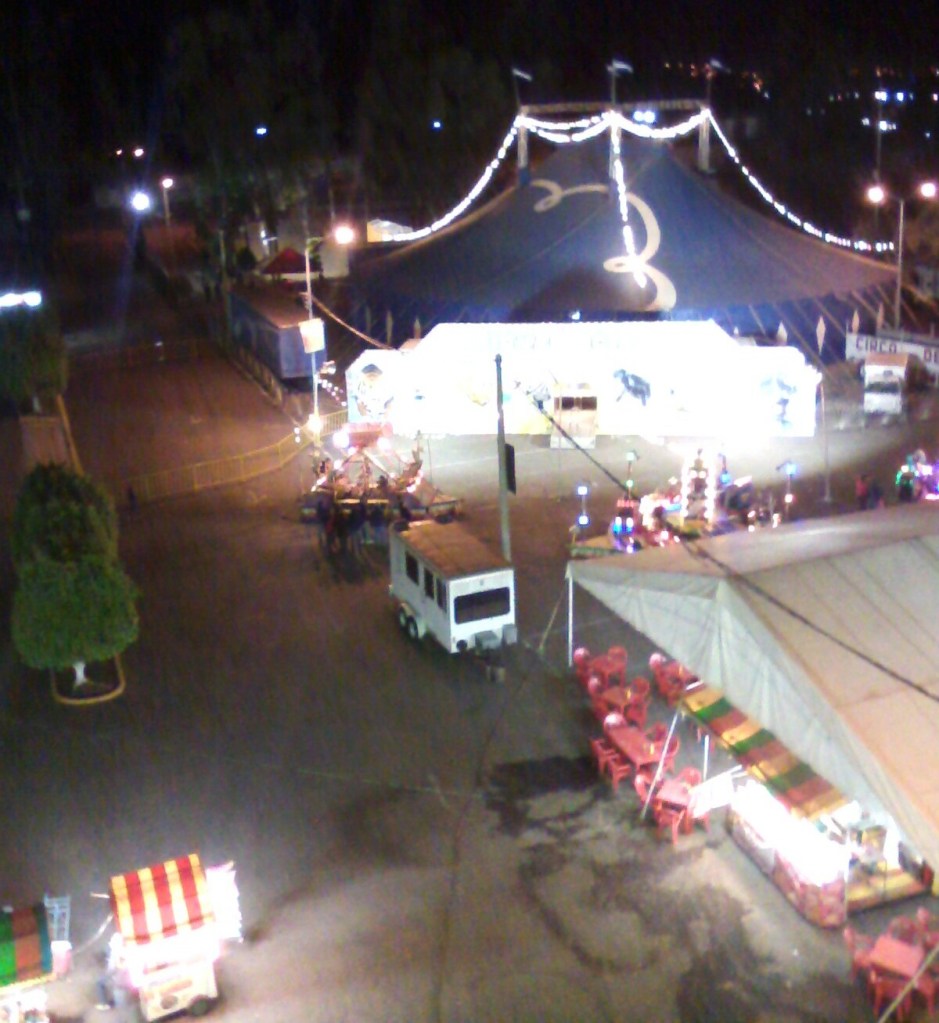
The big top in Moroleon.
The circus was great! I know that cruelty to animals can be an issue with such events, especially in a third-world country, but I always love to see the elephants with their big, baggy skin and wrinkles. The clowns were funny, the jugglers were amazing, but miniature Shetland pony ridden by a baboon named Peña-Nieto was the best! During the performance, I kept thinking what a shame it was that there weren’t more public events like those offered during this festival. In this world of computer, television and movie screens, the emotional interaction between audience and performer has been lost completely. There may be more quantity to our viewing pleasures, but there certainly is less depth.
Las Fiestas end on January 31 with a paseo (walk) with the statue El Señor de Esquipulitas through the downtown streets of Moroleón. Many former residents make the peregrino (pilgrimage) to participate in this event, some even descalzo (barefoot) to atone for the sins they committed during the festivities. Personally, I think it would be better to not commit the sin, thus not need to make atonement, but hey, what do I know?
So, on to the next great festival!
Interested in learning more about the history of Moroleon?
Check it out!
The History of Moroleon for Kids (Kindle)

***********************




 Surviving Mexico