
Category Archives: Natural Healing

Natural Healing — Amula De Monterrey

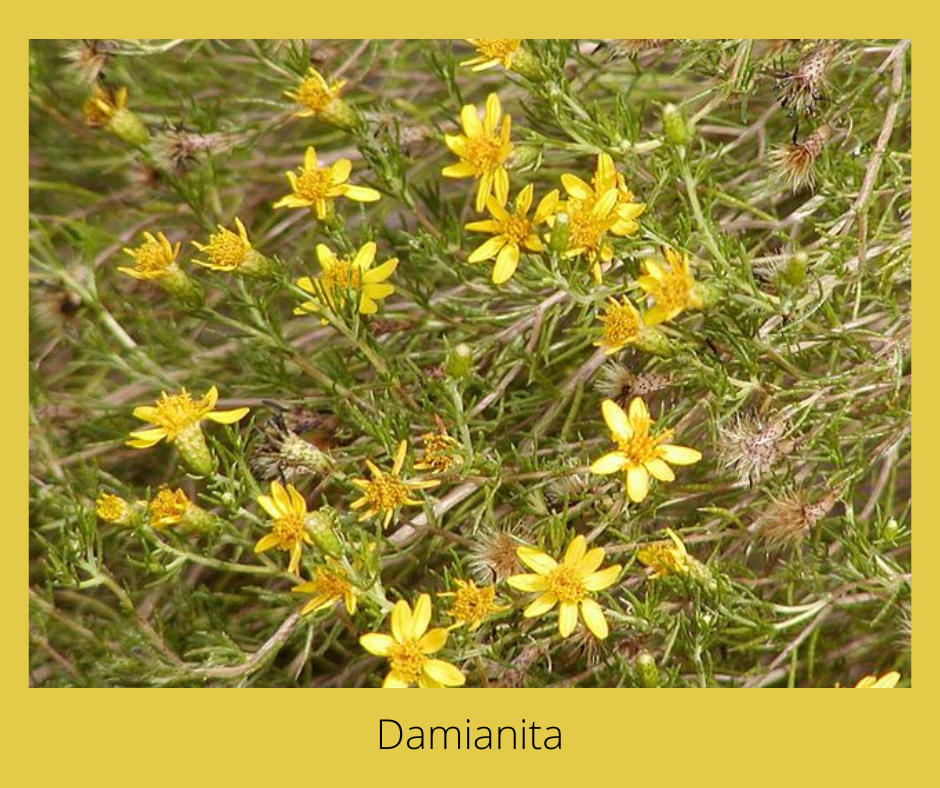
Photo Credit: Orbelilo

Amula (or Hámula) de Monterrey is the name locals use to refer to Brickellia cavanillesii, Bricklebush.  In some parts of Mexico, it is referred to as prodigiosa. However, prodigiosa is Artemisia absinthium L. in other areas. Other common names are just as problematic. Gobernadora de Puebla is easily confused with gobernadora (Larrea Tridentata). Hierba amargosa translates as “bitter herb” and can be used for several other bitter-flavored plants. Hierba del becerro (cattle herb) is a term for Stevia jorullensis as well as Brickellia cavanillesii. Hierba del perro (dog herb) could also refer to Cestrum fasciculatum. However, Atanasia amarga is classified as Coleosanthus squarrosus, which is considered a synonym of Brickellia cavanillesii, so that alternate name seems less troublesome than most. 

Whatever its local name, Brickellia cavanillesii is most often prescribed for diabetes and bilis (anger issues). It is applied topically for numbness or pain in the hands and feet. As a poultice, the stems and leaves are washed in warm water, then crushed and placed on the affected area. Be warned, it has a very strong odor.

In the states of Morelos, Guanajuato, and Mexico, Amula De Monterrey leaves are infused and drunk before breakfast without a sweetener. Another remedy “para el coraje” (for rage), adds ajenjo (Artemisia ludoviciana) to the infusion, which should be drunk three times a day. A third remedy for bilis calls for crushed leaves added to the alcohol of choice, left to steep overnight, and a shot of the alcohol before breakfast. Yet another infusion consists of steeping Amula De Monterrey leaves flavored with ground canela (Cinnamomum zeylanicum) and salt. 

A final remedy for bilis directs the herbalist to boil a canela (Cinnamomum zeylanicum) stick in a liter of water. Once the water is boiling, add a few branches of real (smilax moranensis), Amula De Monterrey, bark, leaves and tender fruit from the limón (citrus aurantifolium), fruit and leaves of naranjo (citris aurantium), flowering toronjil morado branches (Agastache mexicana), and a few manrubio leaves (marrubium vulgare). Blend the ingredients and bring the liquid to a boil a second time. In a second pan, caramelize some sugar and then add a splash of alcohol. Add the sugar and alcohol mix to the first pot. Drink one cup before breakfast for nine consecutive days. 

Unsurprisingly, studies have shown that Brickellia cavanillesii is an anxiolytic phytomedicinal agent, which supports its use to calm the emotional state implied by bilis. 

The leaves are steeped in boiling water for a few minutes for stomach issues and drunk before each meal. To stimulate the appetite, tea is made with a flowering branch, yerba buena (Mentha spicata), and malva (Malva sylvestris). 

An antidiabetic infusion is made by adding 10 grams of Amula de Monterrey and 6 guarumbo (Cecropia obtusifolia) leaves in a half liter of boiling water, steeped for no more than three minutes, and given three times a day before meals. Another remedy calls for an infusion of leaves and flowers taken in the morning and evening to lower blood sugar levels. Studies have shown Amula De Monterrey effectively controls blood glucose levels, is a source of α-glucosidases inhibitors, and exhibits antidiabetic activity supporting this traditional use.

***

Interested in natural remedies? Uncover herbal remedies from traditional Mexican sources for healing and wellness in the Exploring Traditional Herbal Remedies in Mexico series.

Leave a comment

Filed under Native fauna and flora, Natural Healing

Exploring Traditional Herbal Remedies in Mexico Volume 5: Botanical Treasures from Acuya to Zarzaparrilla

After nearly a year of research, writing, editing, and despairing, I’m delighted to announce that FINALLY Volume 5 in the series  Exploring Traditional Herbal Remedies in Mexico is available on Amazon. Isn’t the cover lovely?

I haven’t done any free book promotions for this series yet, so I thought I’d give it a whirl this book launch. For the next few days, you can get the ebook version for FREE. Whoop! Whoop!

Don’t think I’m ready to rest on my laurels (pun intended) just yet. I’m working on compiling a special hardcover edition that contains the plant studies from volumes 1-5. Look for that beauty coming soon. I don’t want to give a specific date as the rainy season and internet service may have something to say about my progress. 

Anyway, I hope you enjoy this most recent offering all about my herb passions. Here’s another link to go and grab your FREE copy while the offer is still good.

Leave a comment

Filed under Native fauna and flora, Natural Healing

Natural Healing — Siempreviva

My sedum investigation began with the positive identification of Colita de burro AKA Donkey’s Tail (Sedum morganianum) which I had growing in my garden. Also known as cola de borrego (sheep’s tail), it seems to be purely ornamental. However, in my research I did find several other species of sedum that were used medicinally here in Mexico.

Siempreviva (Sedum praealtum) is an effective spermicide, 20 percent more effective than Nonoxynol-9 when used as a vaginal postcoital douche. It is also known as shrubby stonecrop and green cockscomb in English and tetzmitl in Nahuatl. Francisco Hernández, Fray Bernardino de Sahagun, and Martín de la Cruz make mention of this plant’s medicinal use by the Aztecs in their writings. 

Its leaf sap is applied topically to treat burns, hemorrhoids, gum inflammation, and conjunctivitis. The leaves are chewed and swallowed for dysentery, scurvy, and typhoid. In the state of Morelos, the leaves are chewed for toothache relief, and a leaf warmed on the comal (griddle) is placed over an aching ear. Sedum praealtum has antibacterial and anti-inflammatory properties.

For excessive bleeding during menopause, a decoction of sedum is drunk before breakfast until the bleeding has stopped. One tablespoon of this decoction cooled overnight is taken before breakfast for frequent, burning urination. 

For tonsil inflammation, the leaves are ground and soaked in vinegar. The gargle is warmed and used two or three times a day. In addition, a leaf decoction drunk as a tea is prescribed. If there is a fever in addition to the inflammation, the decoction is made from the flowers. 

The term siempreviva (always living) refers to the plant’s hardiness. Not only is it heat and drought tolerant, but it is able to withstand freezing temperatures. Because of this robustness, one group of researchers has proposed its use as green roofing in Mexico City to mitigate air pollution. 

Sedum praealtum closely resembles Sedum dendroideum, which is also commonly called siempreviva in many areas. In the state of Mexico, the Mazahua people use the name medye, while in Puebla, the Popoloca prefer the term kanda chansa.

The primary visual difference between these two varieties of sedum is a red tint on the edges of the leaves on Sedum dendrioideum, which Sedum praealtum lacks. In many remedies, the two varieties are used interchangeably. 

Cloudy vision and redness in the eyes are treated by squeezing the leaves so that a drop of sap enters the eye. Using Sedum dendroideum has demononstrated healing process of corneal damage caused by pterygium, commonly known as eye web.

Burns are covered with a plaster made from the sap. Sedum dendroideum has antioxidant effects and aids in burn injury healing

For intestinal issues, 10 grams of the leaves are crushed and added to a liter of water and drunk for 15 days. This plant has shown to be a natural nontoxic therapeutic alternative for the treatment of gastric ulcers. It is also an effective treatment for gastrointestinal disorders as a tea infusion due to its gastroprotective properties.

Two split leaves dipped in manteca (lard) of sedum dendroideum is a headache remedy. The fresh sap from the leaves of the Sedum dendroideum are antinociceptive and anti-inflammatory. Leaves warmed and mashed to make a poutlice are applied to sore and inflamed muscles. Mashed leaves are placed directly on a wound to stop bleeding. 

Leaf extracts also have antidiabetic potential

Another variety of sedum, Sedum mexicanum, Mexican stonecrop, or uva de gato mexicana (Mexican cat grape) may possess therapeutic potential for liver fibrosis

Sedum oxypetalum known as jiote or Siempreviva is a traditional remedy for periodontal disease. Studies have shown it promotes the regeneration of mineralized tissues making it useful in teeth strengthening. As a mouthwash, the juice is warmed, swished over the gums, and held in the mouth for a few minutes before spitting out. Sedum oxypetalum also possesses antifungal activity

***

Interested in natural remedies? Uncover herbal remedies from traditional Mexican sources for healing and wellness in the Exploring Traditional Herbal Remedies in Mexico Series

Leave a comment

Filed under Native fauna and flora, Natural Healing