Category Archives: Natural Healing

Natural Healing — Mala Mujer

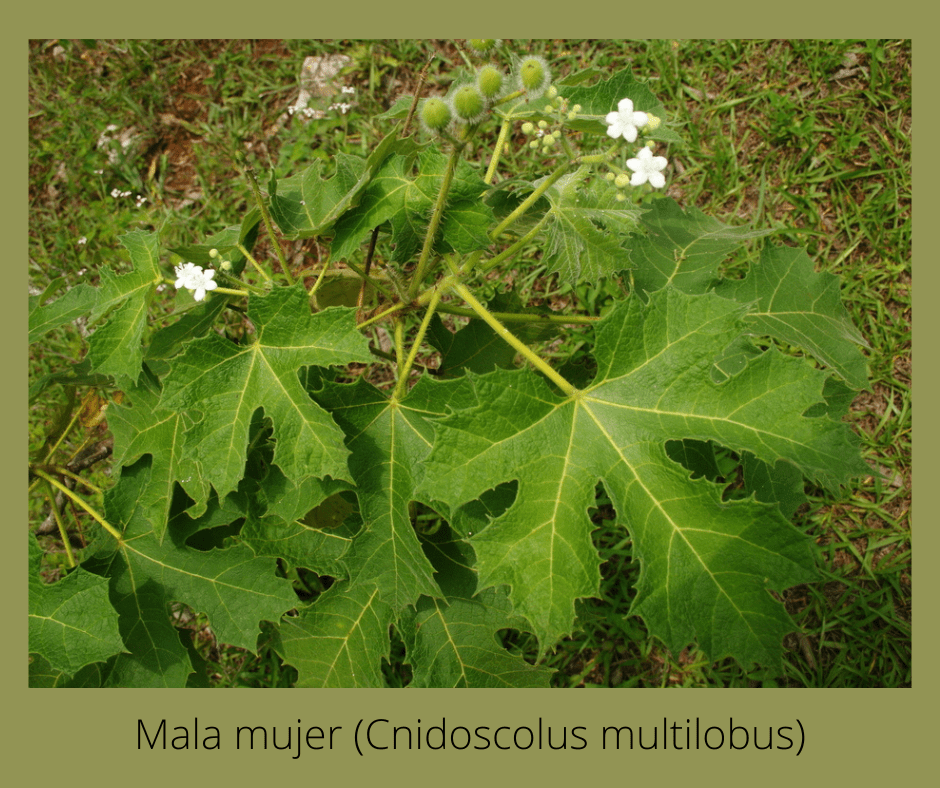
Mala Mujer (bad woman) is a term used to refer to both Cnidoscolus tehuacanensis and Cnidoscolus multilobus in different areas of Mexico. 

In traditional medicine, Cnidoscolus tehuacanensis is applied topically for scorpion stings, arthritis, hemorrhoids, and rheumatism. The leaves have anti-inflammatory and anti-bacterial properties

Cnidoscolus multilobus is also known as chaya de monte, chichicaste de caballo, pica-pica blanca, tetsonkilit or tetzonquilitl in Nahuatl. In Oaxaca, it is called chench tiek and in Veracruz, kakne. 

Cnidoscolus multilobus is classified as a “cold” plant. It is also employed in treatments for nose bleeds, kidney infections, hypertension, measles, and skin infections. Interestingly, mala mujer can be used in place of rennet as the coagulant to make cheese. 

It’s used as an anti-diabetic remedy. The flowers are eaten as a vegetable in San Luis Potosi. 

The sap is rubbed on cavities to reduce pain. The leaves and stems are rubbed on the skin for rheumatism pain. 

Mala mujer and ortiguilla (Urtica chamaedryoides), both prickly plants, are chopped and applied to sore joints with the belief that “al picar las espinas se cortan las dolencias” (the nettles will cut the pain in half). 

The condition tlapeaxcoconxtle, an ovarian inflammation resulting in yellow discharge, is treated with a cold infusion of the flowers three times a day until the infection subsides. Cnidoscolus multilobus is an antioxidant and has demonstrated an antiproliferative effect on cervical cancer cells. It has antimicrobial activity. The seeds and leaves are made into an infusion to improve milk flow for breastfeeding mothers. 
Mala mujer is also used in the treatment of susto (sudden fright), mal aire (evil winds causing illness), and brinco del arco (rainbow jumping). Brinco del arco was a condition I hadn’t heard of before, so a little more research was in order. This malady occurs when a rainbow appears above a person and “traps” them. A pregnant woman caught under the rainbow might have her womb filled with water, resulting in a false pregnancy (pseudocyesis), polyhydramnios (excess amniotic fluid), or excess water retention. Someone who is not pregnant and experiences brinco del arco also might be “filled” with water and could develop a urinary tract infection, edema, or excessive urination. The cure is an infusion made from ajo (Allium sativum) and mala mujer leaves (Cnidoscolus multilobus). One cup is drunk. The remainder is used as a wash.

***

Interested in natural remedies? Uncover herbal remedies from traditional Mexican sources for healing and wellness in the Exploring Traditional Herbal Remedies in Mexico series.

Leave a comment

Filed under Native fauna and flora, Natural Healing

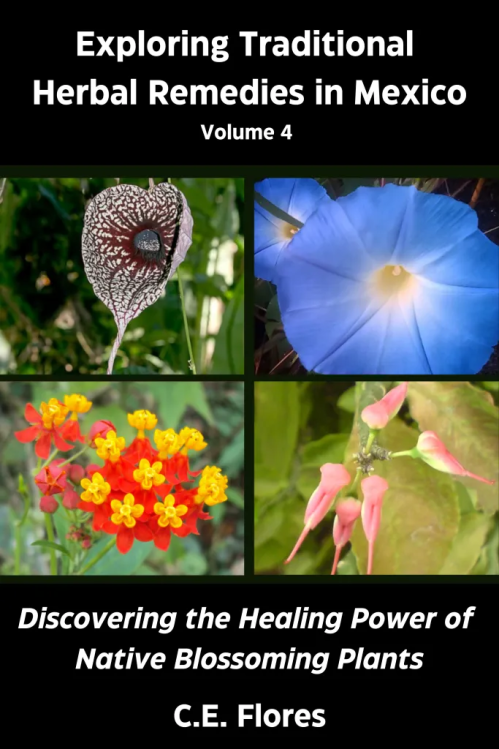
FREE Book for Today: Exploring Traditional Herbal Remedies in Mexico, Volume 4: Discovering the Healing Power of Native Blossoming Plants

Are you ready to unlock the secrets of nature? Exploring Traditional Herbal Remedies in Mexico, Volume 4: Discovering the Healing Power of Native Blossoming Plants invites you on a journey through the vibrant world of over 50 blossoming plants and their unique medicinal properties. This volume delves into both the breathtaking beauty and the powerful healing capabilities of these remarkable plants.

Inside, you’ll discover:

  • In-depth insights into traditional uses and modern applications of each plant, blending ancient wisdom with contemporary practices.
  • A diverse range of plants that showcases the richness of Mexico’s flora, from stunning blooms to those that may not catch the eye but pack a powerful punch in healing.
  • Practical knowledge for both herbal medicine professionals and curious individuals seeking to enhance their health and well-being naturally.

Don’t miss your chance to explore the incredible healing properties of Mexico’s native blossoming plants! Download your free copy of Volume 4 today and embark on a transformative journey towards better health and wellness.

Leave a comment

Filed under Native fauna and flora, Natural Healing

Natural Healing — Pega Ropa

Photo credit: Francisco Emilio Roldán Velasco

Mentzelia aspera is given the name pega ropa (sticks to clothes) and Mentzelia hispida, pegajilla (a little sticky), because they literally stick to any fabrics or fur that happen to brush against it, hitching a ride. In fact, bats have been known to become hopelessly entangled in the plant. This stick-to-it-ness led to its prescription for caída de matriz (displaced uterus) with the belief that something that sticky could keep that roving womb in place. 

Other names for both plants include pega-pega (it sticks, it sticks), pegoste (sticky), and pegajoso (clingy). Mentzelia hispida is known as tsayuntasy or tsots-k’ab in Maya and zazálic or zazale with a spelling variant sasele which mean “something sticky” in Nahuatl. Zazalic patli was a medicine made from the “sticky rods” given to women who had given birth either as an aid to expel the placenta or to help move the internal organs back into place. English names include blazing stars and stickleafs.

Not much research has been done on the medicinal value of the Mentzelia genus. There are approximately 95 varieties found worldwide. Twenty-five species of Mentzelia grow in Mexico. 

Photo credit: Francisco Emilio Roldán Velasco

Mentzelia aspera and Mentzelia hispida are often used interchangeably in traditional medicine. Pegajilla ashes are applied to the skin for pimples. Pega ropa pulverized root induces vomiting. An infusion made from the entire plant, except the roots, is given to relieve rheumatism and anemia and drunk as agua de uso (in place of water). 

For the condition, hervor de sangre, which, as close as I can figure, is an eruption of boils resulting from a skin infection or cancer, the plant is boiled, and the water is used for bathing the afflicted area. Mentzelia aspera has enhanced antiproliferative activity, and Mentzelia chilensis (native to Chile) is anti-inflammatory, supporting this traditional use. In the state of Guanajuato, pega ropa is given as an infusion to improve fertility, again with the idea that the baby will “stick” in the womb until full term. In Puebla, the same infusion is given to loosen the placenta during a difficult birth. Mentzelia infusions are prescribed for syphilis in Mexico, while in Oaxaca it is a gonorrhea remedy. It’s classified as a “cold” plant. Martín de la Cruz and Bernardino de Sahagún recorded that the Aztecs used this plant to treat urinary tract disease as well.

***

Interested in natural remedies? Uncover herbal remedies from traditional Mexican sources for healing and wellness in the Exploring Traditional Herbal Remedies in Mexico series.

Leave a comment

Filed under Native fauna and flora, Natural Healing