In-depth insights into traditional uses and modern applications of each plant, blending ancient wisdom with contemporary practices.
A diverse range of plants that showcases the richness of Mexico’s flora, from stunning blooms to those that may not catch the eye but pack a powerful punch in healing.
Practical knowledge for both herbal medicine professionals and curious individuals seeking to enhance their health and well-being naturally.
Don’t miss your chance to explore the incredible healing properties of Mexico’s native blossoming plants! Download your free copy of Volume 4 today and embark on a transformative journey towards better health and wellness.
Mentzelia aspera is given the name pega ropa (sticks to clothes) and Mentzelia hispida, pegajilla (a little sticky), because they literally stick to any fabrics or fur that happen to brush against it, hitching a ride. In fact, bats have been known to become hopelessly entangled in the plant. This stick-to-it-ness led to its prescription for caída de matriz (displaced uterus) with the belief that something that sticky could keep that roving womb in place.
Other names for both plants include pega-pega (it sticks, it sticks), pegoste (sticky), and pegajoso (clingy). Mentzelia hispida is known as tsayuntasy or tsots-k’ab in Maya and zazálic or zazale with a spelling variant sasele which mean “something sticky” in Nahuatl. Zazalic patli was a medicine made from the “sticky rods” given to women who had given birth either as an aid to expel the placenta or to help move the internal organs back into place. English names include blazing stars and stickleafs.
Not much research has been done on the medicinal value of the Mentzelia genus. There are approximately 95 varieties found worldwide. Twenty-five species of Mentzelia grow in Mexico.
Mentzelia aspera and Mentzelia hispida are often used interchangeably in traditional medicine. Pegajilla ashes are applied to the skin for pimples. Pega ropa pulverized root induces vomiting. An infusion made from the entire plant, except the roots, is given to relieve rheumatism and anemia and drunk as agua de uso (in place of water).
For the condition, hervor de sangre, which, as close as I can figure, is an eruption of boils resulting from a skin infection or cancer, the plant is boiled, and the water is used for bathing the afflicted area. Mentzelia aspera has enhanced antiproliferative activity, and Mentzelia chilensis (native to Chile) is anti-inflammatory, supporting this traditional use. In the state of Guanajuato, pega ropa is given as an infusion to improve fertility, again with the idea that the baby will “stick” in the womb until full term. In Puebla, the same infusion is given to loosen the placenta during a difficult birth. Mentzelia infusions are prescribed for syphilis in Mexico, while in Oaxaca it is a gonorrhea remedy. It’s classified as a “cold” plant. Martín de la Cruz and Bernardino de Sahagún recorded that the Aztecs used this plant to treat urinary tract disease as well.
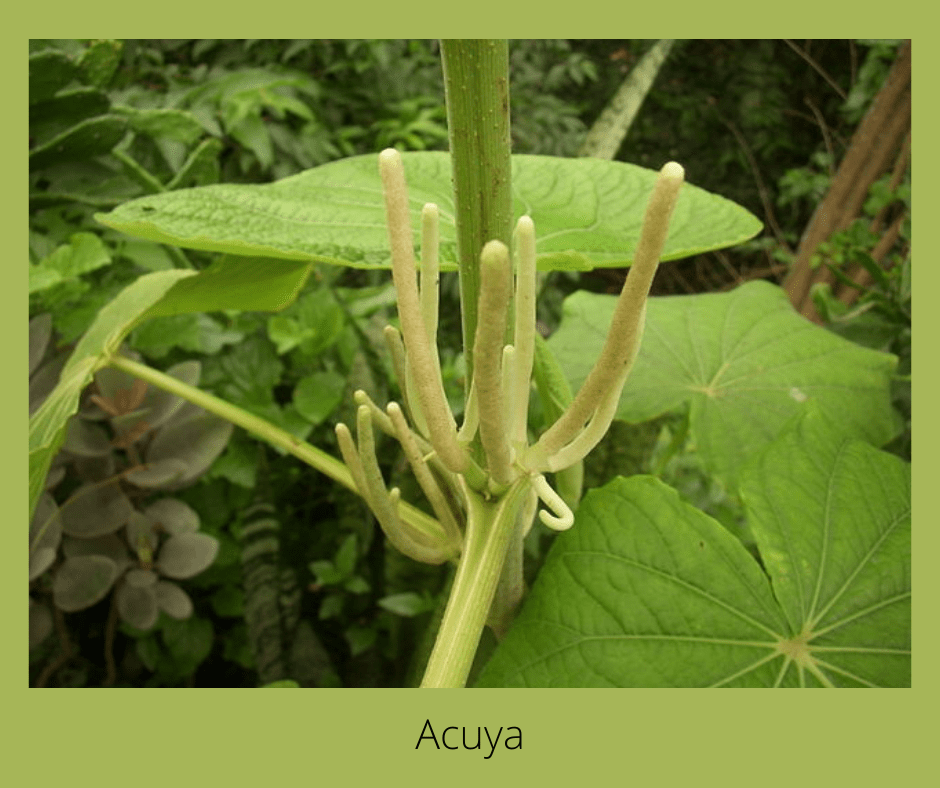
Piper umbellatum is locally known as acuya, not to be confused with acuyo which is one of the names given to Piper auritum.
The leaves are applied topically to wounds. An infusion of leaves and roots is prescribed as a purgative. Dried leaves are burned in ceremonies and added to steam baths to ward off evil, poisoning, fever, and migraines. Acuya is antibacterial, anti-inflammatory, analgesic, antifungal, antioxidant, cytotoxic, antiparasitic, and antimalarial. It has gastroprotective properties and is beneficial in treating inflammatory bowel disease and peptic ulcers.




 Surviving Mexico

