Category Archives: Electricity issues

Window Installation

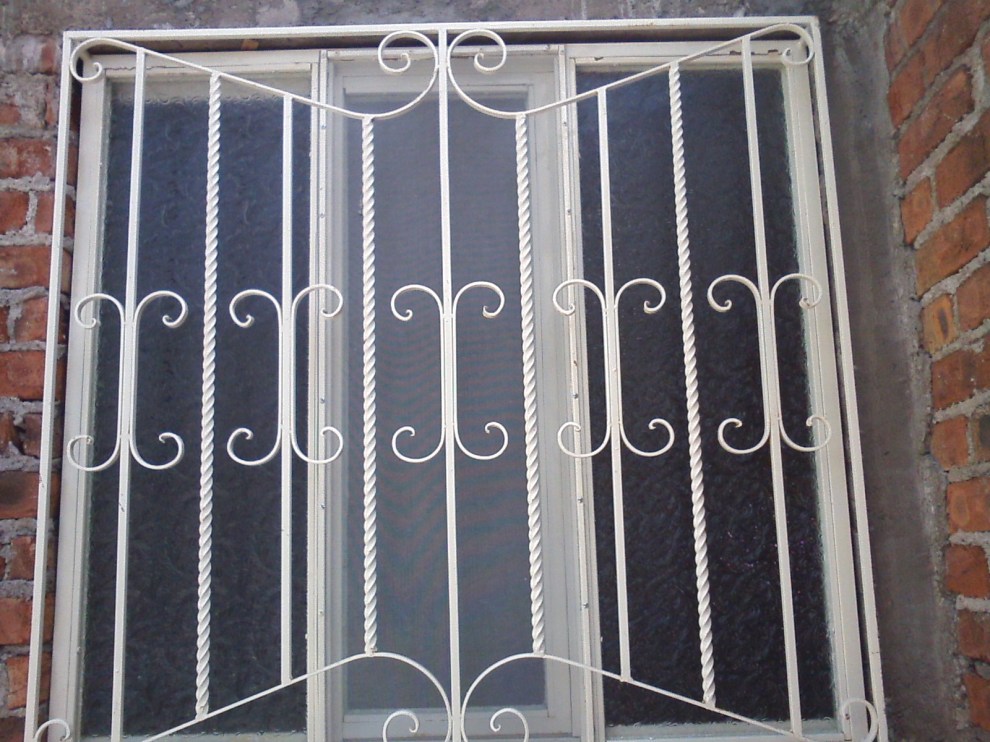
Little by little our house is getting done.  We finally had enough to have the windows installed.  So that became the summer project.  Houses in Mexico typically have windows that are made of metal and involve bars on the outside to keep intruders and thieves out.  Knowing our neighbors, bars are a good idea.

cam04748-1

As this was more than my husband could manage, we went to see G, the secretary of the now inactive Mesa Directiva (Board of directors) of La Yacata who just so happens to be a herrero (blacksmith).  His prices were about 5,000 pesos less than the other two estimates we got.  We knew him and his work personally as well, so more inspired confidence.  We made a downpayment and he started work on the 4 windows and 2 doors needed.  One door leads to the back porch.  The other door leads to  Joey’s roof, which one day will be another porch. Or so my husband says.


cam04749-1

The door over Joey’s room


We arranged for them to be finished by my next quincena (2 week-paycheck) and installation to occur the following quincena so that there would be enough money for the installation and any last minute issues.  Things are never as easy as they appear at first here in Mexico.

My husband rented a generator and welding machine for the day. Between G and my husband, everything was installed that same day.  Of course, the installation wouldn’t be complete until all the gaps in the frames were filled in, but that was a project for another day.

cam04945

tinted front window

Glass installation was not included in the work G did.  So we called a vidriero (glass installer) and had tinted glass put in the front windows and flowered patterned frosted glass put in the doors and other 2 windows.
cam04943

bathroom window

I wasn’t quite satisfied with the amount of light that reached the intended second-floor bathroom.  Since we still have no idea how long it will be until we can either connect up to the landline or purchase a solar powered system, natural light is absolutely necessary.

I bugged and bugged until my husband suggested glass bricks for the bathroom.  At 55 pesos each, we could have a new window for under $300 pesos.  Fabulous!  

cam05141

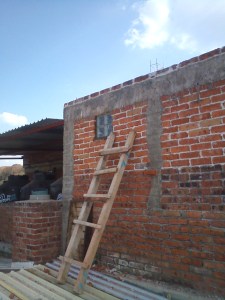
Making the hole for the glass brick window
cam05146

Installing them required a bit of hammering and cementing, but it was done in less than a day.  

cam05145

Let there be light!

Next project–patching the walls!

*****************************


3 Comments

Filed under Construction, Electricity issues

Surviving a Solar storm in La Yacata

A solar flare is evident when there is a flash of brightness near the Sun’s surface. This flare causes a number of types energy emissions that often send out clouds of electrons, ions, and atoms into space, reaching Earth up to 2 days after the initial event. These flares can affect Earth’s ionosphere and interfere with radio communications.

Nanahuatzin

Nanahuatzin The Fifth Aztec Sun god

A solar flare can escalate in intensity and become a solar storm. Solar storms have been on record since 2225 B.C.E. The Aztecs are thought to have personified solar storms with their sun god Nanahuatzin, who being full of sores, periodically flaked skin away. Incidentally, Nanahuatzin was considered The Fifth Sun, the god whose demise would bring on the Aztec apocalypse with his death.

Scientists have been able to measure the effects of solar storms on the Earth since 1859. The potential for devastation can not be over emphasized. Solar flares can emit energy equivalent to a billion hydrogen bombs and are difficult to predict with any accuracy.

While most scientists agree that a solar storm would not destroy Earth, it definitely would destroy the world as we know it, technologically wise, at least for a time.  In 1859, a solar storm hit the Earth’s magnetosphere and caused one of the largest geomagnetic storms on record. In addition to intense auroras, bright enough to read a newspaper by, telegraphs operators were shocked and telegraph paper set on fire.  A similarly powerful storm was detected in 2012 and missed Earth by a period of nine days.

Because the intensity of a solar storm could melt copper wires that are part of the power distribution system, a large storm would cause massive power outages. This would affect the internet, any grid-tied device, many urban water and sewer systems, gas pumps, medical equipment and so on.  It might take years to repair and reestablish the electric grid network.

In the case of a solar storm, La Yacata is the perfect place to be. We have no electricity, so grid-down would not adversely affect our daily life. (See Cooking without electricity) Of course, without the internet, I wouldn’t be able to write these blog posts you enjoy so much, nor would you be able to read them, so there is that. But overall, it’s a completely survivable event, at least in our case.

****************************

2 Comments

Filed under Carnival posts, Electricity issues, Safety and Security, Water issues

Surviving a Nuclear disaster in La Yacata

reactors

Mexico has 2 nuclear reactors and both are contained within the complex called Laguna Verde Nuclear Power Plant (LVNPP) in Alto Lucero, Veracruz. The complex is owned and regulated by Comisión Federal de Electricidad (CFE), the government-owned electric company. The amount of electricity these reactors provide the Mexican people seems to vary, but most sources agree it is less than 4%. Mexico has said that it plans on adding two more reactors to the Laguna Verde complex, but those have yet to materialize.

According to Wiki, LVNPP has been presented with numerous awards–from breaking the world record for reaching 250 days of continuous operation during the first generation cycle in 1991 to the Nuclear Excellence Recognition Manager’s Award by WANO in 2010. It was even given the Socially Responsible Enterprise award by the Mexican Centre for Philanthropy in 2009. Upon further investigation, I found some disturbing information.

In 1999, the World Association of Nuclear Operators (WANO) reported that the Laguna Verde complex has had a high number of shutdowns which have weakened the operating systems, personnel with inadequate training, lack of proper management and organization and obsolete equipment, all of which pose potential safety hazards. WANO completed a second evaluation in 2009, however, those results were never made public. Greenpeace somehow got a hold of some of the paperwork and surprise, surprise–serious safety concerns.

In the event of a major nuclear accident, 80 percent of Mexico would be affected. According to geologists, Laguna Verde is an accident waiting to happen. In addition to the substandard operating procedures and faulty equipment, the very location of Laguna Verde is a risk.

The Laguna Verde complex is situated on the Zacamboxo fault line along the Mexican Volcanic Belt with an active volcano five miles away. This location is prone to seismic activity, not limited to earthquakes, volcanic eruptions, and tsunamis.

On April 6, 2011, an earthquake with a magnitude of 6.5 did hit the area. Yet CFE denied any damage was done to the power plant.

wind current

Veracruz is also subject to frequent hurricanes due to its location. The wind current at Laguna Verde blows in from the Gulf of Mexico over central Mexico–right over Mexico City with a population of 20 million.

On September 10, 2010, Hurricane Karl forced the suspension of operations at the Laguna Verde facility, but CFE reported no damage.

A former employee of the Laguna Verde facility reported several serious incidents while he was employed at the complex. On November 25, 1989, and Abril 27, 1990, radioactive vapor escaped from the main line. CFE denied it. In December 1989, 130 thousand liters of radioactive water was released into the lake. CFE said no such thing occurred. In 2005, there was a fire on the roof of the building that houses the reactors. CFE doesn’t know anything about that one either.  In 2006 and 2013, the power plant was in a state of emergency shut-down, but no information was ever released to the public.

How is it that the facility is given award after award for quality control, non-contamination, and preservation of natural resources?

cartoon reactor

There are no publicly accessible radiation monitoring networks in Mexico which would give some warning about high radiation level. Nor is there any policy in Mexico for the disposal of radioactive waste. CFE can say what it pleases, the Laguna Verde Nuclear Power Plant is a health hazard.

The best thing that La Yacata has going for it in the event of a nuclear disaster is that it is far away from the Laguna Verde facility.

That doesn’t mean no radioactive exposure could ever occur. In 1984, the lack of disposal regulations and detection strategies in Mexico permitted radioactive material from scrap metal to expose at least 4,000 individuals over the period of a month and throughout 4 states to harmful levels of radiation.

In 2013, 2015, and 2016, radioactive materials were stolen from transport vehicles. Thieves, drivers, bystanders, police officers, cleanup crews were exposed to high doses of harmful radiation. Those were just 3 that were recovered–how many more incidents have their been that have been covered up?

Well, we will just have to hope for the best on this one then!

****************************

6 Comments

Filed under Carnival posts, Electricity issues, Health, Safety and Security