
Cuaresma Pool Project

After going back and forth on how we wanted to develop our new lot, we decided that we needed a pool. Thus the digging began. I wanted it to go from wall to wall, but that’s not how it was dug. The total area is about 19 feet by 9 feet, and it’s about 3 1/2 feet deep. 

 The digging took some time, but on Ash Wednesday, we were finally ready to pour the floor. The goal was to get it finished for Semana Santa. 

Since only my husband and son would be working on the project, not a whole crew of coladores (roof builders), we rented the cement mixer to save some time. Well, turns out not all that much time and effort was saved. The mixer was a bit wonky and stopped repeatedly. So a half-day job turned into a full-day effort. And it was HOT, making both workers mighty cranky.

The second workday was brief. My husband decided he had to get his truck paperwork and license plates straightened out that day, so in lieu of actual work, they moved the bricks from the brick pile to the pool floor so that bricklaying could commence bright and early the next day.

My husband is a super bricklayer when he gets started, so the walls to the pool were done in a matter of days. My son prepared the cement mix. My husband did the bricklaying, and tada! 

The enjarando (patching the bricks with cement) is my husband’s least favorite job, and of course, that took the better part of a week. Next, we went on a shopping excursion for some tiles. We only went to 4 different tile shops (which was surprisingly few) until we found something we liked. My son picked out this pebble tile, and we bought some. We had to drive to the warehouse some distance from the store and pick it up ourselves, and the boxes of tile were not exact matches to each other, but they were close enough that it was fine.

Once we got home my husband admitted that he hadn’t taken the floor into consideration when estimating how many tiles the pool would need. That was annoying. So we decided to not do anything to the floor. My husband argued for painting it blue–but since the tile was mostly gray, I didn’t see why we should, so we didn’t.

We also needed a way to get in and out of the pool. So my husband built stairs. I tried to show him on different videos that pool stairs tended to be rounded, but he didn’t pay any attention. 

Making a pool wasn’t enough. We had to make sure that as many insects as possible stayed OUT of the water. So my husband made a screened-in wall that extended from one side of the lot to the other, with a screen door, complete with doggy entrance. Although I wanted to make it permanent and use metal, it was substantially less expensive to use wood. I’m not sure that we won’t have to replace it in the future even if the wood got a coat of oil. 

Then we had to do something about the roof. I wanted to put up laminas transparentes (opaque corrugated plastic roofing), but again, it was out of the budget. I found a UV shade cloth on Amazon and ordered that instead. Again, I’m not sure that we won’t have to replace it in the future, but it’s perfect for now. I can spend an hour or two outside and not get burned to a red tomato hue.

Next, we needed a walkway area. My husband wanted to put down this type of tiny gravel, so we did, but it kicked up a lot of dust. So my son put down a brick patio. It’s not exactly flat, with little hills and valleys, but it will do for now. 

Along the side, my husband planted some of my plants. I hope to be able to get some more macetas (flower pots) eventually and fill the area, but it’s good for now. 

Then we needed to fill the pool. It actually took two full delivery trucks of 10,000 liters each, but there is no leakage, so that water will be good for quite some time. This was the Thursday before Semana Santa, so we beat our goal of “completing” it before the end of cuarema (lent).  

My son and I were in the water splashing around before the water truck even pulled out of La Yacata. Whoop! I love the water. Growing up in the Susquehanna River valley, just a stone’s throw from my grandpa’s river lot, meant I spent a lot of my childhood in the water. We also had a little 12-foot round pool that my brother and I spent our summers in. So it is nice to finally have a way to cool down.

The pool isn’t finished, although we are using it every day. I wanted my husband to enjarar (patch with cement) the walls in the pool “room.” He wasn’t interested in doing that. I also wanted him to tile the edges of the pool. That didn’t appeal to him either. Now that’s he gotten in the pool, he said that the steps should have been rounded, and we’ll need to get a railing of some sort for those. Yep. 

And the pump set up. My husband said he was going to rig it so it would be able to be plugged into the house, thus using our solar setup, but he hasn’t gotten around to that. So after a freak rainstorm the other day, it was no surprise to me that the water turned green. He seemed baffled, though. Shock treatment and running the pump with the generator helped some, but it really needs a more consistent water circulation plan.

So this project was a lot of give and take (mostly me giving advice and my husband not taking it, but whatever). We have something to enjoy in May, the hottest month of the year, and a place I can drown my sorrows daily now that I’m unemployed.

2 Comments

Filed under Construction

My Inner Herb Song

So I’ve had a rough couple of weeks, and I expect it will be a rough couple more. Things started out rosy in March, and then I had a birthday—just my 49th, not a milestone or anything, and while I’m ok with my age, it reminded me of all those who didn’t make it to 49 with me. 

But I shook it off and kept moving forward in busyness–until I lost my main source of income teaching online. And I was sure something would turn up, but as the days turned to weeks, and nothing did, well, you can imagine how that weighed on me. (More about that saga in another post). 

Midway through April now, and I’m dealing with swollen and painful joints keeping me housebound, just when I thought to start planting my garden. And looming ahead is May when my son turns 20 (where did the time go?), and my mom will have been gone a year. 

In between, I’ve been working steadily on some plant studies. Yesterday I finished the thirtieth one, which means the first draft of a new herb book will be out soon. 

Chatting with one of my besties, who is also having a rough time of it (aren’t we all?), I mentioned how much I enjoy my herb research. I admitted I even have a little herb song that plays in my head while I look up Nahuatl terms and try to decipher yet another scientific paper on plant properties. 

It goes something like Rihanna’s “Work,” but instead, I sing, “Herbs, herbs, herbs, herbs. I really like them herbs, herbs, herbs, herbs…Digging in the dirt, dirt, dirt, dirt….” and so on. Anyway, it’s a happy little ditty with a lot of repetition and mumbling. 

You may be wondering how I pick the next plant study when there are so many to choose from. After all, Mexico is one of the ten most biodiverse countries in the world. 

Sometimes it’s random. I might see something in an article or in my Facebook feed about some plant or other, and I jump in with both feet researching. But mostly, it’s more of a personal connection that leads me down the garden path of investigation.

For example, last week, my sister-in-law was over, and I, of course, had to show her my plants. She pointed to one particular viney weedy thing with white flowers that sprung up from nowhere and said that that one was for coughs. WHAT! Now I have to look into la artemisia (the plant in question) and see what is to be seen. Very exciting!

Or take another instance. I expect this year to be rather difficult all around with rising food prices and now my unemployment. So I thought long and hard about what would be the best use of the limited growing space I had. While researching native plants, I came across huautli, outlawed by the Spanish conquerors. Now known by its European moniker, amaranto is hailed as a superfood. Well then, I could plant huautli and girasoles (also believed to be native to Mexico) along with maíz, frijoles, and calabazas. And it’s exciting!

Or maybe I’ve picked up another tea concoction for my son to try who still struggles with breathing two years after Covid, and it doesn’t work as well as the last tea. After looking at the ingredients and seeing that gordolobo (Verbascum thapsus) is in one but not in the other–and voila. Gordolobo is a plant that helps his breathing and I’m off to the indigenous herbalist in town to get some and at my computer doing some more research. 

Each plant is like a little mystery waiting to be solved. I try to answer what it is, how is it best grown, how it is used (fresh or dry), and ultimately what is its value. It’s fitting as I putter in my garden, sitting, of course, to spare my knees, with my hair faded to grey and the freshness of youth gone, I wonder: Who is she? What is her value? How is she best grown? And then my little inner herb song kicks in…and it’s ok.

***

Discover how native Mexican plants can enrich your garden!

Leave a comment

Filed under Alternative Farming, Health, Mexican Food and Drink, Native fauna and flora, Natural Healing

Natural Healing — Tomillo

Photo credit: Syrio Thymus vulgaris

The other day at the plant place, I came across a lovely thyme plant that I just had to have for my garden. As part of my introduction process, I had to do an intensive research session on medicinal properties. As my devoted reader, you too get to enjoy my obsession with plants in today’s post.

Tomillo (Thymus vulgaris) is native to Europe and therefore a plant brought to Mexico by the Spanish after the conquest. In Mexico, this is a culinary and medicinal herb. It’s used to flavor beans, calm a cough, and as a digestive aid.

It has antifungal, antibacterial, antimicrobial, antioxidant, and anticancer properties. It has been shown to have beneficial immunomodulatory and potent smooth muscle relaxant effects, making it a good choice for treating respiratory ailments. It is also effective against several RNA viruses, including coronaviruses. Its antispastic effects on the intestine and antibacterial and antimicrobial properties also support its use as a digestive aid. 

It can also be used as a bioinsecticide. Studies have shown that it is toxic to larvae of insects that carry the dengue virus. It is an effective food preservative as it inhibits microbial growth.

Tomillo and Ajo Infusion for Hacking Cough

  • 1 tablespoon of tomillo leaves (Thymus vulgaris)
  • 1 ajo clove (Allium sativum)

Pour one cup of boiling water over the tomillo leaves and ajo. Allow it to steep for 15 minutes before straining. Add miel (honey) and limón (Citrus aurantifolia Swingle) to taste.

Tomillo Cough Expectorant

  • 2 parts gordolobo (Verbascum thapsiforme sdahere)
  • 1 part bugambilia morada (Bougainvillea glabra)
  • 1 part manzanilla (Matricaria chamomilla)
  • 1 part jamaica (Hibiscus sabdariffa)
  • 1 part tomillo (Thymus vulgaris)
  • Pinch of ground canela (Cinnamomum zeylanicum)

Pour a cup of boiling water over 2 spoonfuls of the mixture. Allow it to steep for 10 minutes. Strain and add a pinch of canela. Drink as needed to reduce excess phlegm.

***

Want to learn a new way to look at plants?

Discover common traditional medicine practiced in Mexico today

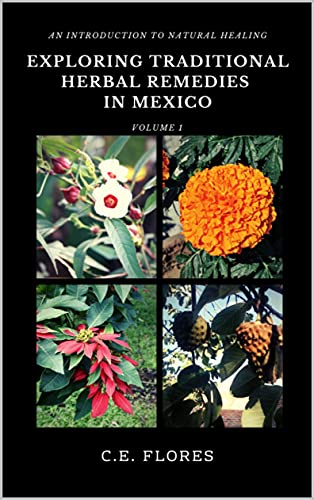
with the Exploring Traditional Herbal Remedies in Mexico series.
Leave a comment

Filed under Health, Native fauna and flora, Natural Healing