Herbal Academy’s Summer School Workshops

It’s been a while since I’ve done a plug for Herbal Academy, but once you see what they have to offer this month, you’ll understand why I’m bringing it to your attention. 

Herbal Academy has THREE new and exciting summer workshops that will inspire you to keep your plant studies going strong all summer long. These workshops are short, sweet, and most importantly—fun! Each workshop comes with an optional companion product to enhance your herbal exploration.

Imagine for a moment:

  • Serving botanical mixed drinks at a summer cookout and soaking up the compliments while your friends and family marvel at how your herbal creations double as the star ingredients in your cocktail (or mocktail!) cabinet. 
  • Pressing natural herbs and flowers, walk into your beautiful plant press and then using the delicate pressed plants in your materia medica and summer craft projects.
  • Sipping on a refreshing herbal iced tea that you formulated yourself—tailored specifically to your tastes and featuring herbs that support your physical, emotional, or spiritual state.

Honestly, these sound like heavenly activities, but you know I’m a little obsessed with herbs anyway.

The Tea Blending 101 Workshop begins June 7. In this 3-part online workshop, you’ll learn everything you need to know to start blending and brewing custom herbal tea blends at home today! 

The Flower Pressing for Herbalists Workshop starts on June 21. In this creative online workshop, you will learn how to press flowers, leaves, and other plant parts to preserve their color for years to come. 

There are 4 in-depth lessons, a handful of printable charts and graphics, detailed plant-pressing instructions and troubleshooting tips, 4 inspiring videos, and 5 hands-on craft projects, showing you the skills you need to weave botanicals into every aspect of your home—from your apothecary to your kitchen to your art collection. 

The Botanical Mixed Drinks Workshop is available on July 5. You will learn everything you need to know to start making flavorful herbal drinks at home, explore the anatomy of a well-made mixed drink, discover easy ways to transform a cocktail into a mocktail and learn how to create a well-stocked bar with basic supplies and herb-infused essentials like Honeysuckle Liqueur, Wild Vermouth, Hibiscus Syrup, and Orange Bitters.

Each course is $45, but you can get all three and save $20 by purchasing the bundle! Act quickly, though. The bundle deal is only available from May 21 until May 31. 

Whatever you choose, celebrate summer right with herbs! I know I will be!

Leave a comment

Filed under Natural Healing

Natural Healing — El Camote

Photo credit: Earth100

El camote (Ipomoea batatas), the sweet potato, is often confused with the yam (Dioscorea spp.). Both plants create edible tubers. However, sweet potatoes are related to the morning glory and yams to the lily. The tubers can be white, yellow, purple, pink, brown, or orange and have been used by indigenous groups for paint coloring. 

In Mexico, this tuberous delicacy is called el camote from the Nahuatl word camotli. Many experts believe it was first domesticated in Peru around 2800 B.C. and had become established in most of Mexico as well as Central and South America before the Spanish arrived. 

Juan de Grijalva’s interactions with the Maya in the 1518 expedition describe los camotes as tasting like roasted chestnuts. The bishop to Yucatan, Diego de Landa, recorded in 1572 that the Maya used los camotes to bulk up pozole and atole when the corn crop was low. Los camotes were served to Cortez in 1519 during a banquet with Moctezuma. 

Los camotes continue to be a common fall edition to the Mexican diet. They can thrive in poor soil and their vines reduce the growth of weeds, so they are often planted as companion crops. Los camotes de Santa Clara, originally produced by the nuns of the Convento de Santa Clara in the state of Puebla, are considered sweets of the highest quality.

The camote contains complex carbohydrates, fiber, iron, calcium, and Vitamins A, C, and B6. The orange variety has substantial antioxidant beta-carotene. In traditional medicine, the camote is prescribed for fevers and as a heart tonic. The leaves are applied topically to treat skin infections and wounds. 

Ipomoea batatas is useful in the treatment of hyperglycemia. The leaves demonstrate anti-cancer, hypolipidemic, and anti-atherosclerogenic properties, supporting their use as a heart tonic. The tuber has shown to be effective in improving the function of mitochondria in the liver damaged because of obesity, diabetes, or metabolic syndrome. 

The leaves from the purple camote can be made into a tea high in antioxidants. The tuber from the same variety has antibacterial properties and anthocyanins, which reduce blood uric acid levels. 

Camotes en Almíbar

  • 2  medium-sized camotes (Ipomoea batatas)
  • 1  cup of water
  • ½  stick of canela (Cinnamomum zeylanicum)
  • 1 piloncillo cone

Wash the camotes. Place them in a pot with the canela, piloncillo, and water. Cover and cook on medium heat for about 25 minutes. The camotes should be slightly firm in the middle yet. Remove the camotes and cut them in half. Serve covered in the syrup they were cooked in. Many in Mexico add a bit of milk to the bowl as well, but it’s optional.

****

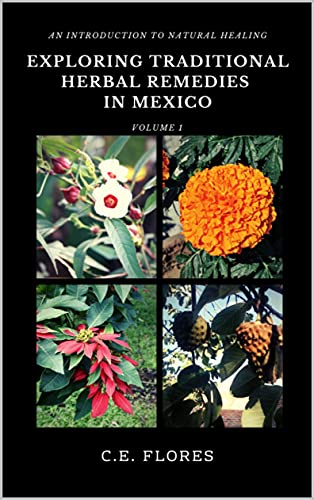
Interested in natural remedies? Uncover herbal remedies from traditional Mexican sources for healing and wellness in the Exploring Traditional Herbal Remedies in Mexico series.

Leave a comment

Filed under Natural Healing

Job Hunting Ain’t What It Used To Be — Part 2

After the first three job hunting strikeouts, I went to Indeed for some leads.

I applied to a company that focuses on improving non-native speakers’ American accents. In preparation, they sent me several links to watch videos about pronunciation. Then, I had a Zoom interview with a lovely Eastern European teenager with braces sitting in front of a sparkly shower curtain. My internet decided to act up, as it has been for the past few weeks, and the upload speed during the speed test was only 4.6 Mbps instead of the 10 Mbps it’s supposed to be. The teenager informed me they required a minimum of 5 Mbps. A few days later, I received an email that informed me that I did not get the position. 

Since I was on a roll, I decided to tackle a video interview requested by an online teaching platform based in Costa Rica. The video requests for this company were pretty specific. I needed to wear my favorite color shirt and have some music playing in the background while I answered questions about how I handled certain situations that came up in class. I chose to have Meatloaf playing on Spotify while I talked, and for most of the time, it was ok. But Meatloaf being the exuberant performer he was, started belting it out, and it was distracting, to say the least.

I expect this requirement was to test the noise-canceling capabilities of my microphone. Anyway, it must have been good enough because about a week later, I received an email to teach a demo class with the materials and a few links to watch. 

And here we get to what I’ve been struggling with about this whole job-hunting process. Back in the day, I would turn in an application. If I seemed like a potential candidate, the company called me to set up an appointment for an interview. If, after said interview, they were satisfied with my credentials/answers/availability or whatever, then I began training. After a training period, which varied from job to job, I was set to work.

But these days, all of the places I’ve applied wanted me to teach a class, and THEN they’ll see if my credentials/answers/availability match up. So in effect, I have to train myself, unpaid, mind you, and if I am just as good as the teachers they already have, I’m hired. If not, so sorry. 

Anyway, I taught the demo class but ran into some technical difficulties that left me flustered. I didn’t know how to share a video on Zoom. So I know my demo class wasn’t my best effort. After that class, I had a short feedback session with someone from the company who pointed out where I could improve. Then taught ANOTHER demo class. I finally heard back from them. They decided to go with another applicant because I didn’t have enough rapport with the student. Yeah, ok.

A third company that I managed to score an interview with at first seemed promising. I met with the founder via Zoom, and we chatted about their philosophy and all that. Then the next step was to observe a class and then teach a demo class with provided materials. At this point, I had a bit of a panic attack or something. In addition to feeling out of my depth because the class would be in Spanish rather than English, and I haven’t taught Spanish in over 15 years, the hours seemed extraordinarily complicated. I would be teaching three two-hour grammar classes during the week. Then on Saturdays, I would teach a conversation class. Two evenings a week, I would hold “office hours” virtually where anyone could drop in. Then every month, there were mandatory teacher training and language events. 

All of these were at set times. As you know, my internet can be a bit wonky, and there have been times when I’ve had to cancel classes because of it. With this company, that didn’t seem like a possibility. There was also the pay setup. It wasn’t an hourly wage but a set amount after completing an eight or 12-week course. I would be expected to teach not one but at least two maybe more different classes (each of which met three times a week) plus Saturday and office hours per 8 or 12-week session. I would need to adapt the materials and provide feedback for all students as well. That totaled up to a whole lot of hours per week, and my internet just can’t be relied on for that many hours.

Anyway, I backed out of that demo class with apologies and withdrew my application.

***

A Woman’s Survival Guide to Living in Mexico Series

Leave a comment

Filed under Economics