Abundance and Scarcity

December is harvest month around here. Even though my husband didn’t plant anything, he brought in a harvest nonetheless. Four or five times a week, he headed to Cerano to see where la maquina (harvester machine thingy) was currently working and asked the owner of the field if he could pepinar (glean). Only once was he refused permission. That day, he had taken his father along and apparently the owner had some beef with him that went back 50 years or so. So no, corn that day.

IMG_20181120_130731.jpg

The gleaned corn he has been feeding as a regular treat to all the mama goats and sheep we have right now to help increase their milk production so that all the babies become fat and sassy. The then-empty corn cobs have been fueling our fire to keep down the bitterly cold December brought to our mountainous area along with the leña (firewood) from a dead mesquite tree the neighbor cut down a few months back. My husband has been trying to reduce our cooking gas consumption by using this mesquite wood to cook our daily meals. There’s nothing quite like beans cooked over the open flame for taste.

IMG_20181113_120719.jpg

My husband also bought a costal (feedbag) of purple corn he prefers for pozole. He sold several kilos to some ladies who work with his sister at the tortilleria, but we still have more than half a tote full. And he purchased rastrojo (dried corn stalks) from Panzon (Big Belly) in La Ordeña which will be ground to dust later this month as animal feed.

In line with our end of year prepping, we ordered a pipa de agua (water truck delivery) from the presidencia (town hall). This is the first we’ve had to order in the 6 months since the dry season started due to unseasonally late rains this year. The runoff from the rains kept our tinacos (water storage containers) about half full for some months.

What we didn’t take into consideration in all our prepping was the gas crisis. Yep, 9 states including both Michoacan and Guanajuato (which are the two states bordering us) are experiencing gas shortages.

IMG_20190107_094329.jpg

Gas stations in Moroleon and Uriangato and nearby Yuriria began running out of gas January 1st. The ones that were without gas first were privately owned gas stations, those owned by foreign investors like Oxxo and Exxon. However, now into the second week of hideously long lines, the Pemex owned gas stations are now outta gas too.

Locals insist that the problem originated when the Nortenos (Mexicans who live north of the border) began their annual pilgrimage back to the United States, filling up their gas-hogging SUVs and mini-vans and leaving locals without a drop of gas. I have my doubts about that since this year there were far fewer returning paisanos (countrymen) due to the US threat to close the border.

Apparently, it isn’t a gas shortage, at least according to government officials, but rather a problem with distribution. The new president Lopez Obrador has begun his campaign to reduce robos de gasolina (gas thievery) by implementing a new system of distribution. While working out the kinks, he has asked the Mexican people for patience.

According to some, there are additional factors causing the gas crises going as far back as 2016 when Pemex reduced production. Of course, the 800% increase in fuel theft under the previous president Pena Nieto, hasn’t helped the supply.

Regardless of the reason, there is no word on when our area can expect gas deliveries again. Grocery store shelves are becoming bare because delivery trucks don’t have enough gas to make deliveries. The cooking gas trucks that cruise around town with their cheery song are off the streets for the same reason. The guy my husband buys corn leaves from is no longer at his usual corner. He wasn’t able to purchase enough gas to fill his tank this weekend. It’s just a matter of time before the buses stop running.

We have enough gas in my husband’s motorcycle for the next 2 or 3 days. The truck and my motorcycle are garaged until further notice. The bicycles have been dusted off. Their tires have been checked and patched. We may need to go low tech for a while. 

Leave a comment

Filed under Alternative Farming, Uncategorized

2019–International Year of Indigenous Languages

lenguages

Did you know that 2019 has been declared International Year of Indigenous Languages by the United Nations? The organization’s goals include increasing understanding, creating conditions for knowledge-sharing, and integration of indigenous languages with the dominant cultures of each country. UNESCO has even set up a site which lists events, ways to get involved, and teaching resources which you can find here.

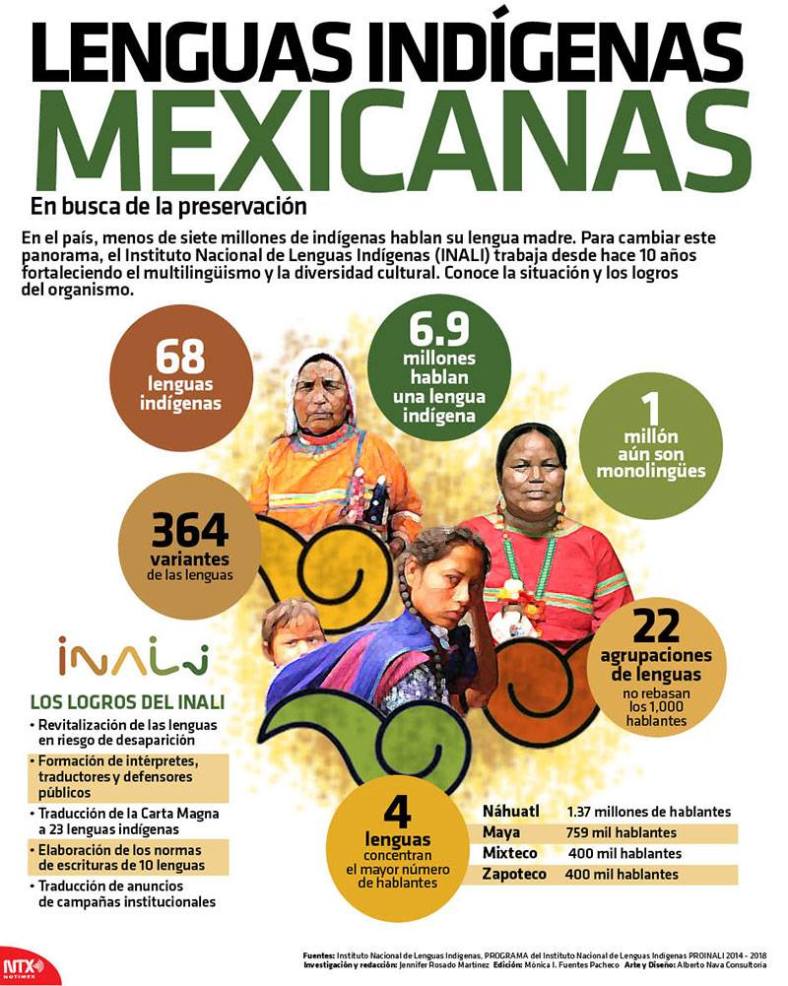
The Mexican government officially recognizes 68 indigenous languages which have approximately 350 different dialects. Most of these languages originated from 7 larger language families while some resulted from 4 language isolates, that is they developed independently of other languages. Purépecha, the indigenous language spoken in the area where I live on the border of Michoacan and Guanajuato, is one of those language isolates. (See Catalogo de las Lenguas Indígenas Nacionales: Variantes Lingüísticas de México con sus autodenominaciones y referencias geoestadísticas). Twenty-one indigenous languages are in danger of extinction as the last remaining speakers die off.

Since 2003, the Mexican law Ley General de Derechos Lingüísticos de los Pueblos Indígenas requires that its citizens receive services in their native tongues. Some strides in that direction have been made because of the efforts of the Instituto Nacional de Lenguas Indígenas but the results have been limited nationally.

Approximately 6 million Mexicans speak an indigenous language. Nahuatl, the language of the Aztecs, and Yucatec Maya are the two most spoken languages. Six million people is only about 7% of the entire population of Mexico which has allowed for increasing marginalization over the centuries.

However, under the new presidential regime of AMLO, indigenous culture has taken center stage once again. At his December 1 inauguration, the president-elect received the official blessing from the governor of Los Pueblos Indígenas (indigenous towns) complete with incense and cedar staff engraved with 68 indigenous language representations. He received yet another ruling staff on his trip to Oaxaca later in the month. This staff was the official Tatamandón, the staff that symbolizes the ruler of the majority of indigenous communities of the area.

Just days after taking office, AMLO announced the formation of the Programa Nacional de los Pueblos Indígenas stating “Daremos preferencia a los más humildes y a los olvidados, en especial a los Pueblos Indígenas de México.” Andrés Manuel López Obrador (We will give preference to the most humble and forgotten, especially the Indigenous Towns of Mexico)

It appears he is making efforts to listen to and incorporate the indigenous population in the new government.

On the other hand, AMLO also approved the construction of what is known as the Maya Train, even going as far as hosting a ceremony to ask Mother Earth bestow her blessings on the construction. Indigenous groups in the area are opposed to the route which will pass through some of Mexico’s most biodiverse and fragile ecosystems.

Furthermore, EZLN (the Zapatistas) have already made it clear that they do not support AMLO in any way, shape or form and will oppose his government with violence if necessary.

Whether the new government fulfills its promises toward the indigenous peoples or not remains to be seen.

What indigenous languages are spoken in your area?

2 Comments

Filed under Cultural Challenges, Mexican Cultural Stories, Politics

Surviving Voluntary Exile: Overcoming Common Obstacles to Making a Successful Life Transition Online Course

If you’ve followed my blog for a time, you’ll likely already know that I have made it my mission to provide practical information and support to those, especially women, who have moved to Mexico, particularly rural Mexico.

I love my life in rural Mexico. However, that has not always been true. When I first arrived, the lack of basic services like water, sewage and electricity caused my daily activities to be physically (not to mention mentally) exhausting. I was often depressed. It took me years to find my happy space. Looking back, I can pinpoint several life-changing moments that propelled me to create the life I have now. This process is what I want to share with others who are struggling with life in Mexico.

To that end, I’ve created an online course via CourseCraft that I hope will provide support and guidance for those that most need it. This course is entitled: Surviving Voluntary Exile: Overcoming Common Obstacles to Making a Successful Life Transition and is designed to not only identify common reasons why you might not be living to the fullest in your new country but also what you can do to reduce, if not eliminate these obstacles to happiness.

course cover square

Since I know that finances are a concern for many who have moved to Mexico, (the pesos is extremely low right now) I have priced this course at $9.99 USD during the month of January making it the perfect time for you to enroll. I know, I know! I’ll never make any money that way! That’s ok. It will all work out somehow!

So if you are having a hard time adjusting to life in Mexico, or know someone who is, check out  Surviving Voluntary Exile: Overcoming Common Obstacles to Making a Successful Life Transition.

Why not make 2019 your best year in Mexico yet?

enroll now


Here’s what participants are saying:

So much of the information out there on moving to another country is either focused on those moving for work or for retirement and only focuses on nitty-gritty details. What about if you are moving for another reason, or if you have the life details ironed out but want to prepare for the emotional rollercoaster that is sure to follow? This course is different; it is really about the internal changes we experience and how we help ourselves not be overwhelmed by our feelings. I found it very helpful in conceptualizing how we can change our reactions to events and therefore increase our happiness. Not only that, but many of the techniques or info can be applied to other areas of our lives!

— Florence P.

I really enjoyed the Surviving Voluntary Exile course. I really feel that it has excellent information for anyone overcoming obstacles in their life ( aren’t we all?!). The course designer has used her experience to make the path for other women to be easier and to have some idea of the challenges they will be facing. She approaches the lessons with positivity and humor. She really has an excellent perspective on this topic. It leaves you feeling like you can overcome the obstacles that lie ahead, and her positive attitude becomes contagious. There are assignments each week that are uplifting and not burdening. It’s information that you can come back to again and again to help you be successful.

— Erica D.

******

disclosure

1 Comment

Filed under Cultural Challenges, Education, Surviving Voluntary Exile