Imagine my delight when I discovered that Mexico has native cucumbers, well, not exactly cucumbers but gherkins, but that’s close enough. I was even more tickled when I poked around and found that one of the two main varieties is used medicinally. Oh, happy day! Let me share my findings.
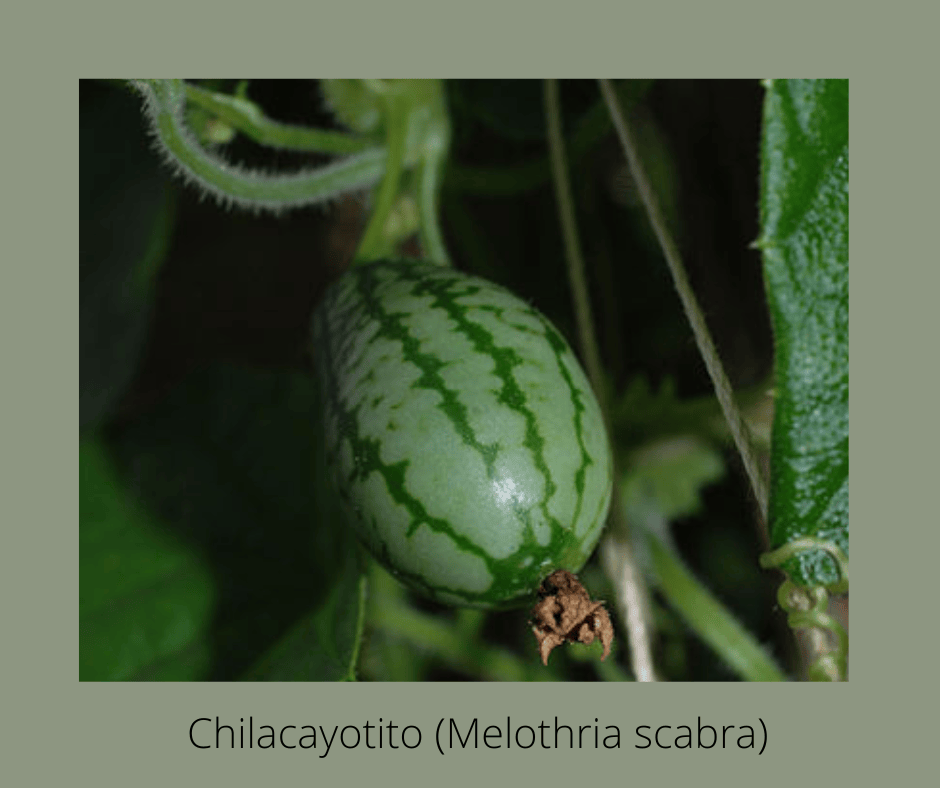
Belonging to the Cucurbitaceae family, Melothria scabra has a long list of common names. These include cucamelón, melón ratón, pepinillo agrio, pepquinos, sandía de ratón, bejuco de culebra, sandías de la lagartija, K’um-tulub (Maya), Siña spun (Totonaco), just to name a few. In English, it is known as Mexican sour gherkin. The term chilacayotito comes from the Nahuatl tzilacayotli and the diminutive ending – ito, which translates as ‘little smooth squash’.
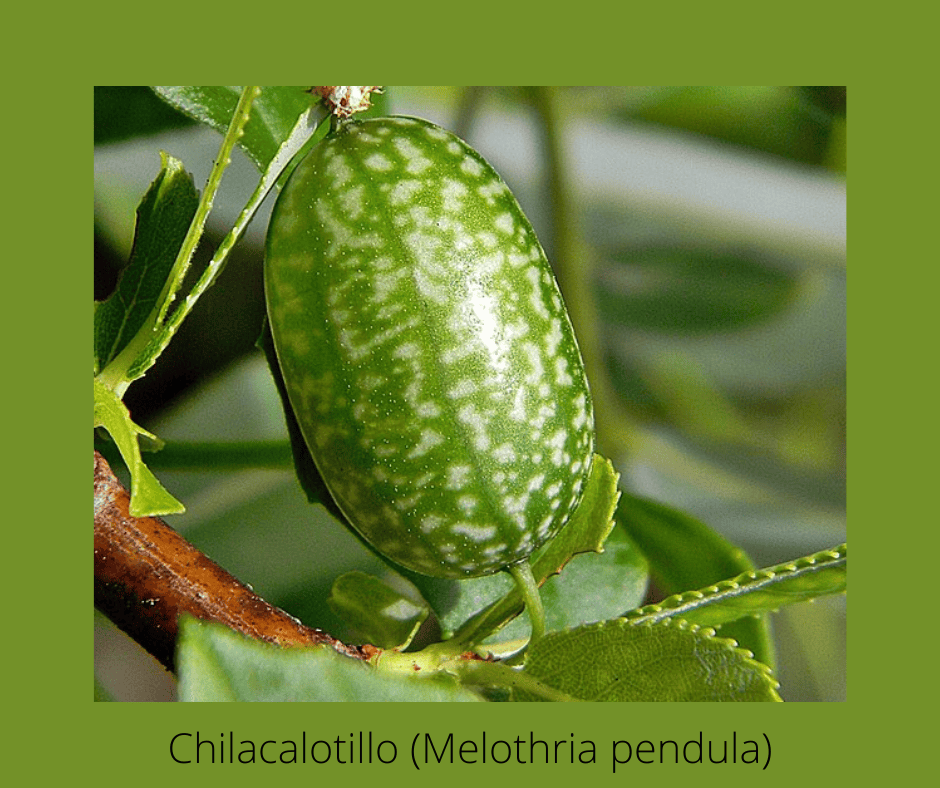
A related species, Melothria pendula, with the botanical synonym Melothria guadalupensis, shares some of the same 67 identified common names. These include chilacayotillo de pajarito, bejuco de culebra, miná na (Mixtec), chilacayotito, chilacalotillo, baleeyail an t’eel (Teenek), k’uum tulub, (Maya), pepino de Guadalupe, pepinillo silvestre, tomate de murciélago, and pepino rastrero among others. In English, this variety is known as creeping cucumber, and it is used medicinally in many areas of Mexico.
The fruit from these plants are tiny, oval, and striped like a watermelon. Its taste is tart cucumber, and can be eaten raw or cooked. Similar to cucumbers, chilacayotitos and chilacalotillo are low in calories,and contain vitamin C, vitamin K, potassium, beta-carotene, citrulline, and fiber.
Chilacayotito fruit is eaten both cooked and raw throughout Mexico in a variety of local dishes. The Tzotil eat both the raw chilacalotillo fruit and boiled leaves as quelites (edible greens). The fully ripened chilacalotillo fruit is purple and has a mild laxative effect when eaten.
In Guerrero, chilacalotillo fruit is boiled with salt before eating. In Hidalgo, the fruit is mixed with onion for salsa. In Querétaro, chilacalotillo fruit is mixed with chile rayado (Capsicum annuum) for salsa.
In Veracruz and Morelos, chilacalotillo is used to treat gonorrhea, hemorrhoids, and burns. Melothria pendula demonstrates anti-viral activity against Herpes simplex 1, supporting its use as a remedy for some sexually transmitted diseases.
In Chiapas, fruit infusions are used as a vitamin supplement against anemia. The Tzetzal people boil the fruit to alleviate heart pain, and for the mal de ojo (evil eye), the fruits are mixed with sugar cane liquor and blessed by a curandero before being consumed.
In San Luis Potosí, a smoothie is made to cure sexual impotence caused by brujería. In Quintana Roo, chilacalotillo and rosemary poultices are applied to the forehead for headaches and dog or snake bites.
In Yucatán, the buds, fruits, and aerial parts of the plant are used as anti-inflammatory and diuretic agents and as a treatment for urinary infections and gastrointestinal pains. Additionally, the entire plant is crushed and applied fresh for snake bites and infused to relieve gastrointestinal pain, kidney stones, and sores. The leaves, stems, and fruit are anti-inflammatory.
In other areas, a decoction of the entire plant is made to relieve constipation. Burns are treated with a decoction made from the whole plant or a poultice of crushed leaves, water, and salt, applied twice a day. The mashed fruit is applied to an infant’s navel to treat an umbilical hernia and as an anti-inflammatory for hemorrhoids.
***
Are you interested in natural remedies for healing and wellness? The ‘Exploring Traditional Herbal Remedies in Mexico’ series offers a treasure trove of traditional Mexican herbal remedies. Learn about the rich history and cultural significance of these remedies and how they can benefit your health. Get your copy today!