
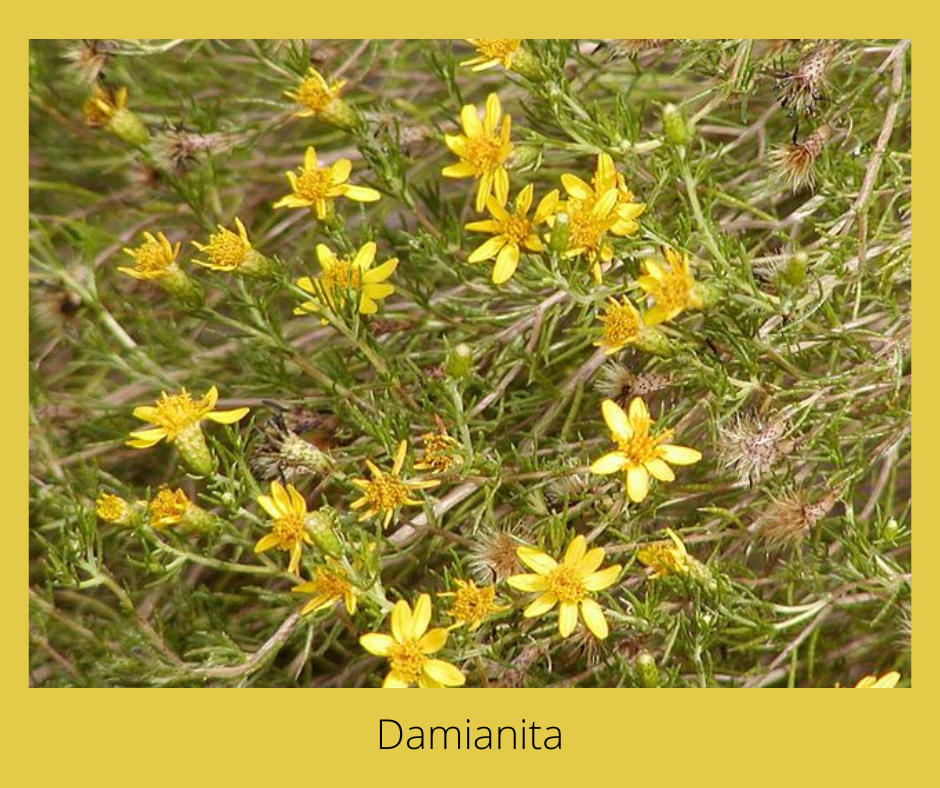
Damianita (Chrysactinia mexicana) is often called Hierba de San Nicolás (Saint Nicolas’ herb), which should not be confused with Piqueria trinervis, also known as Hierba de San Nicolás. Other common monikers have confusing overlaps as well. Although the term damaina is the most popular name for Turnera diffusa, it is sometimes used for Chrysactinia mexicana too. Therefore, Falsa damiana is a better name in this case. Garañona is a name given to both Castilleja tenuiflora and Chrysactinia mexicana in certain areas. Using the name Mariola or Romerillo leads to alternate plants Parthenium incanum and Asclepias linaria, respectively. Tatalencho is the term for Gymnosperma glutinosum or Chrysactinia mexicana depending on the region.
On the other hand, Yeyepaxtle and the spelling variant Llellepaxtle are self-contained labels, as are San Nicolás Calanca, Tse ñ’ethi, and Damianita daisy.
Damianita is mostly associated with fertility and the sexual organs in Mexico. However, it is also employed to reduce fever, treat rheumatism and tuberculous, and lessen the severity of diarrhea. It’s considered a “cold” plant and thus apt to treat “hot” infirmities.
A decoction is prescribed for nine consecutive mornings before a woman’s period is due to make the womb more receptive to conception. This fertility treatment is prepared by adding one or two tablespoons of chopped leaves to a cup of boiling water and allowing it to steep for up to twenty minutes. An infusion of damianita should also be given to the male partner as it has both an aphrodisiac and prosexual stimulatory effect.
A hot decoction made from the entire plant is suggested as a sitz bath for relief from painful menstrual cramps. Boiled crushed leaves are used as a poultice for earache. Muscular aches and pains can be relieved by adding full branches to the bath.
A tepid douche made with a teaspoon of honey and damianita is made for treating gonorrhea, sometimes called purgación. Another douche for syphilis is an infusion made from five damianita leaves and Tlalchichinole hembra (kohleria deppearia) in a half liter of water. This same infusion is drunk for ulcers and diarrhea, one cup in the morning and one at night. Chrysactinia mexicana is both diuretic and antispasmodic, thus useful in the treatment of intestinal spasms, diarrhea, and menstrual cramps.
A douche made from a whole damianita plant is recommended for leukorrhea or flujos blancos, followed by drinking a decoction made of llantén (Plantago major) leaves. Chrysactinia mexicana has anti-fungal properties, which means if the flujos blancos are a result of yeast or other fungal infection, this douche could be beneficial.
Chlamydia, gonorrhea, and syphilis are caused by bacteria. Therefore, the antimicrobial activities found in Chrysactinia mexicana can provide effective treatment for these and other fungal STDs.
For tuberculosis, pneumonia, or other respiratory conditions, an infusion is prepared with the damianita leaves. Chrysactinia mexicana demonstrates antimycobacterial activity, supporting this traditional use. For a respiratory tea, boil fresh branches and drink daily as “agua de uso” (in place of water) until symptoms abate.
Additionally, Chrysactinia mexicana shows a pronounced antihyperglycemic effect and has a clear anti-depressant-like effect.
***
https://amzn.to/3CoZsKWInterested in natural remedies? Uncover herbal remedies from traditional Mexican sources for healing and wellness in the Exploring Traditional Herbal Remedies in Mexico series.


 Surviving Mexico
