Tag Archives: Mexico

Parenting Challenge–Living History

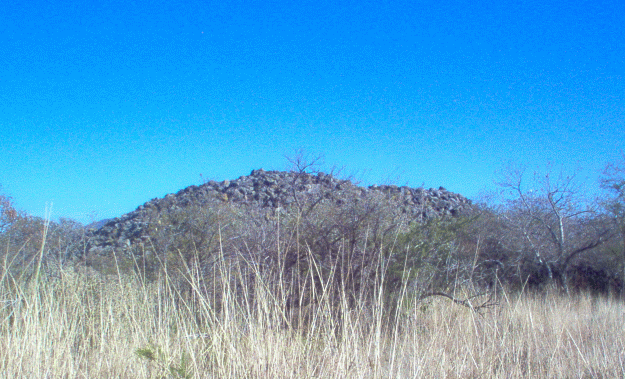
History of man must be taught as living history ( Who built this yacata? How did they live? Where did they go? ) or not at all.

History of man must be taught as living history      ( Who built this yacata? How did they live? Where did they go? ) or not at all.

Last week, I had a look at my son’s 5th-grade calificaciones (grades) (See Alternative Homeschooling) and noticed that he had dropped considerably in the subject of Mexican history. How could this be? I asked myself. He is attentive and interested in the stories we discuss at home, the movies we watch, making endless speculation about why this person did this or acted like that and wonders continuously about our own place in the history of La Yacata, our small foundling community. I investigated further and looked over the questions he had missed.

In what year was expropriation of petroleum? What reforms did Congress make during the decade following the revolution? What was the Mexican economic miracle? (Answers to these questions)

Perhaps the gravest defect in school curricula is that they fail to give a comprehensive, intelligent and interesting introduction to history. To leave off or even to begin with the history of our own country is fatal. We can not live sanely unless we know that other peoples are as we are with a difference, that their history is as ours, with a difference, that they too have been represented by their poets and their artists, that they too have their literature and their national life. We have been asleep and our awaking is rather terrible.–Charlotte Mason

Well, that explained it then. This was dead history, no heroes, no battles, no significant achievements to remember. Is it less important for him to learn? Yes, I think so. In memorization dates and facts, he isn’t asked to make sense of what transpired, to understand the whys or hows of it all and as a consequence doesn’t learn history.

It is a great thing to possess a pageant of history in the background of one’s thoughts. We may not be able to recall this or that circumstance, but, ‘the imagination is warmed’; we know that there is a great deal to be said on both sides of every question and are saved from crudities in opinion and rashness in action. The present becomes enriched for us with the wealth of all that has gone before.–Charlotte Mason

In contrast, in our very community, we have the La Yacata, a stone mound dating back to prehispanic Tarasco tribes. My son and I talk often about what it could have been built for, how the people in the region might have lived, what they might have eaten, such as pitayas, nopales, tunas, maiz y frijol (our typical diet), and the changes that came to the area as a result of Spanish invasion.

From there, it is no great stretch of the imagination to see how we are a living part of history. How will those that come after us see our lives and view the contributions or damage we have left behind?  (See Revolutionalizing La Yacata and Forcibly Green, Obligatory Organic)

Always and everywhere there have been great parts to play and almost always great men (and women) to play those parts: that any day it may come to anyone to do some service of historical moment to the country (or the world). —Charlotte Mason

So I am not upset at the lower grade when it means so little in the grand scheme of things. As this living way of examining history is lacking in the traditional classroom, it is up to me to make important events come alive in the mind of my son so that my he too may take his place in history, in our family history, in our community history, perhaps even in Mexican history or in the history of the world.

We live in times critical for everybody but eminently critical for teachers because it rests with them to decide whether personal or general good should be aimed at, whether education shall be merely a means of getting on or a means of general progress towards high thinking and plain living and therefore an instrument of the greatest national good. –Charlotte Mason

************************

disclosure

Leave a comment

Filed under Education, Parenting Challenges and Cultural Norms

La Curandera–The first reading

Curanderas cure with herbs and prayer in many parts of México.

Curanderas cure with herbs and prayer in many parts of México.

Thus, as we live in a place out of time, there are what are called curanderas here in México. The term loosely translated is “one that cures”, for the most part with herbs and prayers, that which ails you. All sorts of innocent looking items may be part of the cure. For instance, once I asked about this hairy looking thing in my mother-in-law’s house. It was a long brown stick with hair sort of like a horse tail whip that she said was a ward for evil and helped with the cure of her arthritic knee.

Now, I know that herbs are plenty helpful, in many cases more so than manufactured chemicals prescribed by doctors. There is nothing new in the idea of wise women in the history of the world. It was when I understood that a curandera is often a diviner, a fortune teller, or spell caster, that I was taken aback. After all, the bible warns against any association with witches and I had been raised a good Christian girl. But wait a minute, Chencha, the curandera was a devout Catholic.

So, before judging with biblical admonitions to “You must not preserve a sorceress alive” (Exodus 22:18) I needed to remember that the bible also speaks of prophets and prophetesses or seers in a positive light. For every witch of Endor (1 Samuel 28:7-25) there is a Deborah. (Judges 4:4-24)

Well, why not? When in Rome, the saying goes. . .So as things at the time were not going so well, off we trooped, my husband, my mother-in-law, my sister-in-law L and myself.

Chencha had a little waiting room/store. She sold amulets and lotions but the bulk of items for sale seemed to be ladies undergarments. So we sat in the waiting room and were eventually called to the secret room behind the store. And I was introduced Chencha, a tiny woman that radiated peacefulness and power, an efficient elf. She got right down to business and read the cards for each of us with a well worn and shuffled tarot deck.

L’s cards were full of woe and even the egg that was used to cleanse the body came out bloody. She would need more cleansing sessions before she could be “cruzado” crossed or blessed.

My husband’s cards were also portentous. Chencha made the comment that if she told everything she saw in the cards, he would surely weep. And when the egg was waved around his body and then cracked open, it contained oodles of salt. Apparently this means he is “salado” or had envious friends or acquaintances that were interfering with the flow of his life spirit.

Then it was my turn. She took my hand and placed it on the deck of cards and asked me to pray with her. I repeated what she said. It was something like I asked that the cards would show me answers for my well being and future happiness and that we would be wise in the interpretation of what was about to be presented.

So she said that I had a good heart, that I would live a long time, that my child would be fine, that my husband liked to drink but that didn’t mean he didn’t love me, that I had problems with the butterfly shaped organ that affected my mood, that I got angry easily and found forgiveness difficult and that my finances had been going down steadily for 2 years. As an afterthought, she said that any trip I might be planning would be fine.

So how close was she? My husband and I were having serious problems, so much so that I was planning on leaving México to go back to the US in a matter of weeks. However, I hadn’t told even him of that plan. I have hypothyroidism, the thyroid is the butterfly-shaped organ in the neck, and I had not been taking my medication for about a year. Three days after this consultation, we celebrated our second year in México, and our funds were at an all time low. And my in-laws chimed in and said that I was a “corajuda” or easily provoked. Who am I to gainsay them?
She seemed right on the money.

Chencha passed an egg over certain areas of my body, those I suspect that are in the centers of power and prayed. She cracked the egg into a clear glass already full of water and peered into it. I had some salt, literally, salt. As with my husband, it meant I was salada, that someone or some persons of my acquaintance were ‘echandome el sal’ or wishing me ill and that it was interfering with my sense of well-being. However, it wasn’t enough for her to suggest the full treatment. She was pretty sure it would take care of itself.

However, L and my husband needed the full dose, 9 sessions of cleansing and prayer and then the final blessing if the egg was clean. Nine seems to have special significance here. When a person dies there is a “novena” or prayers for 9 days after the death. When a prayer making petition is published in the newspaper, it is for 9 days. And it seems to me there are 9 stations of the cross in Catholicism as well.

My husband completed his treatments and we went about our daily lives.

*********************

disclosure

6 Comments

Filed under Natural Healing, Religion

Babywearing with rebozos in México

babywearing

When we arrived in México, my son was 4, and he no longer wished to be carried about.  However, my husband’s family introduced me to the rebozo, and I sent some to all my friends that had babies to wear.

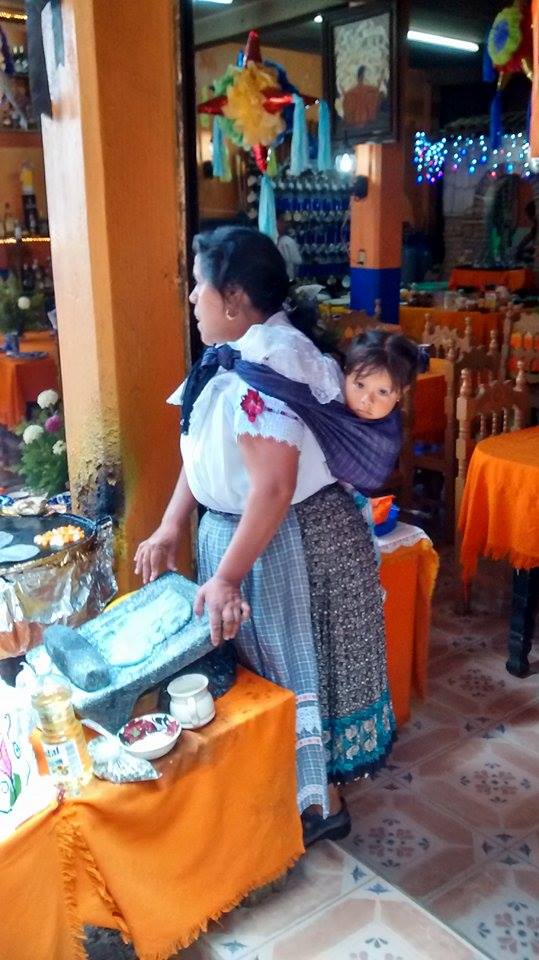
Babies are an integral part of life in this Catholic nation, where birth control is still considered a sin and contraception tough to come by in rural areas.  These two factors create a childbearing age that begins at about 15 and ends in the late 40s.  Most women do not have any choice but to take the smallest of their broods along with them for the daily trip for tortillas or while minding the store.  In rural areas, babies also may be taken out to the fields, all snuggly encased in the rebozo.

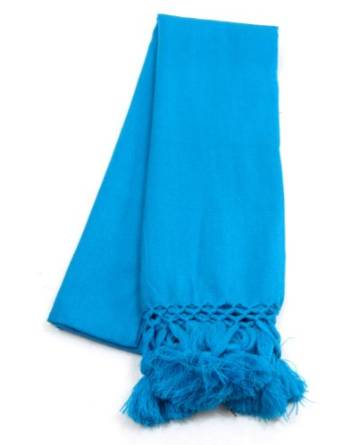
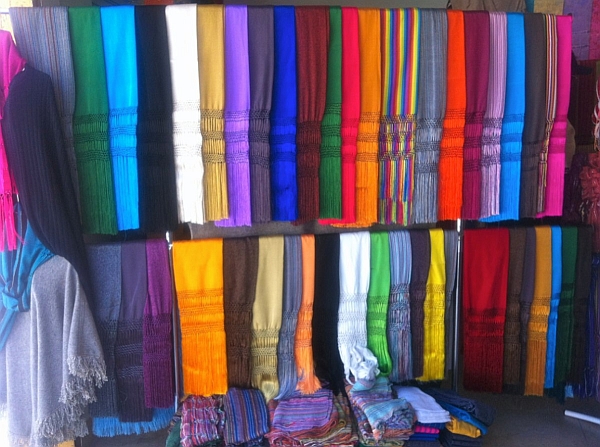
rebozos color

Rebozos come in a variety of fabrics and colors.

A rebozo is a staple in a traditional Mexican woman’s wardrobe.  Young girls wear them as shawls to add color to their outfits.  Mothers wear them as baby slings and nursing covers.  Older women wear them to shade their heads from the blistering sun.

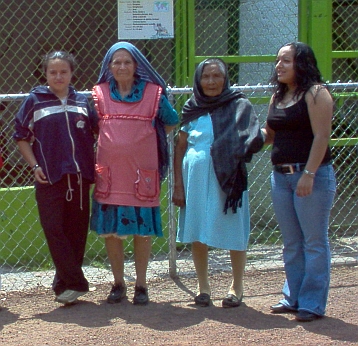
still wearing rebozos

Mama Vira and Mama Sofia still wear rebozos in their 80s.

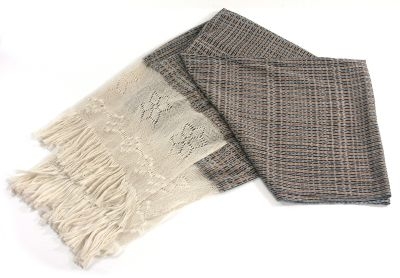
They come in all colors and materials, but the most common pattern in our area is a simple black and white.

The most popular choice for a rebozo in our area is a variation of black and white design.

The most popular choice for a rebozo in our area is a variation of black and white design.

I have seen indigenous women wear their babies on their back as they come through town selling fresh cut flowers, but most women here wear their babies face to face.

rebozo

Janitzio, Patzcuaro Michoacán

The rebozo loops about the baby securely and allows the mother to use both hands, although, with heavier babies, one hand is braced underneath for additional support.  The extra material is then used as a blanket to cover the baby’s head, either from the sun or cold or with newborns especially, from the evil eye.

Read more about rebozos here: Sliding a rebozo through a wedding ring

****************************************************

disclosure

11 Comments

Filed under Carnival posts, Parenting Challenges and Cultural Norms