One Sunday morning during the long Christmas vacation, we up and decided that today was the day we would go see the mariposas (butterflies). We had high hopes of seeing active butterflies since the numbers were reportedly up this year (2015) as compared to previous years.
I had heard that the hike was not an easy one, so in addition to the “better go and see the butterflies before there aren’t any to be seen” reason, I figured it would be better to make the hike while I was still youngest and ablish–and not wait until I had trouble getting around. As you will see, that ended up being a pretty good idea.
Adult monarch butterflies (Danaus plexippus) found east of the Rocky Mountains migrate to the central, volcanic region of Mexico, specifically in the area bordering the states of Michoacan and Mexico. And that’s where we aimed to go to see them.
There are only two sanctuaries open to the public in Michoacan, El Rosario, and Sierra Chincua. We set out with El Rosario as our destination. Outside of Morelia, we got on the toll road, (133 pesos) but inadvertently headed in the wrong direction. After an anxious 10 minutes, we were able to get turned around.
The directions and maps I had printed out seemed pretty straight forward. However, Mexico road sign makers had other ideas. We were to take the Michoacan highway #765 outside of Maravatio. There was a big road once we exited the town, however not one of the road signs had a number on it for verification purposes. We ended up asking and asking which way to the butterflies? Of course, everybody had a different answer to that, but we were able to head in the right general direction.
Every single sign we passed looked like this–NO road numbers!
At the end of the road Michoacan highway #34, we came across an official-looking dude and a big sign that said THIS WAY TO THE BUTTERFLIES. We stopped to talk to the chaleco (vest) wearing man, and he gave us directions to El Rosario and a map. I’m sure the Michoacan state tourism board gives these maps out for free but well, he had one, and we didn’t so we donated 10 pesos para el refresco (for a soda).
We continued along, asking questions in the little towns we entered. Again, everybody had a different answer. One said to turn right at the high school. A right turn there took us to the parking lot. Then another said turn right at the Telecable–again, there was no right turn available. Up ahead, we saw a big old tour bus, like from the 70s. A tour bus must be heading towards the butterfly sanctuary, so we hitched our wagon to the bus and headed up the mountain.
It was an incredibly steep drive, but spectacular! Good old Myrtle (our Volkswagon bug) did her best, and soon we were driving through Angangueo, another one of Michoacan’s Pueblo Magicos. The tour bus did take us to the butterfly sanctuary, but not to El Rosario. We ended up in Sierra Chincua. Well, butterflies were butterflies and since we were here, might as well go to this reserve.
We pulled in and paid for parking (30 pesos), then drove another 2 km or so to the lot. We headed to the ticket booth and bought tickets (45 pesos each). In line, I overheard some Mexicans trying to negotiate the price with the ticket seller. Was there a student discount? Was there a discount for the tercer edad (senior citizen)? Nope.
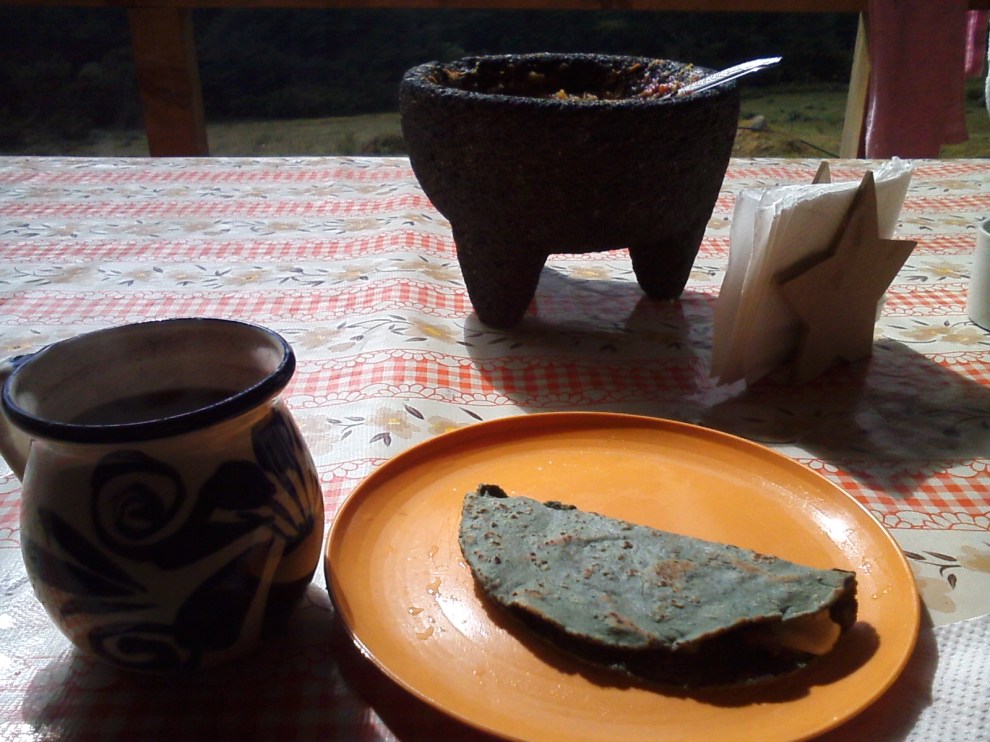
The price of the ticket included a guide. As we were a piddly group of 3, we were assigned Fernando, who looked to be about 10 years old. Well, that was all right. It took us longer than we had figured and we were ready for lunch, though. Fernando took us to the next to last Cocina Economica (Economy kitchen) where his sister worked. We invited Fernando to eat with us as well. We had blue corn tortillas quesadillas con champiñones (mushrooms) and atole de zarzamora (a blackberry flavored corn-based hot beverage). It was delicious!
We also were right under the Tirolesa c (zip cable) and enjoyed the screams of several high-flying riders as we ate.
Then we were off. This particular reserve offers a horse ferry for part of the hike. We opted to not ride the sturdy fellows and walk. Twice, before we arrived at the base of the hill, I was offered a ride up at a discounted price. Apparently, I looked like I might need it. But I declined. Well, it was a hike and a half. I’m sure about half way up, my face was tomato red. One of the horse leader guys, at least 20 years my senior, called out “Anima Jefa” (You can do it lady) as he passed at a high-speed sprint up the hill. Well, if there’s one thing I am, that’s determined (or pig-headed), and I made it up the hill. But for future reference, it isn’t a hike for senior citizens or for children under the age of 6.
At the top, there was a scenic view, which was quite scenic, before the actual trail. Horses are not allowed on this section of the trail, so it’s on foot or not at all. The trail was about 8 inches wide and was both the coming and going trail, which meant frequent stops to allow other hikers to pass. It was not nearly as steep as the first section, but it was muddy, especially the closer we got to the actual nesting site. Both my son and I slid part way down the mountain while gawking at the trees. Wear hiking boots.
Here’s another future reference tip. The butterflies are most active between 9 and 10 am. After that, the temperature drops (it is definitely winter jacket weather) and the butterflies settle down for the day in a sort of suspended animation. It’s still amazing! However, the butterfly’s underwing is white, not orange and black, so it’s not what you might be expecting. Several of the hikers were quite disappointed. Not me, by golly! The reserves in Michoacan are one of the 13 Natural Wonders of Mexico, and I got to see it.
We headed back–the hike in took about 30 minutes, then another 30 minutes to get back to the scenic overlook. The steep hill trail was much easier going down than up. We gave our tour guide Fernando 20 pesos as a tip and went to the souvenir shops. There were lovely hand knit sweaters, hats, mittens and ponchos for sale. Quite handy if you happened to not have dressed appropriately. There were also some commercially produced monarch memorabilia. Unfortunately, every store had the same merchandise for sale, so that was disappointing. The bathrooms had stone floors, and although you had to bring in your own bucket of water to flush with, they were nice and clean. Toilet paper is 3 pesos like most other public restrooms.
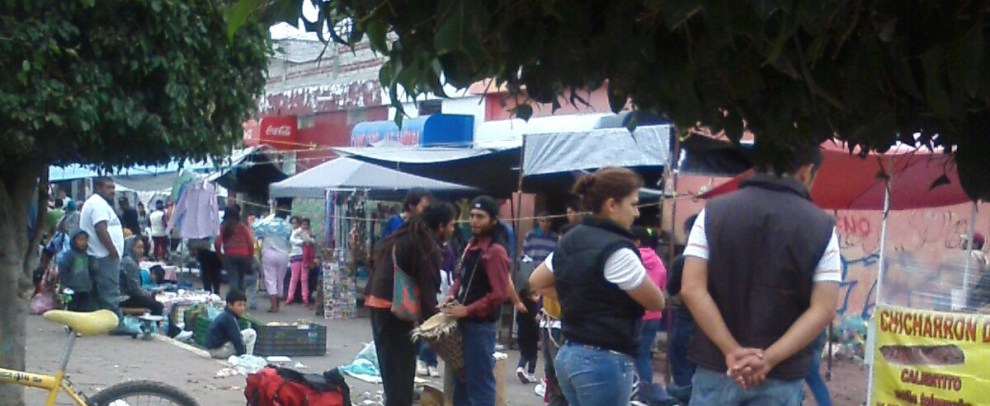
The other week we headed to the town on the other side of the Lake Yuriria, Valle de Santiago. The town itself doesn’t have any of the magic that Yuriria or Cuitzeo have, but what it does have is a kick-ass tianguis (flea market) on Sunday. We were able to buy two pairs of Levi’s jeans for my son, a pair of Dockers Corduroy Pants and Caterpillar Work Boots for my husband and a Spider Plant
for me, all at totally reasonable prices. AND since we had to go through Yuriria to get to Valle de Santiago, we stopped for a fabulous lunch in el mercado (market). Since the weather had turned chilly, I had an excuse to purchase my first ever rebozo. Wearing a rebozo is like wearing a blanket–and totally acceptable in public. My husband and son called me granny the rest of the day, but I was a warm granny!
So a little history here…
Valle de Santiago and the surrounding area was first settled about 2,000 years ago by the Purepechas and most likely conquered or otherwise absorbed by the Tarascos. Back then it was called Kamenbarhu (or Camembaro) which translates as roughly “lugar del estafiate” which then translates as “place of the estafiate plant.” Estafiate is also known as Western Mugwort, Western Wormwood, Louisiana Sagewort, Prairie Sagewort, Mountain Sage, Simonillo, and Itzauhyatl in Nahuatl and is used for digestive issues, as an analgesic, a decongestant, a sedative, a diuretic, an expectorant and an antioxidant, among other uses.
Kamenbarhu (or Camembaro) was renamed Valle de Santiago (Saint James’ Valley) and officially “founded” in 1607 by a bunch of Spaniards. In 1997, the state of Guanajuato declared the area a natural preserve.
Valle de Santiago
While the town of Valle de Santiago isn’t much to brag about–the drive there and back is spectacular. We already knew that Lake Yuriria is formed from an extinct volcano crater, so it was not much of a stretch of the imagination to see that the surrounding landscape also had a volcanic look to it. When we got home, I did some internet research–because asking the locals never gets us anywhere–and lo and behold, the area all around Valle de Santiago is known as the Siete Luminarias (7 lights) which refer to 7 distinct craters, although there are more than 30 craters formed by now extinct volcanoes in the immediate area.
Astroarchaeology (the study of how people have understood the phenomena in the sky and the role that understanding played in their culture) suggests that the Siete Luminarias align with the constellation La Osa Mayor (the Big Dipper) every 1040 or 40,000 years (there seemed to be a bit of a discrepancy on when that event actually happens) hence the name Siete Luminarias. It does appear to make the rough outline of the Big Dipper if you look at the map below.
Several of these craters have been the site of strange phenomenon. The lake in the Hoya de San Nicolas turns red, much like Lake Yuririra does, and probably for the same reason.
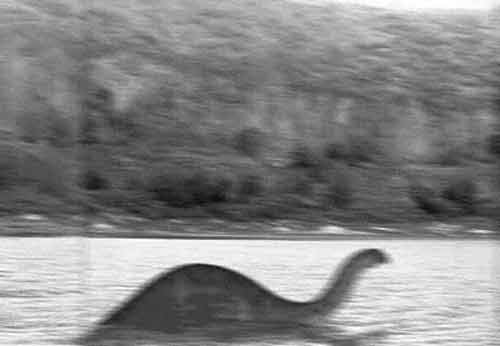
La Alberca is reportedly home to Chac (or Chan), the Loch Ness monster’s cousin. This creature is said to live in the underground tunnels that connect the craters. It supposedly resembles a sauropod dinosaur.The only picture of the creature was taken in 1956 from a plane, and it seems far from conclusive to me. But maybe you want to believe????
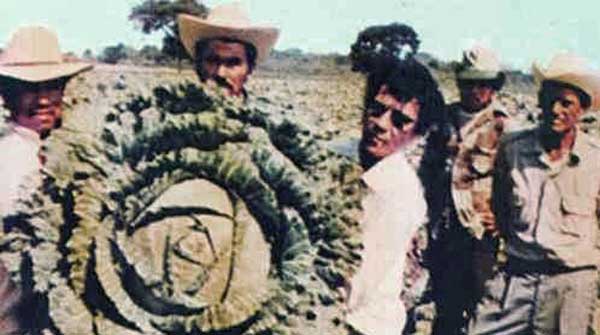
There have even been various reports of extraterrestrial contact and UFO sitings in the area of the Hoya de Flores. A local resident riding his donkey saw strange lights in 1987. Crop circles were later discovered in the area (although I haven’t been able to find any pictures of them online.) Some UFO-ologists reported contact with a glowing silvery-blue man there. The most famous contact was with a local farmer, Jose Carmen Garcia Martinez, who grew enormous vegetables in La Hoya de Flores in the 1970s. He claimed that his astronomical success in creating his astronomical sized vegetables was based on agricultural methods he received from astral messages.
Well, I wouldn’t have expected aliens and monsters from our pleasant day in Valle…but then I have learned that Mexico is often not what it appears to be.







 Surviving Mexico