Dreaming of a simpler life in Mexico? La Yacata Revolution: How NOT to Buy a Piece of Heaven in Mexico is here to show you the real story behind buying land and building a life in rural Mexico. In this eye-opening and often humorous account, you’ll follow one community’s efforts to establish basic services like water, sewage, and electricity in a place where the rules are… a little different. When frustrations boiled over, they didn’t just wait—they launched the La Yacata Revolution and took matters into their own hands.
Inside, you’ll discover:
The unfiltered truth about land ownership in Mexico: Learn about the challenges, surprises, and unique strategies needed to navigate property ownership and development.
A real-life story of community resilience: Meet the residents who rallied together to overcome obstacles and reshape their neighborhood—and maybe a piece of the political system.
Humor and hard lessons: With wit and wisdom, the author shares insights into the complexities of living off the grid and the realities of rural life in Mexico.
If you’ve ever dreamed of living abroad or are curious about Mexico’s unique blend of challenges and charms, La Yacata Revolution is a must-read. Download it today and see if you’re ready for the adventure of a lifetime!
The last video of the interior of the pozo (well) ran into a hitch because the water was dirty, and the camera couldn’t get a good picture of the bottom. So Super Prez had a bulto de cal (lime) dumped in and added more water in the hopes that the sediment would fall to the bottom and a clear image could be obtained.
The video was then delayed because the camera broke. Finally, another company was hired, and a video was taken. The results weren’t terrible, but they weren’t as definite as we would have liked.
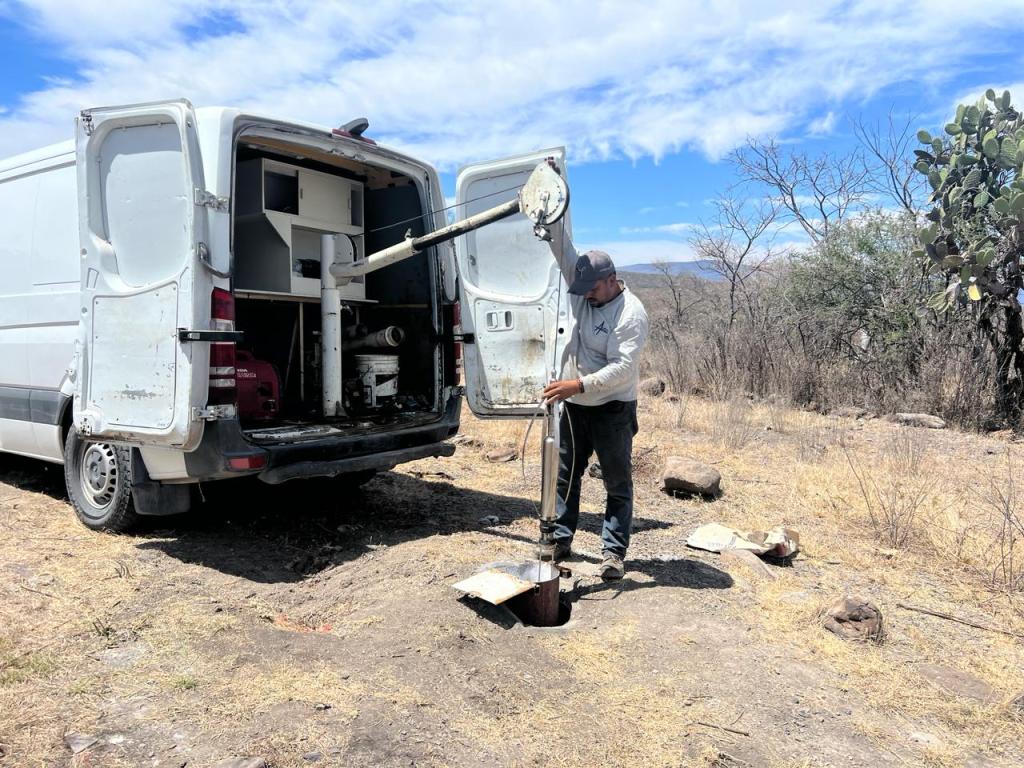
The camera was able to film to 174 meters before running into the rock that had been demolished but not removed. The supporting tubing was 10 inches rather than 12 inches and of inferior quality. Super Prez said that we could insert a better tube inside the tubing that doesn’t meet the specs as reinforcement. That would also “fix” the damage caused by the giant boulder being thrown in.
The company that agreed to clean the pozo was scheduled to come out the week of Semana Santa. Then, we would see how bad the obstruction was. However, it was a full month later before they finally arrived.
When they did, the truck with the machinery zoomed past me while I was out walking the dog. It barrelled up the road to the pozo and less than 15 minutes later, I heard the machinery hammering away. Super Prez arrived shortly after and took some pictures. The first day (or ¼ day, as it were) went well. The crew did not show up the next day and was delayed the third day with a flat tire. They did finally return and worked about an hour more to remove the debris.
Another video was taken, and the well ended up being 239 meters deep, more than what we needed. Hooray! This information was then submitted as evidence to the water and sewer office (El Sistema Municipal de Agua Potable y Alcantarillado).
So now that we knew the well was deep enough, it was time to determine if there was enough water to support our little community. And for this, we’d need someone to conduct el aforo (water volume study). Super Prez gathered several bids and finally picked a company out of Cuitzeo, about 20 minutes away. It took them about a month to get her, though, with one delay after another. Several times, they sent pictures of the truck all ready to roll, only to call back the next day with another excuse.
I was all for hiring another company at that point, but Super Prez said they were substantially less costly than any of the others, that the were known for quality work, and that we would need that money we saved for other items. So we waited.
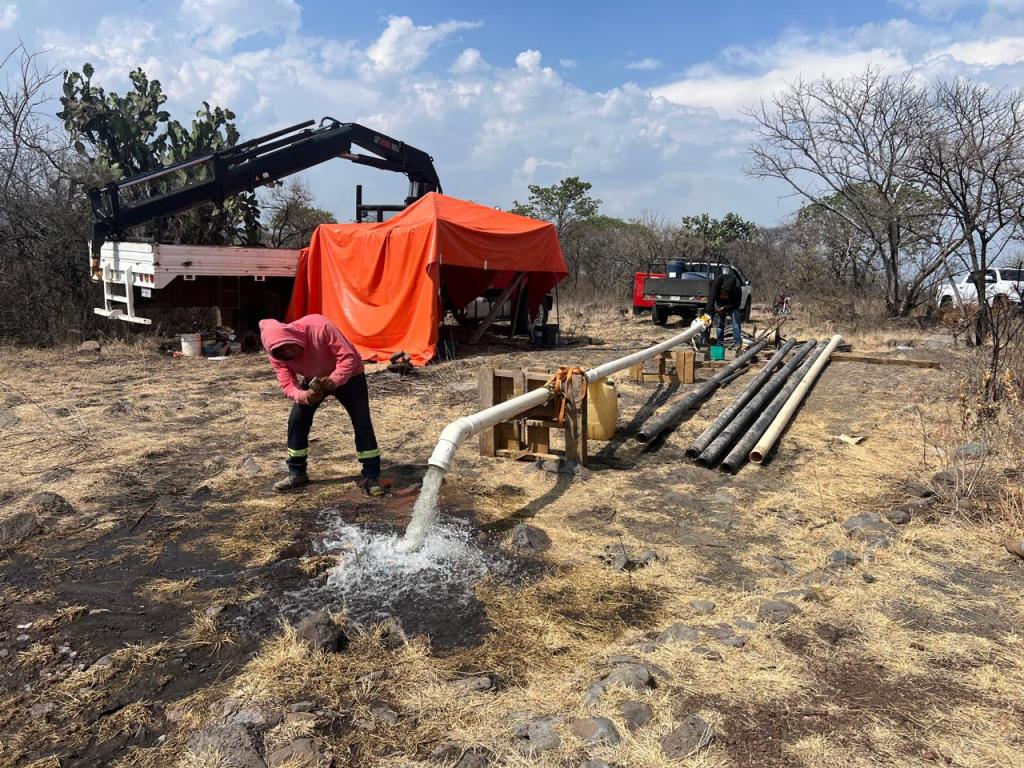
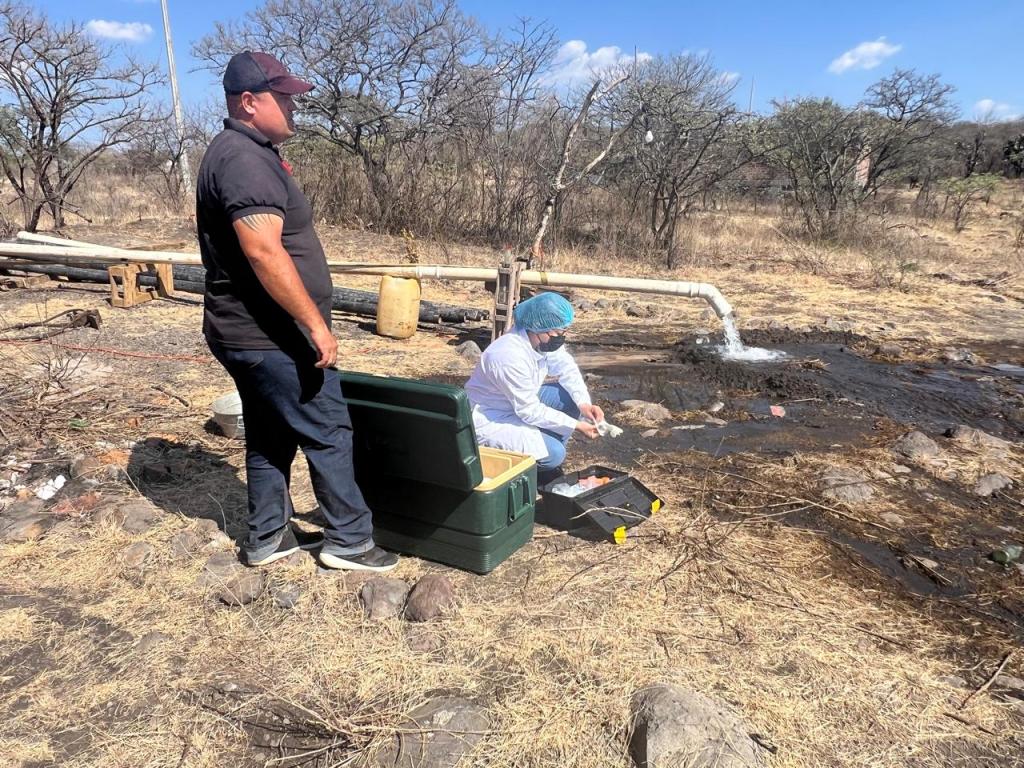
Finally, the last week of May, they arrived and immediately started setting up. This involved inserting tubes and connecting a pump. They would pump the water from the depths of the well over several days and determine how long it took for the groundwater to replenish itself. We originally were going for 48 hours, but ended up doing 36 hours with the approval of SMAPAM. After all, we were in a drought, and we didn’t want to be excessively wasteful.
The water was not hot but lukewarm. The pozo dug last year at the intersection had issues with the temperature of the water. It came out too hot to use without mixing it with cooler water. Not this baby.
The quantity of water was phenomenal. For the first 24 hours, it came out at around 13 liters per minute. After that, it remained at a steady 9 liters per minute. We needed only 1 liter per minute to cover the current residents’ needs, so we were all good there.
Mid-way through the aforo, the water analysis people came out to take samples. These were sent to the laboratory, and we’ll have the results in about 3 weeks. We have a lot depending on the favorable conclusion of this final study.
While all these shenanigans were going on, CFE (Comisión Federal de Electricidad) paid a surprise visit to La Yacata and brought some totally expected but welcome news. More to come.
The Tuesday after we delivered the letter to the appropriate offices, I received a call from the governor’s office asking what exactly we were looking for. I’ll admit that I’m not at my strongest when talking on the phone. I can’t hear well, and I don’t have the visual cues to help me decipher what is being said. Anyway, I did my best, standing out in the road since the phone signal in the house is variable.
I told the governor’s secretary that we didn’t have any basic utilities, which was our primary need. She said that was something the municipio would need to address. I said that we’d been trying for 28 years to get servicios (utilities) and were rejected time and time again. Those documents were included with the letter. She asked if we were “regular,” and I said we were in the process of regularizing (which means conforming to the requirements for a fraccionamiento-neighborhood). She asked about escrituras (deeds), and I said we had the escritura global (one deed for the entire property). I didn’t feel like I had explained myself well, and she said she really should talk to the Ingeniero (Super Prez), who was listed second in the document. She said she’d check into things and call back. I don’t know why she didn’t just send an email with this information.
But she called back. She asked if I had something to write with. I grabbed something quick. Then she said I should call this number …. And gave me some numbers, but the phone call ended before I heard the final two digits. Now, a normal person would just call the person back, but I never had saldo (minutes) on my phone because the signal is so spotty that I never make phone calls. I was distraught, believing I had totally messed this up. However, doing a reverse search on the partial phone number, it seemed she was giving me the number for Secretaría Desarrollo Social y Humano.
Before we got any further in this process, Super Prez was called to the presidencia to answer for our crimes (writing and delivering this letter to the governor). Super Prez did much better than I would have done soothing the ruffled feathers. He made it clear that the letter’s intent was to solicit financial support for La Yacata with the understanding that those funds would need to be channeled through the municipio of Moroleon.
The architect in charge of Desarrollo Urbano tried to turn it back on us and said we hadn’t been back to follow up on our regularization process. Super Prez responded that it didn’t mean we weren’t working on it. In fact, the limpieza de pozo (well-cleaning) crew was back at work to finish that project so we could move to the next one and determine the quantity and quality of the well’s water.
It’s possible that the presidencia felt our appeal to the governor was an attack on their administration since the governor is part of a different political party and this was an election year. It’s also probable that no one in the presidency had read the letter to the governor in its entirety (it was 8 pages long) and just read the accompanying missive from the governor’s office. Had they done so, they would have seen that we made no disparaging remarks about the current administration, that paragraph having been removed judiciously at Super Prez’s recommendation before the letter was delivered, and that we lay the blame squarely on Chuchi, who was dead and wouldn’t protest.
Super Prez returned to Desarrollo Urbano a day or so later with an entire PowerPoint presentation printed out to explain how we were working with FE Guanajuato to apply for funding and infrastructure support. He said that seemed to appease the powers that be somewhat.
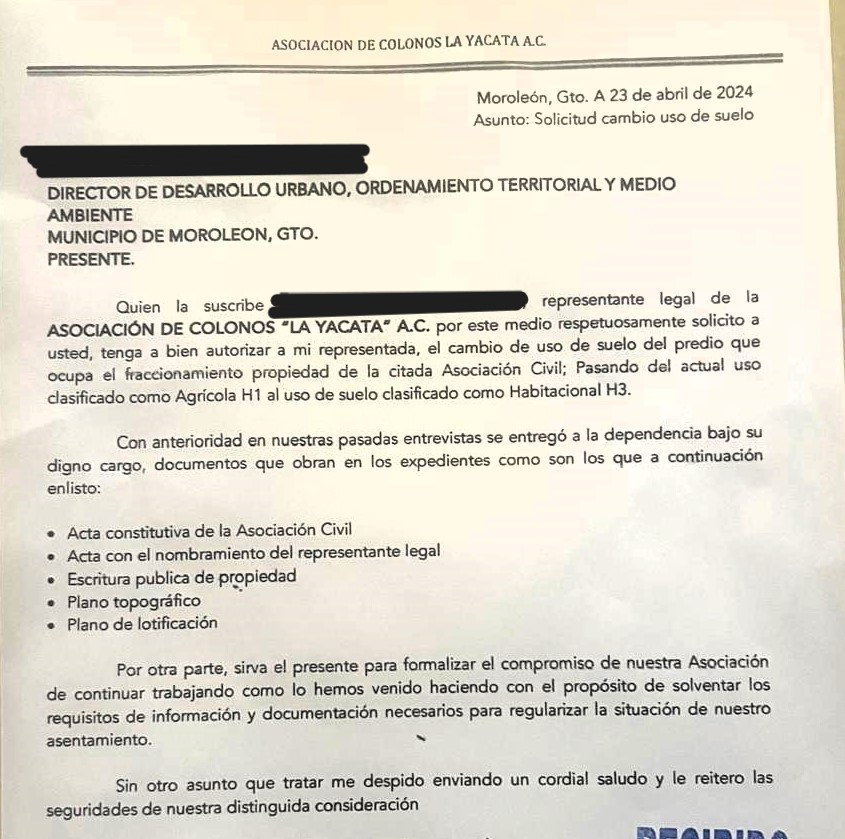
Super Prez also took this opportunity to present our petition once again to change the registered uso de suelo (land use) from agricultural to habitation. Before 1995, the area that encompasses La Yacata was farmland, and plots were rented for individuals to plant. The asociación de colonos was formed with the understanding that the classification would change. It was never approved, even after being submitted to 10 different municipal administrations. Without this document, nothing else can be approved.
I’m not exaggerating when I say it feels like we are tilting at windmills in this process to create a habitable community, the windmills being the antiquated processes in place that are preventing this. Perhaps we are foolish to believe we can overcome these obstacles to basic necessities. Well, I guess we’ll hope for the best.




 Surviving Mexico