
Category Archives: Getting Legal

Getting Legal—Moto license

moto man

For the past 2 months, the transito del estado (State transit police) have been sitting at the crossroads to La Yacata and stopping all vehicles. There is a second way into La Yacata, however, it adds about 30 minutes of travel time over very, very rough terrain. The transito (transit police) have been stopping my husband and son every single evening and sometimes in the morning. His moto has placas (license plate) however his tarjeta de circular (permision to circulate) and his license had expired. (See Getting Legal—License to drive) You would think the State police would have something better to do than bother moto drivers about their licenses, but it pays well. Mordidas (bribes) run from $50 to about $200, depending what they think they can get from you. And since we have to cross the intersection to get to Moroleon every single day, it gets to be a bit pricey. (See Driving Hazards–Traffic Stops)

Then they moved on to me. I thought perhaps I was immune because I was a female, but no, I was not.  I showed them my tarjeta de cirular (circulation permit) and they checked it against my license plate number. It matched, of course. Then the police asked me for my license. I told them I didn’t have one, that I just received my residency (See Getting Legal–Residency at last) so had been unable to get my license before. Ok, no problem and they let me go. But then they stopped me again.. I bluffed my way through a second time and promised I would see about getting a license.

So, since the fishing is still apparently good at the crossroads and the transitos (traffic cops) look like they will be there for awhile yet, we decided it prudent for me to get a license and my husband to renew his.

My husband went to asked what sort of documentation I would need to present and the costs. He was told I needed to present my passport, my residency card, my CURP (like a Mexican social security number), comprobante de domicilio (proof of residence like water or electric bill) and a blood analysis and that it would be about $700 pesos for 5 years (which was so not true for motos anyway).

medical laboratory

I gathered what I had and we went early in the morning to a laboratory for the blood analysis. It cost $50 pesos and tells what blood type your are. It took about 15 minutes for the results. The actually bloodletting, however, was a bit uncomfortable. The technician stabbed my finger and squeezed and scraped blood into the vial. It wasn’t enough, so he spent another 5 minutes, squeezing and scraping until he had enough. I’ve had blood draws, vials and vials of blood draws, and they were not as disagreeable as this minuscule amount. Ni modo (there’s no help for it). I survived it.

So then we made copies of my passport, my residency card, my CURP and the blood analysis. We borrowed the electric bill from my sister-in-law’s tortilla local. Then we headed back to El Transito del Estado office. Turns out I didn’t need the CURP after all, or at least a copy of it since it was already on my residency card.
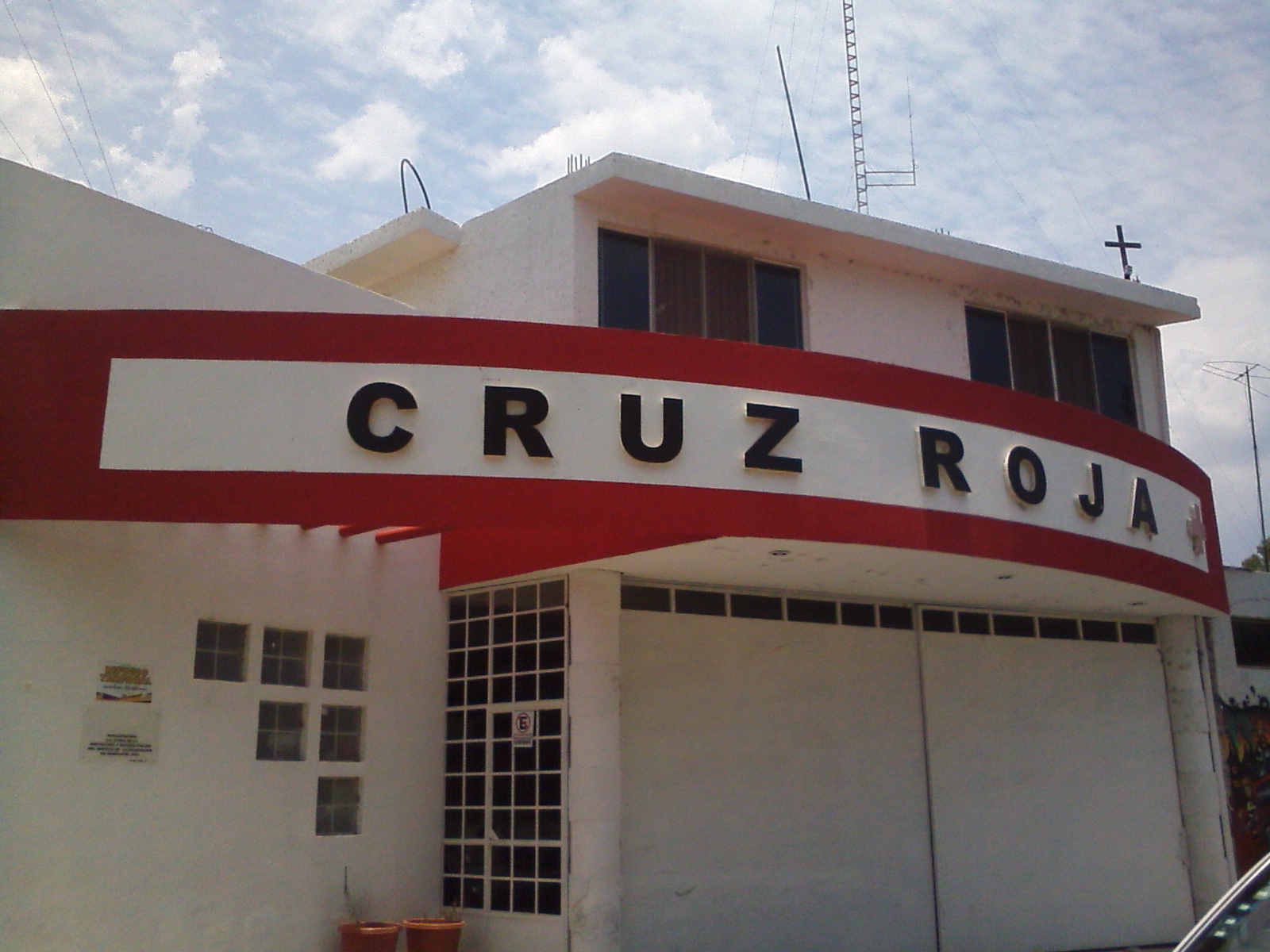
Cruz Roja

At the office, the clerk told us I needed a certifica medica (medical certificate) less than 30 days old. That ruled out the exam I had recently at CAISES (See Seguro Popular—a model of inefficiency—getting started.) We decided not to go all the way to the Regional hospital in Uriangato or CAISES, although we could probably get it done for free with Seguro Popular because it would take ALL FREAKING DAY. The clerk said we could go to La Cruz Roja and have it done, so we did. It cost $100 pesos.  It was a certificate that had the attending doctor’s name, his professional registration number, my name, my age, my weight, my height, then the words CLINICAMENTE SANO (healthy) and the date and time of the appointment. It listed my blood type (I’m A+),  family history of illnesses, my health status (hypothyroidism) (See Seguro Popular—blood work) the results of my vision test (I wore my glasses and passed 20/20) my blood pressure, my pulse and Si next to utiliza anteojos (wears glasses) and Donacion de Organos (Organ donation). Then the attending physician signed under what I believe is the Red Cross Motto “Seamos Todos Hermanos” (We are all brothers) and stamped it. This process took about 20 minutes.

Transito del estado

We went back to the Transito office. The clerk looked at my documentation and asked whose name was on the electric bill as it wasn’t mine. The owner of the local where my sister-in-law rents is listed on the electric bill. We have no electricity or water or sewer or street names in La Yacata and we explained that to the clerk. He himmed and hawed a bit. He wanted a copy of our rental contract, which of course we didn’t have since we aren’t the ones renting there. We were pretty sure he was looking for a mordida (bribe) but we weren’t looking to pay one, so he let it go.

The next step was to take the computerized test. The clerk asked if I could read and I said for the most part although there were words I still didn’t know.  I thought it better to be modest in case I totally bombed the test. He asked if I knew how to use a mouse, which I did. The first 10 questions were about the rules of moto driving and the second 10 were sign identification.

There was no time limit, so I read slowly and carefully. Sure enough, there were some words I didn’t know. The test was multiple choice, so for the most part, I felt pretty comfortable about my responses. There was one sign I had never seen before so completely guessed on. And voila, I hit enter and my results were instantaneous. I had 4 incorrect responses and my grade was 8.67 or B+ so I passed. Yeah me!

My husband was getting a bit impatient at this point. He was just getting his license renewed, so everything could be done right there at the office. He had already taken his eye exam, signed his paperwork, and had his picture taken while I took the test. But I wasn’t done yet.

Then there was the road test. I thought I would need to take a representative from the transit department for a spin around the block or something and I was a little worried. I am confident driving my moto, however when there are passengers, there is more weight to balance and it is a little bit tricky. (See Driving Hazards–Motos) But the big bad transit officer didn’t take a helmet out to where my moto was parked and then I was just confused.

He told me to jump on my moto like I would in the morning when I got it out and start it up. I already had my helmet on, so I did. I put the key in the ignition and revved it up.  And stalled it.  So I tried again.   I wasn’t sure what he was looking for so I pretended to check my mirrors and look at my muffler. I don’t think I impressed him because he asked if that was what I did when I got my moto out in the mornings. I said that my husband takes my husband takes my moto out and does the checking for me. He checks the lights and oil and tires before I hop on. He asked what I would do if my husband were dead, how would I check my moto. I really didn’t like that question. Yes, reality is that one day I may have to do my own checking, or I’d find a reliable mechanic or something. I  stared at him a minute or two sort of baffled. He changed the question to what would I do if my husband had already left for work and I needed to use my moto. Ok. Well, I would check that the lights were off, check the brake box wasn’t leaking, check my mirrors, check my muffler wasn’t stuck on anything, listen for strange noises and check the tightness of my hand breaks. He said “y tu casco?” and I replied that I already had my helmet on. I hoped he didn’t notice that the chin strap was currently held together by a safety pin. (He didn’t say anything if he did.) He asked if everyone needed to use a helmet, including passengers, and I said of course. I don’t have a spare but when I go pick up my son from school, he always has his helmet.

I guess that was the key point for him because suddenly we were done. We trooped back into the office. He filled out some forms. It looked like I only had one strike against me but I couldn’t tell what it was because he filled them out so fast. He kept checking his watch. I guess it was break time. I signed the paper and the clerk took them and handed them to the computer clerk lady.

prices for licenses

She had me come around the side and started filling out my information on the screen. Name, address, sex, civil status, occupation, (there was a place for my phone number, but she didn’t ask for it) birth date, country of origin, (she also left nationality and age blank). There was a section for complexion, skin color, hair color, frente (not sure what that was, maybe forehead?) eyebrow thickness, eye color, nose shape, mouth size, menton (again not sure what that was) and height, but she tabbed right through that. Apparently I have no senas particulares (peculiar or distinct scars, tattoos or birthmarks). She asked how many years I wanted my license for—5, it was the most economical. A moto license, otherwise known as licencia tipo D, can be obtained for 2, 3 or 5 years. The 2-year license currently costs $246, the 3-year license is $271 and the 5-year license is $378.

She then took my right and left index finger prints on the little machine thing. She had me sign my name on the electronic pad. Then she had me take off my glasses for my photo. I stood in front of a white cardboard with the escudo (symbol) of Guanajuato on it. It took three tries to get an acceptable photo. I am terrible about closing my eyes. I signed some other paper, actually, I signed it 3 times and she gave me the receipt.
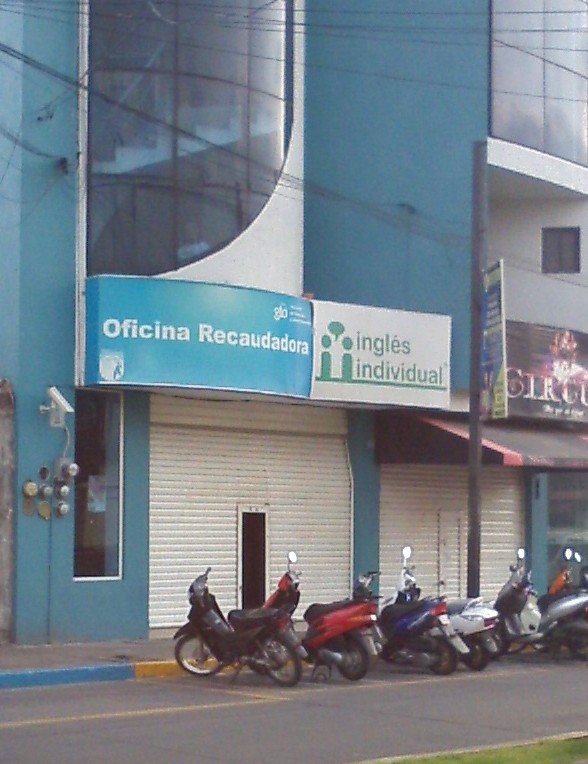
oficina de recaudadora

The receipts we had to take to the oficina de recaudadora to pay the $378 for each license. I expect paying at a separate office is an attempt to keep mordidas (bribes) from happening. That office kept one of the 3 receipts and sent us back to the Transito office to pick up our licenses. We showed the receipt and they took the second copy, leaving the pink copy for us, and gave us our licenses.

I don’t look too bad, my signature is minuscule, but it does have my CURP listed on it, so I expect I wouldn’t have been able to get my license if I hadn’t already registered for my CURP.  This process only took half a day.  Compared to some of our paperwork sagas, this was a breeze!

I can safely bet that I will never be stopped again now that I have my license.

*********************


disclosure

5 Comments

Filed under Driving Hazards, Getting Legal

Getting Legal—Working Papers—Perito Traductor

translater

Now that I had the papers with all the apostilles that I could get in my hot little hands, it was time to get them officialized in México.  I could translate them myself, however, I learned from past experience, that the official offices won’t accept them unless they are translated and stamped by a perito traductor.

I wasted 2 weeks or so asking everyone I knew if they knew of some such person to do my papers.  Of course, no one did.  Then I turned on my brain and googled “perito traductor Moroleón” and lo and behold found one.  It so happened that I knew this woman.  She had translated my son’s birth certificate for us some years ago, but as she wasn’t a perito traductor at the time, the registry office wouldn’t accept it as valid and we had to have it redone in Morelia by a friend of the Civil Registry judge.  It cost us a pretty penny and an annoying amount of time. That unpleasant experience made me think twice about contacting her, but as she was the only official perito traductor in the area, I sent her an email and waited.

perrito

After a week without a response, I sent my husband to the address listed to find out the logistics and price.  He returned to say that each hoja (page) would cost $250 pesos, but since she remembered us and credited our experience with her quest to obtain the prized perito traductor stamp, she would give us a discount and only charge $200 pesos per page.

There were only 3 documents, my high school diploma, my high school transcripts and my university transcripts, that still needed this process done, however with attached letters of authenticity and apostilles, it would be 7 pages.  Sigh.

I typed out the course names that were listed in abbreviation on my high school and university transcripts to aid in translation.  I went to print this out but discovered that my printer had run out of ink.  That delayed things until the following Monday.  Then, having refilled the ink cartridge, I went to turn on my computer to print and was horrified to be presented with the dreaded blue screen.  I spent the next week in denial, trying desperately to recover some of my lost files.  I finally had to admit that my computer had died, taking all my work with it to the grave.  I then went through a period of mourning, unable to muster any energy to work at rebuilding.  When I worked through the grieving process, I started the painful reconstruction of documents with a redo of that list of my transcript courses.  I printed it out before I turned off the computer I was using, just in case some other computer catastrophe was in the cards.

I went with my husband, the documents and the list to the señora’s office.  I showed her my documents and the list.  She sincerely appreciated the list.  It made her job much easier. She was a little worried about the fact that my high school diploma had been notarized right on the diploma and not a certified copy.  I had been a bit dismayed at that as well, since now, should I ever want to display my diploma, it would have all these signatures and stamps and wouldn’t look so pretty in a frame, but had thought that was the price I had to pay for it to be notarized.  Well, nothing to be done about that now but hope for the best.  Otherwise, I would have to request my high school to reissue a diploma and have the apostille process repeated. (See The Paper Chase).

She said the papers would be ready the next day Unfortunately,  payday wasn’t until Friday and I didn’t have the cash to pick them up that day.  In the meantime, my husband and I had a bit of a tiff about how I couldn’t do anything without him in México. In a bout of pig-headedness, I decided to go and pick up my documents myself. That would show him!  It certainly did.  I spent 2 hours trying to find my way back to the office only to arrive and find it closed.  An entire afternoon wasted in a futile display of independence. I returned home chastened and admitted defeat.  I do need my husband to help me through the sometimes complicated process of officialdom here in México.

The next day, my now-agreeable husband went to pick up the documents, taking every cent of my quincena (2 week paycheck) to pay for them.  The señora told him to tell me that if I wanted a job on Saturdays, that she knew people at the university branch in Yuriria.   Based on my studies, I was more than qualified.  Take that SEP!  But, I already have nearly a full day of classes on Saturdays, so declined, although appreciating the ego boost.  (See Failing at your own business—Saturday classes)

With all the documents now translated and stamped, I took them to the school secretary.  She put them in the file box.  After a week, I asked the director what was going on with my papers.  He hadn’t even looked at them.  So the third week, I went to the owner of the school and told her that all my documents were at the school so I could go ahead and reapply with SEP.  She asked the director about them, in my presence, and he gave her my file.  She took my file to the lawyer representative for the school to send on to Guanajuato.

It has been 2 months now, and despite repeated queries, there seems to be no progress in my obtaining my official working papers.

************************

disclosure

2 Comments

Filed under Employment, Getting Legal

Getting Legal–Working Papers: The Paper Chase

long list of paper

So in order to become an English teacher here, I would need a whole handful of documentation.  After my initial flying off the handle phase, I checked the list again. (See Getting Legal–Working Papers)

Well, the application for reconsideration was taken care of.  SEP had kindly sent that with the list of requirements.

The second requirement was my birth certificate, with an apostille and translated by an authorized person. This I had. My mom had done this for me from PA when I began my naturalization process.

The third requirement was the payment to the state. According to SEGOB, I didn’t need to make this payment since I was a permanent resident now, but I would check on it again once I had all the papers together.

Fourth, the payment for SEP to reexamine my documents–that could wait too as I didn’t have all the documents yet.

Number 5 was a copy of my CURP (federal identification number). I received this document when I was upgraded from tourist to imigrante familiar (immigrant).

Number 8 was the original and copy of my permanent resident card which I recently obtained after 7 long years of struggle. (See Getting Legal–Trip 5).

Number 9 was my University diploma translated and apostilled, which I had sent to SEP at the beginning of all this drama.

papers in the air

Numbers 6, 7, and 10 required a lot of mailing to and from the U.S. and countless hours of needless worry and stress.

Number 6 was the documento original y copia oficial que acredite las calificaciones finales de los grados a revalidar apostillado y traducido (the original and a legal copy of my high school transcripts translated and with an apostille).

Now that I understood this to be my high school transcripts, I could see about obtaining it. I had an unofficial copy, but it didn’t have an apostille. So I asked my brother to call the school I graduated from in 1991 to see if it would even be possible to get it. I was in luck. They didn’t have a copy of my diploma, but could send the transcripts and a letter stating that I attended from — to — and that I graduated in —. So once my brother had those documents in his hot little hands, he could then take them to the notary to be notarized, then send them to Harrisburg to get an apostille, a piece of cake, or so I thought.

However, it wasn’t quite that easy. The notary said that she would have to witness the signature from the school, so my mom had to make arrangements for the official school person and the notary to get together. Being as determined as I am, she managed to get the meeting set up and the signing took place. She then sent it on to Harrisburg and in under a week, had it back ready to send to me.

Number 7 was my high school diploma, which I still had wrapped in tissue paper, never having had the occasion to use it before. Unfortunately, it was with me in México. When my brother called the school said they didn’t keep diplomas so old (Geez, thanks!) and therefore couldn’t reissue it. So I packed a box of regional goodies and sent them along with the diploma in a DHL box to my brother in PA. I was not taking any chances with the postal service with this baby.

When my brother received it, he passed it along to my mom. She had it notarized and then sent it on to Harrisburg, but for some reason or other, it was sent back twice without an apostille. She finally got the apostille and after 2 months of waiting, dropped it in the mail.

However, she didn’t have it sent with a tracking number because the U.S. post office dude said she didn’t need one–even after I told her several times that things disappear in the mail here. One time, I received a care package that had just empty candy wrappers–apparently the customs guy had a sweet tooth. So after a month of anxious waiting, and checking at the post office box here in Moroleón, my diploma and high school transcripts arrived.

My husband went to pick it up, but when he got to the counter he realized he had left his wallet with his IFE identification at the house. The postal clerk wouldn’t give him the package without the ID, so he headed home. On the way, his moto ran out of gas. He walked to the nearest gas station, which never is as near as you would like, and begged the gas attendant to give him a little gas to get home, since he had left his wallet there. The gas attendant guy knew my husband, and gave him 20 pesos of gas. He rushed home, got his wallet and headed back to the post office, picked up the package, then paid the gas attendant and BAM, wouldn’t you know it, on the way back home, he got a flat tire. So pretty much, it took the entire day to pick up this package.

Then the 10th requirement was the plan y programa que ampare los estudios realizados en el extranjero original y 2 copias traducidas (my college transcripts and 2 copies translated into Spanish.) Again, I had this here in México and never had occasion to use it. So after a panicked search among my papers, I found it. I contacted a friend who still lived in NE and asked if she would do this great favor for me and have my transcripts notarized and apostillized and perhaps blessed.

When I went to the DHL office to send these bad boys (my high school diploma and my University transcripts) on their way, I discovered that I only had enough to pay for one box to the States. So the things for NE and the things for PA went to my brother in PA with a request that he send the NE things on through the U.S. mail.

When my friend in NE received the documents, she trooped to the capital to try and get an apostille. There they told her it would need to be notarized first. So she went to the University notary and there was told that the transcripts were too old (again thanks!) and would need to be reissued to be notarized. So I requested a new transcript via fax from México to be sent to her. Wouldn’t you know it, there was a financial hold on my account. After several emails back and forth, I was informed that I would need to pay my Perkins loan in full in order to receive new transcripts. At 19 cents interest per day for 7 years, the grand total would be close to $2000 usd or about $23,000 pesos. No Manches! Well, thank you for your time, but that just won’t be possible at the moment.

So I asked my friend to send the old transcripts (which were nonetheless still official) back to my brother in PA, so that he could send them back to me with the other documents. He thought my mom had already sent the other documents to México, so he sent a separate letter with the transcripts. I received them 2 weeks later with no other issues besides having failed in procuring the apostille for that particular document.

The next step is having my high school diploma, high school transcripts and University transcripts and the apostilles translated by a Perito Traductor. It can’t be just anyone, it has to be the person authorized by the state with this special seal. Unfortunately, the person who we went to in the past to have this little stamp put on, died. So I am now in the process of trying to locate some other person with this little stamp. Since the gathering of the papers has taken 3 months, I can’t even guess as to how long this second part will take.

********************

disclosure


3 Comments

Filed under Getting Legal