Category Archives: Getting Legal

Getting Legal–Renewing our U.S. passports in México–Trip 1

passport

It just happened that both my son’s minor U.S. passport and my own U.S. passport were up for renewal within a month of each other. (See Applying for a U.S. passport from outside the United States) Checking online, I discovered that my husband and I would need to go personally to renew my son’s passport and that the office in Morelia no longer processed passports for minors. (See Renewing Passports for minors) Therefore, we would have to go to either Mexico City or San Miguel de Allende. Having been to the U.S. consulate in San Miguel before, we decided to head there.

I printed out passport pictures that I believed met the appropriate qualifications, even using the handy dandy online assistant. (See Passport photos) The size is different from Mexican passport photos. I printed out the appropriate forms and filled out the appropriate parts. I asked for a small advance on my salary to cover the passport and trip expenses. My husband didn’t want to take Myrtle as we are still discovering her quirks and therefore, we gassed up Butch the truck for our trip. (See Getting Legal–License plates). We bought some fruit, packed some sandwiches and filled our water bottles. We even managed to get a verificación (inspection) sticker since we always get stopped in Celaya. (See Getting Legal–Trip 1).

I emailed the consulate in San Miguel de Allende and was told I could have an appointment at 10:30, which would give us plenty of time to get there. Having thought of everything (or so I believed), we were ready to go.

The trip to SMA was completely uneventful. No emergency repairs by the side of the road, no attempts by the policía for mordidas (bribes), we weren’t even stopped in Celaya for a sticker check. Unprecedented! We arrived in SMA and parked in a pensión (enclosed parking lot) and asked direction to the U.S. embassy. We were about 2 blocks away.
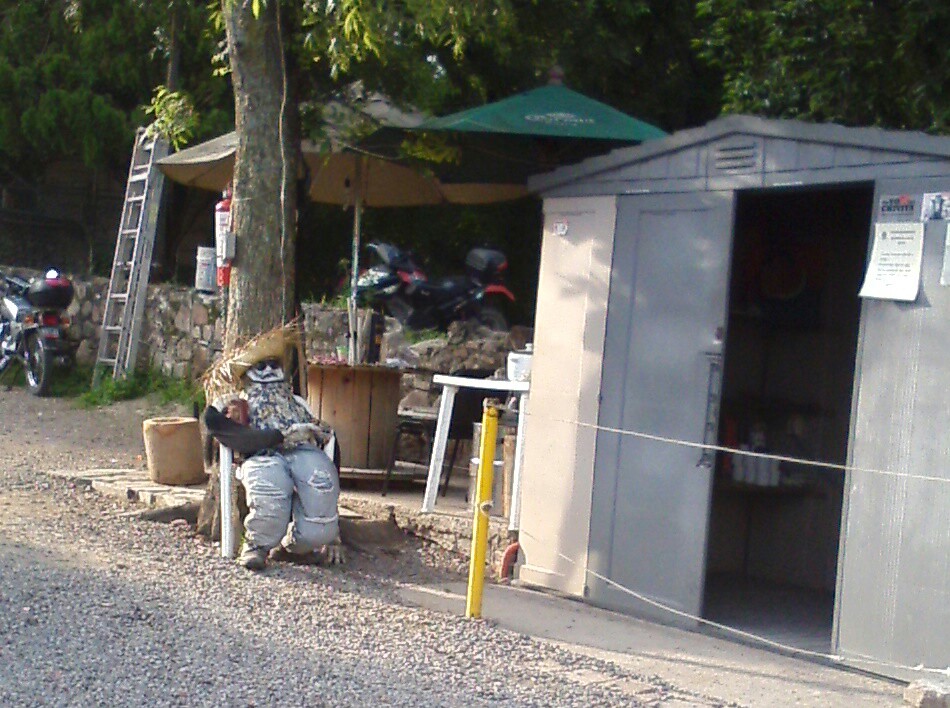
The official guard at the parking lot.

The official guard at the parking lot.

So we strolled along, it being well before 9 a.m. We arrived at the building and sat by the pigeons in front of the church. We sat there a few minutes, then doubt began to creep in. What if the office wasn’t where it used to be? What if it was closed for vacation or some other reason? It would be better to go in and see, we reasoned. And well reasoned we were. The office was no longer there. We asked the sales clerk in the store by the front door where the office was. She told us that after having been in that building for years, the office had been moved to the strip mall next to Liverpool.
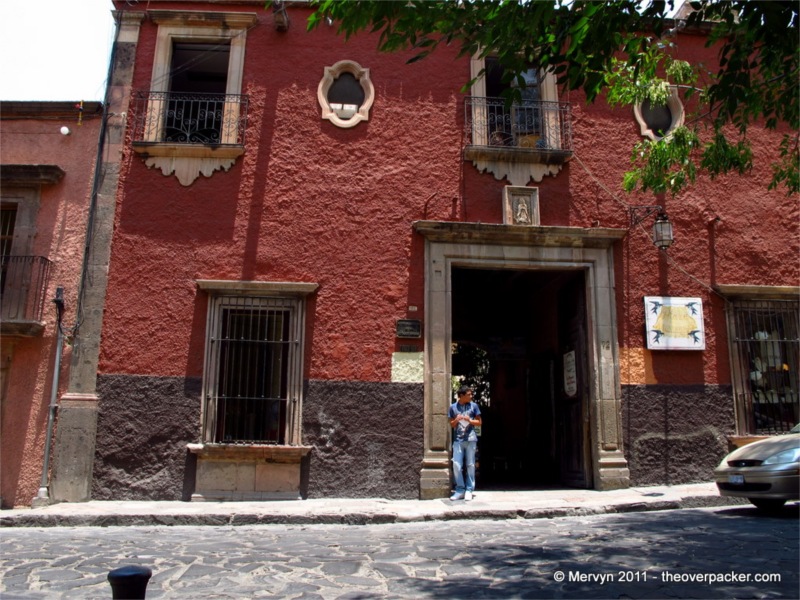
This is where the U.S. consulate used to be in San Miguel de Allende
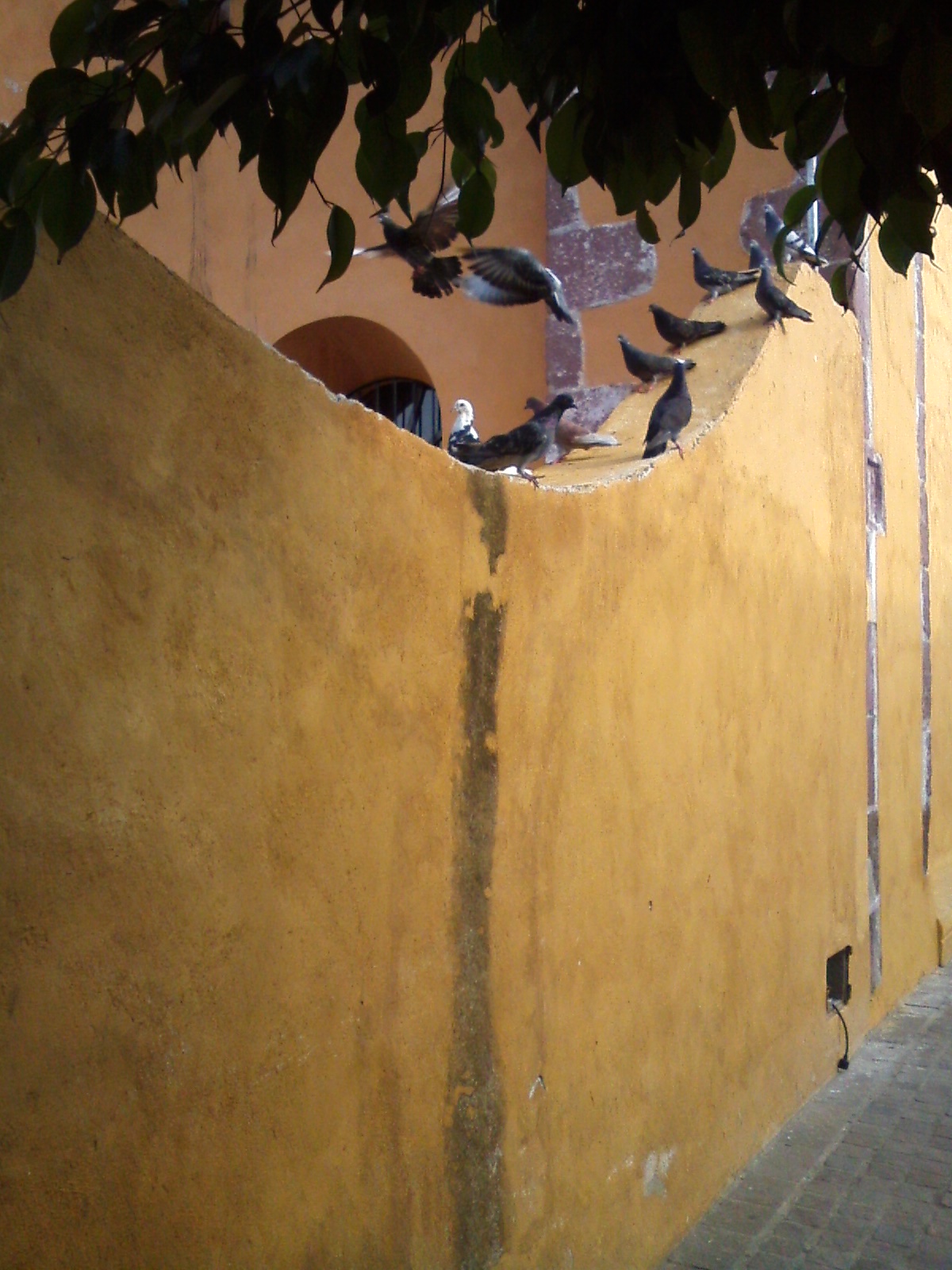
This is where the U.S. consulate used to be in San Miguel de Allende

Sitting with the pigeons in front of where the passport office used to be.

Sitting with the pigeons in front of where the passport office used to be.

Umm, ok? No reason for panic. We walked back to the truck and talked to the security guy at the parking lot. He tried to be very helpful (even though he regretfully had to charge us for the full hour of parking) and drew a little map on his hand to help us on our way. The key points in his map were the statue of Pípila where we would go around the glorieta (traffic circle) and the statue of a caballo (horse) which meant we had gone too far.

The statue of Pipila at the glorieta (traffic circle). Turn right here for the U.S. consulate. The immigration office SEGOB is left here.

The statue of Pipila at the glorieta (traffic circle). Turn right here for the U.S. consulate. The immigration office SEGOB is left here.

And we were off. It was pretty straight forward. My husband remembered that our first year doing transactions in SMA we had to go to the Bancomer bank at this strip mall to make the immigration payment and he was right. Of course, now there was a Bancomer closer to the immigration office and the strip mall had tripled in size, but it was all good.

Strip mall where the passport office has been moved to.

Strip mall where the passport office has been moved to.

Best of all, parking was free. So we got out and asked a security guard where the U.S. Consulate was and we were directed to the food court. I was flabbergasted at the luxuriousness of the area and wanted to stop at Starbucks for a cappuccino just because but my husband said he certainly wasn’t about to pay $30 pesos for a cup of coffee. I had to admit he was right, so we walked on.

Kiosk in front of the U.S. consulate in San Miguel de Allende.

Kiosk in front of the U.S. consulate in San Miguel de Allende.

We passed an enterprising kiosk that offered to get your U.S. visa for you. After reading the sign on the consulate wall that said visas could not be applied for there, I had to admit the kiosk was extremely well-situated.
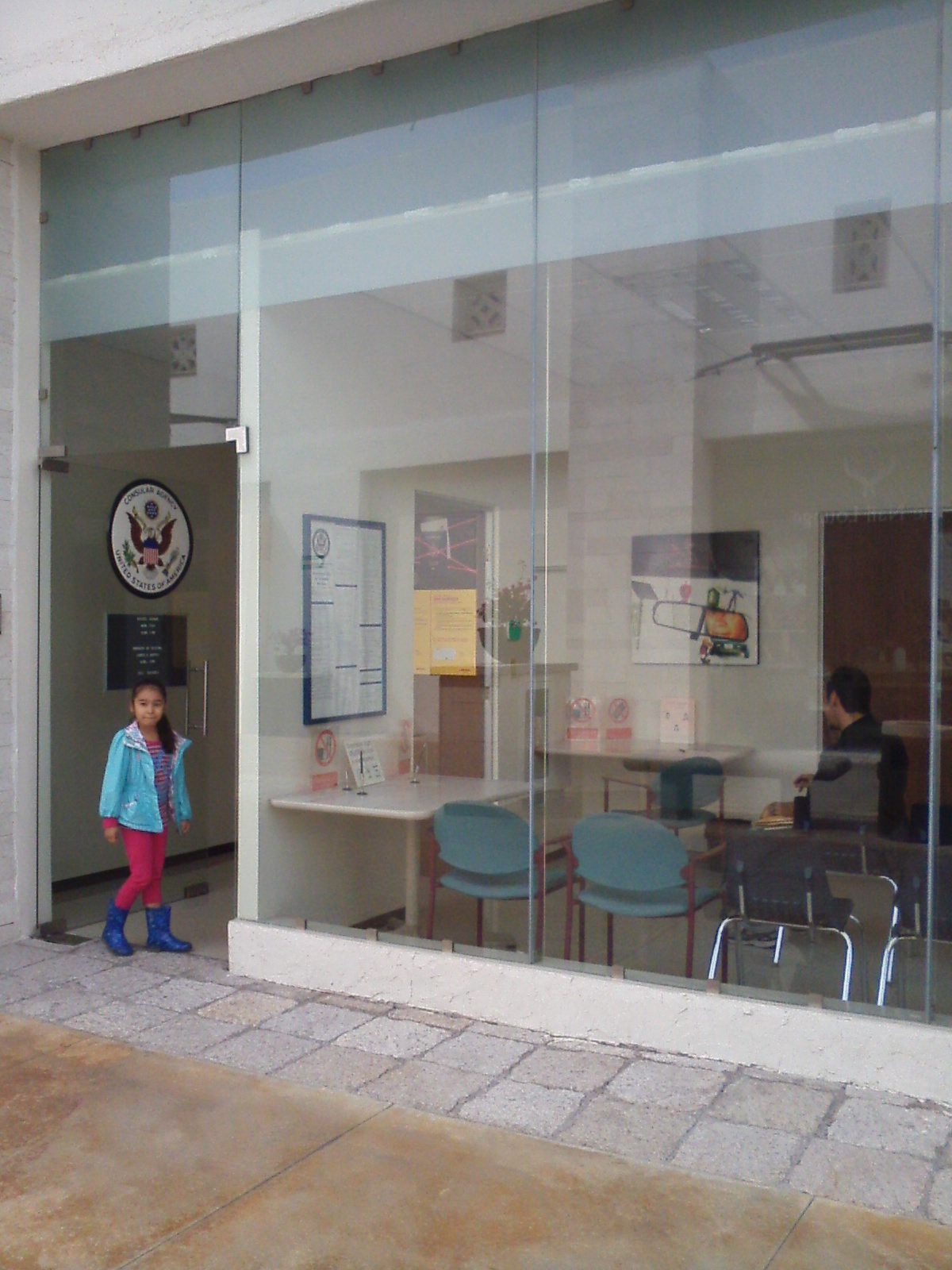
The "new" U.S. consulate in San Miguel de Allende

The “new” U.S. consulate in San Miguel de Allende

We walked into an area that reminded me of DMV and I jumped in the line. I figured at least I would have to check in, but felt sure that having an appointment would take care of everything. Even though the person at the counter in front of me was speaking in Spanish, when it was my turn, I spoke to the receptionist/secretary in English. I was in the U.S. consulate and by golly, I was gonna use English. I also remembered that the secretary was perfectly fluent in English from our last visit.

She seemed surprised that I had an appointment. Hmm. Well, I explained why I was there and gave her my documentation and then my son’s documentation. She asked whether I would be paying in dollars or pesos. When I told her pesos, she did the currency exchange and gave me a figure I could live with. I paid her and she gave me a number and we sat down to wait.

The ambassador or notary or U.S. representative or whatever he was, arrived at 10. He looked like he was ready for a day at the beach in his guayabera shirt and khakis. It might have casual Tuesday at the office but the secretary was dressed (from what I would see through the window) in formal business wear.

He spared not a greeting for the now crowded waiting room, but passed through in a flash, leaving us to cool our feet. We spent some time looking at an awful painting of a Mexican taxista (taxi driver) looking in a rear view mirror and wondered if the U.S. ambassador painted it himself because surely no one would spend good money on it.

Then he was back and flashed a number at the window. This was the sign that the group with #1 should enter into the side door where he presided much like a bank teller. The door between the waiting room and the teller office did provide some privacy, or so I thought until we saw that the back wall was glass and everyone and their brother could observe the proceedings from the food court.
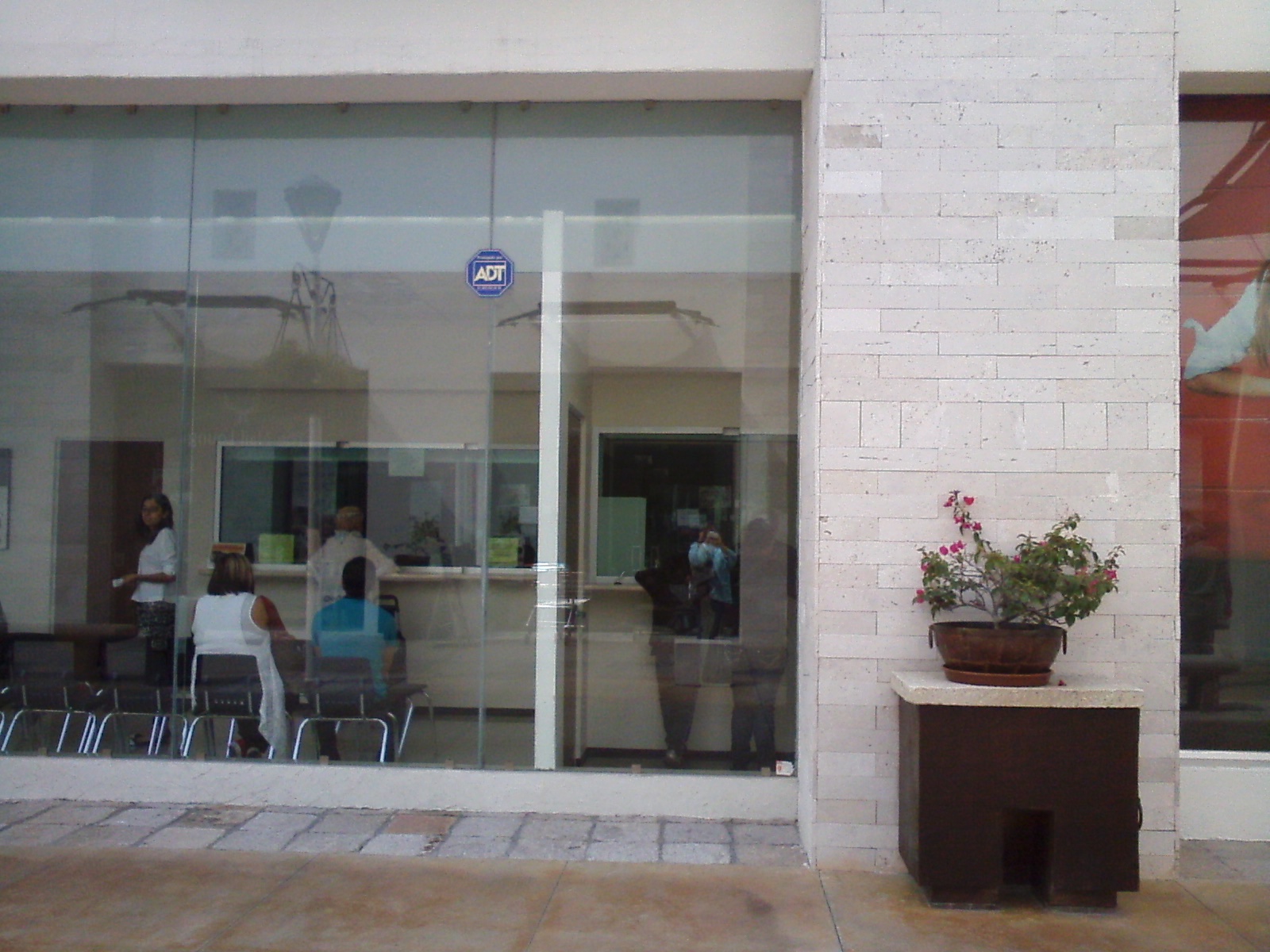
U.S. consulate privacy wall in San Miguel de Allende.

U.S. consulate privacy wall in San Miguel de Allende.

We were number 9 (so much for making an appointment) and waited about an hour. During that period, we were surprised to see Stifler’s mother and the world’s oldest fairy princess, complete with flowered crown, in the waiting room. But I suppose, everyone needs a passport these days.

Then it was our turn. We entered and swore that the information on the application for my son’s passport was correct. I swore in English and my husband swore in Spanish. We were told that our passports would be sent to us through DHL but that we could pay at the office in Moroleón. If there were any problems, the embassy in Mexico City would call me.
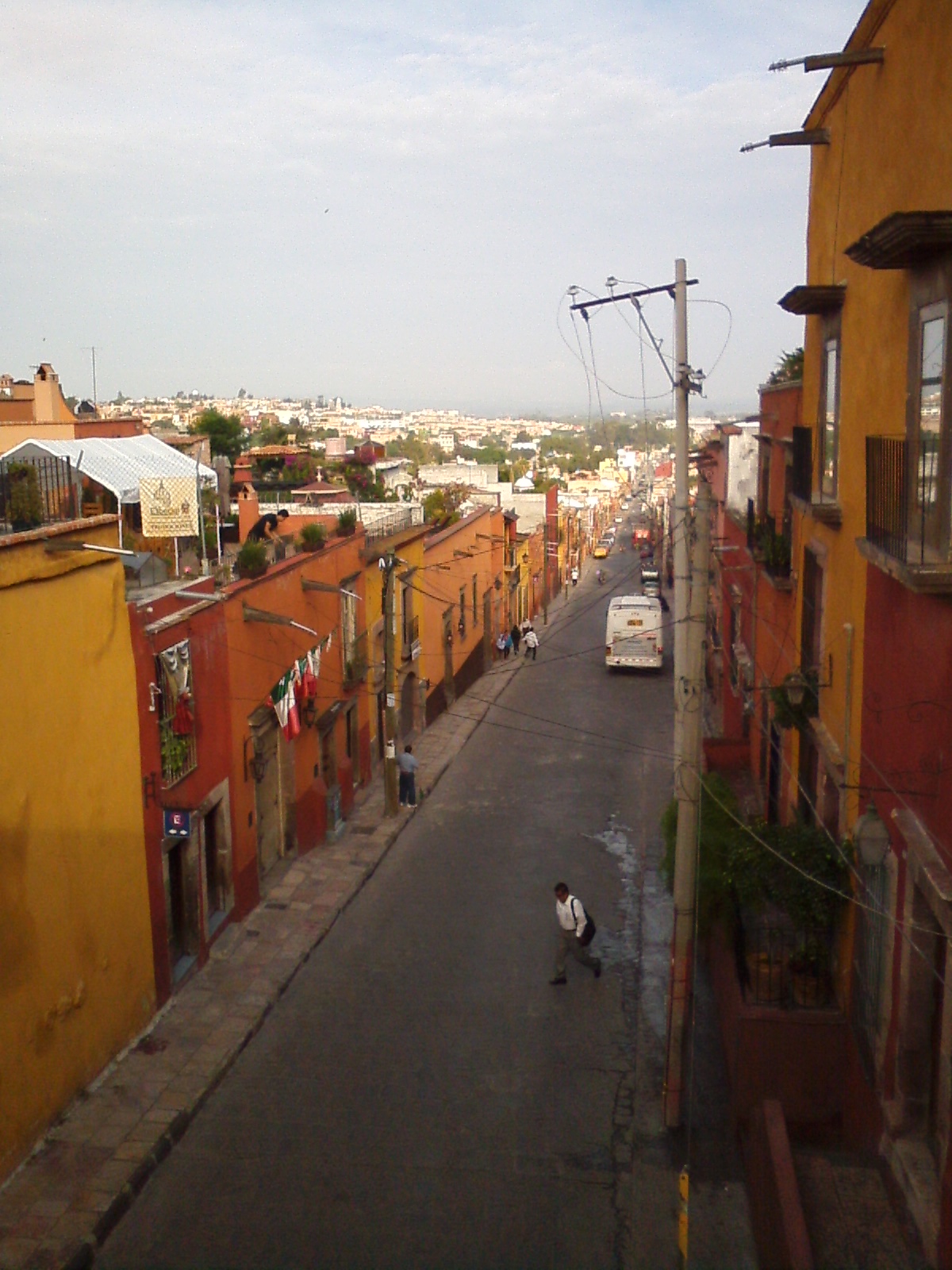
Taking the scenic route through San Miguel de Allende

Taking the scenic route through San Miguel de Allende

And that was that. We left the food court and the parking lot, but leaving SMA was a bit more difficult. We must have missed the road we came in on when we went around the caballo statue because we ended up taking the historic tour of SMA. Then we went one further and got lost yet again in Celaya, adding an additional hour to our travel time.
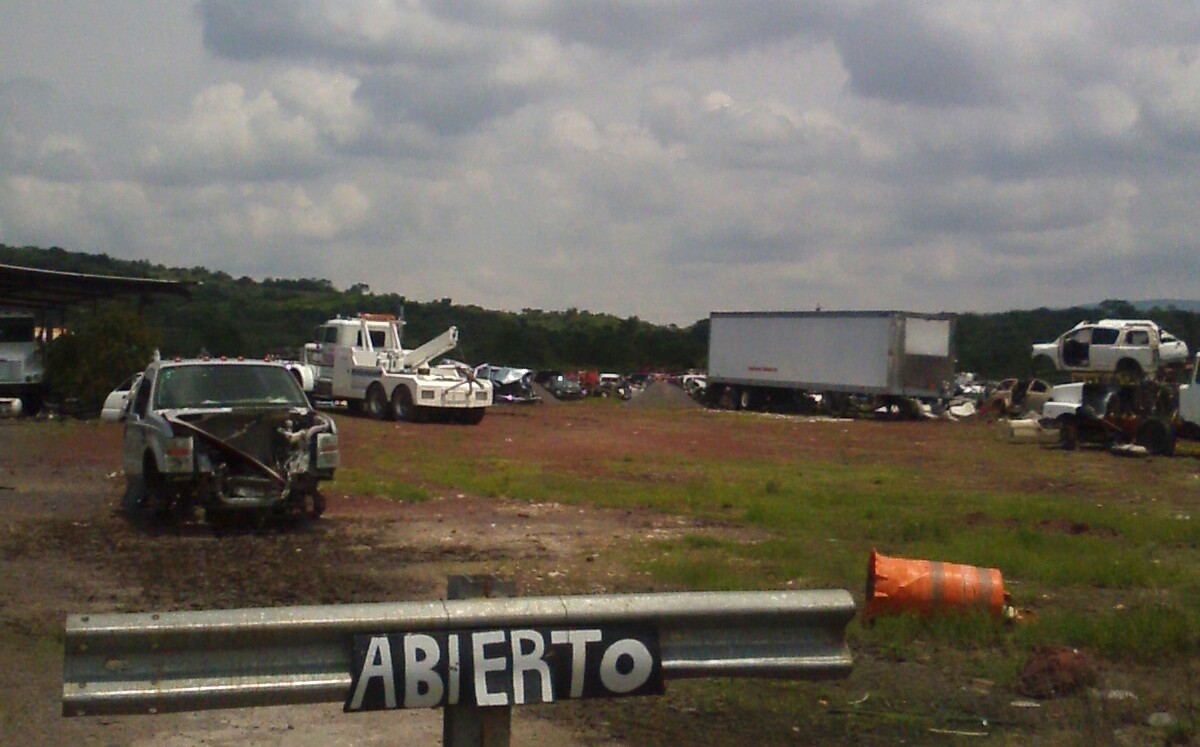
A typical yonke (junk yard)

A typical yonke (junk yard)

We stopped a a yonke (junk yard) or two in search of parts for Myrtle and even had a little cash left to eat at our favorite roadside buffet in San Pedro. Chiliquiles, nopales, frijolitos y arroz! YUM!

One of the delights in traveling is eating at little roadside stands like this one.

One of the delights in traveling is eating at little roadside stands like this one.

We went to the DHL office in Moroleón and paid the special discount rate of $200 per package a few days later. To our relief, we could pick up the documents at the DHL office since we have no address out in La Yacata. In order to pick up my son’s passport, we would need to bring his birth certificate and photo identification of the parent. I panicked a moment since I would not have my passport but then read further that I could use my driver’s license as id. Whew! Now nothing to do but sit back and wait.

But of course, things are never so easy here in Mexico.

***************8

disclosure

3 Comments

Filed under Getting Legal

Getting Legal—License plates

Myrtle

Placando Mytle (a little play on words) Placas are license plates.  Placar means to tackle.  So tackling license plates….

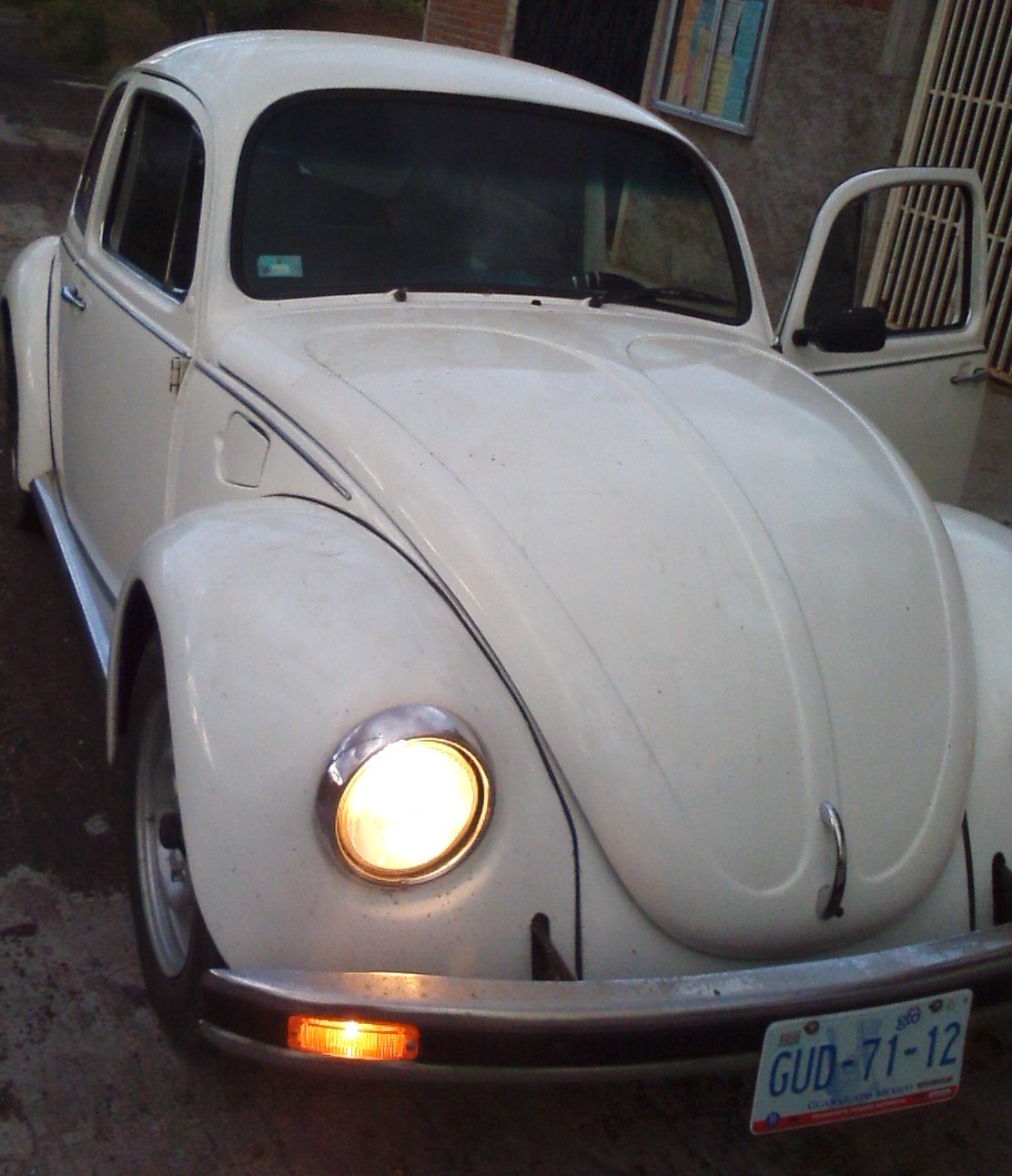
As much as I love my moto, I have to admit it is not as much fun to use during rainy season. With that in mind, this year we found a 1993 VW bug, known here as a Vocho, in our price range, owned by someone whose family we know and could feel reasonably confident buying from and voila, Myrtle joined the family.

With the policía del estado (State police) camping out at the crossroads that is the main entrance to La Yacata, (See Driving Hazards–mordidas) we decided to waste no time in getting license plates and tarjeta de circular (permission to circulate) for Myrtle.

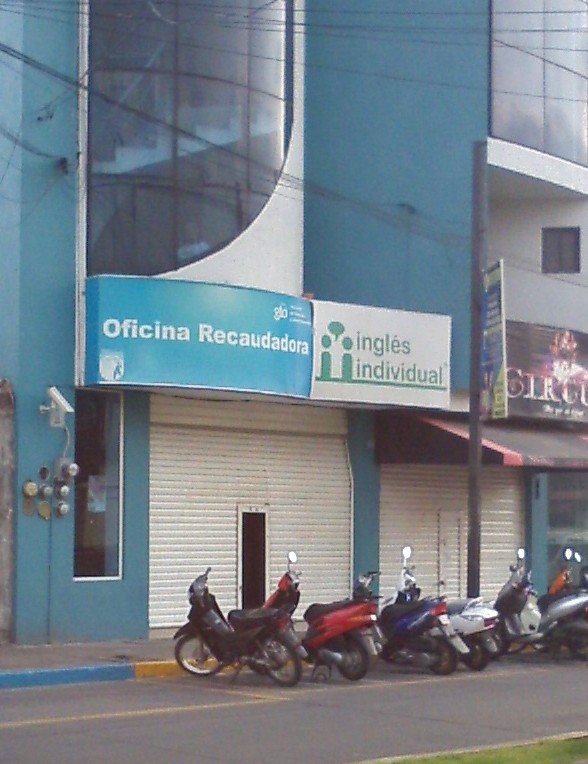
oficina de recaudadora

My husband went down to the Oficina de Recaudadora to see about that particular transaction. He took his driver’s license, his IFE (voter registration card) and the electric bill from his sister’s tortilleria (tortilla shop). However, the guy at the desk said that one or the other of his identifications must have the address that the electric bill had listed.

Oh, but wait! My newly minted moto license has that address on it! (See Getting Legal—Motorcycle license) Problem solved. So we went back and showed my documentation. I brought my residency card, my driver’s license, my passport, just in case, and Myrtle’s papers. We checked with the guy at the desk and everything seems a go. We took a number and waited.

At the counter, the girl asked for the original factura (factory receipt), the baja (the receipt from when the previous owner turned in the old license plates), the CFE receipt (the electric bill), and my driver’s license. My husband also insisted I show her my residency card. I explained that my last name is not E. but F. and that I don’t have a second last name and that E. is my middle name. My husband signed over the car to me on the back of the original factura with 6 other transfers of ownership. He wrote Cedo a los derechos a (I cede the rights to this receipt to) my name, then signed his name and dated it. The counter girl asked for copies of all these. She told us to get a number from the guy at the desk when we came back.

So we trooped down to the first floor to a costume store that makes copies, $1 peso per side. That was a little steep, but it was the closest copy place. We went back up to the third floor and the desk guy said we could go over to the counter. But as the girl said we needed a number, we asked again. He hollered over at the girl and she said we could come on over. There wasn’t a line or anything.

So she took the copies and entered stuff into the computer. She asked how much we paid for the vehicle. My husband said $12,000 pesos although we really paid $17,000 but I guess the price of the plates is partially determined by the value of the vehicle or something. We asked if she could determine if the car had ever been a taxi since we discovered chips of green paint under the white. She said that there wasn’t anything in the system that said that it was, however since it had been originally purchased in D.F. (Mexico City) there was a good chance that it had been.

She told us that the plates would cost between $1200 and $1300 pesos but she couldn’t be sure since it was the end of the month and the price goes up at the beginning of the new month. My husband asked why we couldn’t pick them up today since it would be cheaper than waiting. She said that there was a 3 to 10 day waiting period in order for the State Police to check if the documentation we presented was fake or not. No worries! She gave us a recibo de documentación para tramites vehículares (a receipt stating she had received our documentation) and an appointment for Wednesday at 1:20 pm to come back for the alta (plates and permit and literally the opposite of the baja).

So Wednesday came around and we arrived 5 minutes before our appointment. I handed the recibo (receipt) letter that we had been given to the desk guy. He took it over to the window and gave it to the same girl we spoke with before behind the glass partition. Then we sat down. The waiting area was more crowded but the TV was on, so we watched a telenovela (soap opera) while we waited. It seemed the girl was finishing another transaction and she had to go hither and yon into different areas for paperwork, so the wait was about 10 minutes.

She then called my name and we went to the window. She apologized for the wait and said that she had indeed been working a troublesome transaction and thus the delay. She gave me the plates and read off the number on the tarjeta (card) to make sure they were the same. She asked the original factura (factory receipt) and $1123 pesos, which was much lower than we had been anticipating. I signed two or three documents. She rubber stamped and signed the original and the copy of the factura and she handed me the card. We were done.

How refreshing for an official transaction to be so simple and straightforward! We took Myrtle out for donuts that very afternoon, cruising right past the policía without a care in the world.

***************


disclosure

6 Comments

Filed under Driving Hazards, Getting Legal

Driving Hazards–Mordidas

Bribery is called mordida (bite) as in a bite of an apple.

A bribe is often called la mordida (bite) as in a bite of an apple.

So for the past 2 months, the GTO State Police have set themselves up at the crossroads that is the main entryway, not only to La Yacata, but also La Ordeña, Las Peñas, Caricheo, and Pamaceo. These communities are very small, very poor and very targeted by the police for mordidas (bribes). The police’s constant presence prompted me to get my motorcycle driver’s license, however it isn’t an option for everyone. Many campesinos (country folk) are poor readers or illiterate so don’t even attempt to take the computerized exam. Others might not have an electric or water receipt to prove their residence because they lack these services in their homes. Furthermore, many of the IFE (voter’s registration cards) that I have seen from these little communities have nothing more than domicilio conocido (known address) listed since their home has no street name or number. So what’s a body to do?

So on to the story….

Sunday, my husband went to town for huaraches (large cheese and meat filled tortillas) as a special treat. He took my motorcycle rather than his own because I had just filled my tank and he was low on gas. Right after he left, my son and I went for a walk towards the crossroads so I could take a picture of some yellow wildflowers by the side of the road that I had spotted earlier. Just as we came out of La Yacata, my husband’s brother J passed us on his bike. He spent the day in La Yacata reportedly preparing an area to plant maize (corn) but mostly drinking.

We snapped the picture and headed back to La Yacata to wait for my husband. He was gone an unconsciously long time. We tried to call him, but he had left his phone at the house. My son got impatient and decided to head to the store on his bike for some munchies.

My husband arrived 15 minutes later with the huaraches, having been gone nearly 2 hours. Here’s what happened.

At the crossroads, the police stopped my husband on the moto and asked for his license, which he just renewed (See Getting Legal—Motorcycle license), and the tarjeta de circular (vehicle permit card) which he had taken with him, usually it’s in my purse. My moto has placas (license plate) and all the miscellaneous and sundry impuestos (taxes) paid. But that didn’t satisfy the police. They said that the card wasn’t valid, but it was. They said that the moto was stolen, which is wasn’t. They even lifted the plastic to see the VIN and check it against the card. Even though it was all good, they said that they would have to call it in. My husband wasn’t going to pay the mordida (bribe) they were fishing for, so he told them to go ahead and he’d wait. The officer got up in his face and wanted to know if my husband had a problem with him. He didn’t, but intimidation is part of this whole macho-mordida thing.

While they had him wait, he said that they stopped a car heading to Las Peñas. The car didn’t have any placas (license plates) but everything else was in order. The police told the driver that the new law is that you have 9 days to get placas (license plates) from the date of purchase or the vehicle will be impounded. Hmm, as we just purchased a new vehicle, this is good to know. (See Getting Legal—License plates) Many vehicles in the area are chocolates, which is the name for a car brought into Mexico from the United States that has overstayed its permit and not been legalized. (See Getting Legal—Legalizing a vehicle). This isn’t true in our case however.

By this time, my husband’s brother J rode past the policía on his bike. There is no law requiring license plates, nor license, nor helmet for a bike, although I believe there is a law that says you have to register your bike to prove it wasn’t stolen, but nobody does that. So J just assumed the police wouldn’t stop him. However, my detained and “uncooperative” husband waved to him as he passed. The officer turned to my husband and said that he knew that was his brother, then told my husband he was free to go.

The officers jumped into their official police vehicle and drove towards town. Since that was the direction my husband was going anyway, he followed. He arrived just in time to see them take J into custody. His crime? A suspicious backpack. Inside were 3 empty caguamas (liter size beer bottles) and 1 full one. He also carried an ax and hoe—deadly but not concealed weapons. My husband followed them to the jail and signed for custody of J, promising to deliver him safely to his house, which he did. He took him and his suspicious backpack and deadly weapons all the way to Uriangato and left him at the door with his heavily pregnant wife. Then he headed back to town and picked up the huaraches and headed home.

While my husband was retelling this story to me, my son arrived home from the store. He said he had just seen J by the store on the back of a gray moto with some heavy-set man he didn’t recognize. It seems that having 3 empty caguama bottles is a crime against nature and, therefore, he must have left his house minutes after my husband had dropped him off in search of the not-so-elusive cold one. So much for seeing him safely home.

Anyway, police presence also curtailed our driving practice that afternoon. Technically, the State Police only have jurisdiction on the main road. The road that goes to La Yacata and all the other little communities I mentioned is overseen by the transito muncipal (local traffic police) but they hardly ever come out to check on anything. We wanted to take Myrtle, our new VW bug, out for a spin on the local road, but since we didn’t have placas (license plates) yet and the State police were following bicycle riders to town, we thought better of it. So no practicing until the plates are on.

*********************


disclosure

5 Comments

Filed under Driving Hazards, Getting Legal, Safety and Security