Blogging Thingamajigs

eek (1)

grammarly blog

So if you are feeling a bit overwhelmed this month with the number of blog posts generated during the A to Z challenge plus the book reviews I try to squeeze in, imagine how I’m feeling.  I’ve also sort of committed to a 31-day blog challenge for May, but I think I might space that out a bit more.  This every day posting is exhausting!

While all that has been going on, I’ve been experimenting with a few new thingamajigs.  For instance, I’ve discovered Google docs.  Oh, how much easier this has made my life.  I can work from either my computer at school or home which means not having to lug my laptop strapped across my back on my moto in the rain.  Quite an improvement, eh?  I can also share documents with others.  Super Prez had a computer meltdown and lost all our Yacata files, so the current project is redoing all the spreadsheets in Google docs so he and I can both access them.

Another thingamajig I have been trying out is Microsoft OneDrive, but haven’t been as happy with it.  Yes, all my files are saved in the cloud, which is nice in the event of computer meltdown, BUT I’m at 97% capacity already and if I want more, well I’ll have to purchase it.  

Additionally, I have been playing around with Canva and although it does make lovely graphics, I haven’t been able to download them into a usable format for my blog.  I think I just might be better off using good ol’ Microsoft Paint.  Plus each little thing is a dollar here, a dollar there.  There are free options as well, and you can upload your own stuff, but well, most of the options have a little price tag.  I suppose if I had a few extra dollars floating around, it would be a worthy investment, but well, I don’t.  You can see my project here.  Lovely, isn’t it?  But how to get it into my blog?  Now that’s the question.

Join Grammarly's Affiliate Program

Then there has been Grammarly The World’s Best Grammar Checker.  With all this writing going on, there are bound to be a few errors and Grammarly has been rather helpful in this regard.  Up until now I’ve been using the free version and have been very happy with it.  With an affiliate account, I was able to upgrade for one month to the premium account and I’m loving it!grammarly free vs premium

So what’s the difference? More in-depth error correction including sentence structure, like faulty parallelism, grammar, incorrect verb tense errors, and style, including passive voice issues.  There is also a plagiarism checker, not that I plagiarise, and vocabulary enhancement suggestions.  I have the option to use British or American English, I use American English of course,  and add commonly used words to my own personal dictionary, which is mighty useful since I include Spanish terms in my blog posts.

grammarly productsIn addition to WordPress, Grammarly checks my Facebook posts and my Gmail with the app Grammarly for Chrome.  There are certainly a number of people on Facebook that would benefit from a little spell check, don’t you think? There are also Grammarly for Microsoft Office, which I don’t use, and Grammarly for Windows apps.  Another little option that I was unaware of is the Human Proofreading option through Grammarly.  When I get that e-book finished, I think this will be the way to go!
The #1 Writing Tool

So these are the recent thingamajigs I’ve been exploring in an effort to make my blogging more professional and eye-catching.  Do you know of any other thingamajigs that are the cat’s pajamas for blogging?  Do tell!

This post was proofread by Grammarly


*****************************

disclosure

3 Comments

Filed under Blogging

Surviving Martial law in La Yacata

tyranny

Martial law occurs when the highest-ranking military officer becomes head of government, negating the powers of the executive, legislative and judicial branches. In Mexico, the Supreme Commander of the Mexican armed forces is the current president, Enrique Peña Nieto,

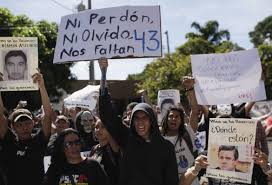
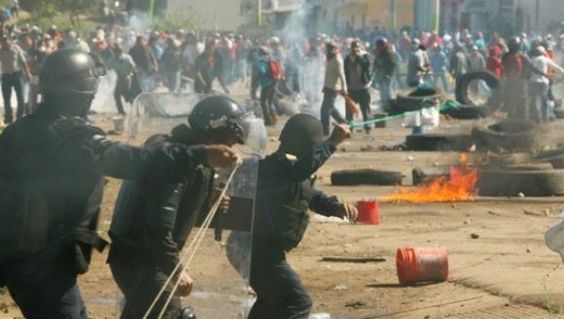
On May 3, 2006, while Sr. Peña Nieto was governor, police officers forcibly prevented 60 flower sellers from displaying their merchandise at the Texcocolocal market just outside of Mexico City. The flower sellers took refuge in the small nearby town of San Salvador Atenco. Residents and sellers set up a roadblock. Hundreds of state and federal police were sent to remove the blockade but were unable even after 5 confrontations. These confrontations were extremely violent. Two protesters died. 207 were arrested including 10 children and received what the National Human Rights Commission determined was cruel, inhuman and degrading treatment while in custody. 145 arbitrary arrests were made, that is to say without cause. Five people were illegally deported from Mexico. At least 26 women were raped by police. The NHRC determined that the police involved used excessive force, smashed windows and furniture, hauled people from their beds, molested women and children and abused the elderly and disabled. (See Video, Documentary, Commentary)

Unbeknownst to the Mexican people, on March 29, 2016, the Mexican Constitution was amended granting Sr. Peña Nieto dictatorial powers to establish a state of emergency and suspend other constitutional rights without congressional approval. Those rights that can be revoked include the freedom of association, the freedom of the press, and the right to a trial and due process.

Article 29 of the constitution now reads:

“In cases of invasion, serious disturbances to the public peace, or anything else that places society in grave danger or conflict, the president of the United States of Mexico, with the approval of the congress or the permanent commission when congress has not been assembled, can restrict or suspend, throughout the entire country or in limited places, those rights and guarantees that are obstacles to confronting, quickly and easily, the situation.

The amendment further clarifies the authorization of the use of deadly force in order to arrest or prevent the escape of suspects including the use of firearms, electric shock, and spray irritants.

All major Mexican political parties (PRI, PAN, PES, Partido Verde, PRD, Movimiento Ciudano) approved what is known as the Ley de Atenco (Atenco’s Law) with only the representative of the Morena political party opposing. (See Politicking)

Thus, all the pieces are in position for martial law in Mexico. How can you survive?

Wikihow suggests being a good citizen in the event of martial law. That implies unconditional obedience. I’ve learned quite a bit about trying to right wrongs with our ongoing battle for public utilities (See You can lead a horse to water) especially how people have their own interpretations of what is right and it usually is contrary to my own interpretation. So I don’t think I’d be able to be a good enough citizen to survive that way.

With this in mind, it would be prudent to consider the second method of survival Wikihow lists–grab your bug-out bag and flee. Fleeing without an ultimate destination may extend your life and liberty for a time, but it would be a difficult life, similar to that portrayed in the movie Defiance. While that sort of nomad existence is sustainable for a time, it’s important to educate yourself about the potential magnitude of the state of emergency. Will it be temporary or has martial law been implemented permanently? It’s very likely that once established, martial law will be hard to repeal. In the event that martial law is now the norm, what then?

Looking over the list of other suggestions of what to do in the event of martial law shows that La Yacata is a pretty good bug-out location after all.

*Become self-reliant. This is our ultimate goal in living in La Yacata. (See About)

*Avoid populated areas. Riots and violent military confrontations are centered in urban areas. La Yacata is rural as rural can be. As it is not connected to the electric, water or sewer systems, disruptions or limitations in these services will not seriously affect us. (See La Yacata still has no electricity) Most consider it bleak living and would choose to relocate to another less inhabitable area. That works for us.

*Create a community. This seems in contrast with the self-reliant advice. Perhaps it should read “Create a self-sufficient community.” The less you depend on the government, the better off you will be. We, in La Yacata, are still working on that establishing a community bit. (See Hate Thy Neighbor) Maybe we’ll be able to pull together in the event of such a disaster. Stranger things have happened.

Other than that, experts have no advice. I suppose it’s a situational sort of thing. If the occasion calls for it, can you keep your head down and remain unnoticed or is it something that calls for a stand against the atrocities? Only you can decide. Mexico has already proven itself to be violently intolerant to any sort of opposition, whether from flower sellers or student teachers (See El Dia del Estudiante). Thus, the outcome to any perceived defiance is understood.

die feet

*************************

 

7 Comments

Filed under Carnival posts, Politics, Safety and Security

Surviving a Lightning strike in La Yacata

lightning map.jpg

Did you know that Mexico has the highest fatalities due to a lightning strike in all of North, Central and South America? Mexico averages 220 deaths per year. At least 7,300 people were killed by lightning strikes in Mexico between 1979 and 2011. More than 45% of the deaths were young males between 10 and 19 years of age and most strikes happen the first half of the rainy season, between June and August. The state of Guanajuato, where we live, has the fourth highest death count. And as we have a son in the high-risk age category, these statistics trouble me.

According to researchers, this extraordinarily high number of deaths due to lightning strikes is not an equal opportunity phenomenon. “Fatalities largely depend on socio-economic factors and not the frequency of lightning strikes,” said Ronald Holle, a global lightning expert at Vaisala Inc in Arizona.

Take for example the unfortunate lightning strike that killed 7 and injured two in a farming community near the towns of Mesa Cuata and El Terrero in Guanajuato state. Three female farm workers, ages 19, 32 and 44 were killed along with four children ages 3, 5, and 14. All were struck while working out in an unsheltered field. Many houses in Mexico, including those in La Yacata, do not have electricity or indoor plumbing, two ways that lightning can be channeled harmlessly to the ground. Houses made of adobe often do not even have metal rebar built into their structures which can also divert lightning strikes.

lightning local

Lightning damaged a building June 2016 in Uriangato, the town next to us.

So what can be done to maximize your survival during a lightning storm?

Take shelter. No place is safe outside in a thunderstorm. My grandmother always made us come inside from the porch during storms, but that’s not something generally done here in Mexico.

The shelter should be a building that has electricity, phone lines or plumbing. The electric, telephone or plumbing lines will attract the lightning and channel it. But wait! La Yacata has no electricity or phone lines and although we have plumbing, our tubes are mostly plastic. Fortunately, lightning can travel through any metal wires or bars in concrete walls or flooring and that we have plenty of. (See Up on the roof that nearly wasn’t)

cam04364.jpg

Metal bars are the foundation of our roof.

If you take shelter in a vehicle, it must be a vehicle with a metal roof and sides. The metal will divert the lightning around you. If the vehicle has no roof, like a motorcycle, or is made of fiberglass, it is not a safe vehicle in which to take shelter.

If you are already indoors, do not use your phone, computer or other electrical equipment. No problem in La Yacata! (See La Yacata still has no electricity) Stay away from sinks, baths, and faucets. Stay off porches (Thanks, Grandma!). Stay away from windows and doors. Do not lie on concrete floors or lean against concrete walls.

survive lightning

If you are outside and can not reach adequate shelter, move away from hills, mountain ridges, and peaks. La Yacata is in a valley. Do not lie on the ground. Do not take shelter under a tree or rocky overhang. There aren’t too many trees in La Yacata and the rocky overhangs typically are already occupied with skunk or fox dens. Get away from ponds, lakes, pools and other bodies of water. Again, no problem in La Yacata as there is no natural water source.(See Water Woes) (See Also Lightning Strike kills 2 in Playa del Carmen) Stay away from barbed wire fences, power lines, windmills, silos or other objects that may attract the lightning. There are several lots that have barbed wire, but it is easy to avoid those areas.

Stay away from areas that have already been struck by lightning. Lightning can strike twice and often will. Even if it is not raining, if you can hear thunder, you are at risk for a lightning strike. Lightning can strike from 10 to 15 miles from a thunderstorm. Anvil lightning can strike over 50 miles from thunderstorms.

So there you have it!

Knowing these simple facts will help you survive a lightning strike–in La Yacata or wherever you are.

rainbow over la yacata

*************************


6 Comments

Filed under Carnival posts, Electricity issues, Safety and Security, Water issues