Tag Archives: Mexico

Driving Hazards–Crossing the Border

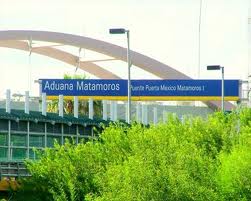
The aduana (customs) at Matamoros, Mexico

The aduana (customs) at Matamoros, Mexico

We crossed at Brownsville/Matamoros entrance to México. We spent 6 hours at the aduana (customs office.) My part was easy. I received a visa for the maximum time a tourist can be in México (180 days) and went to the next window to register the truck and trailer for the same amount of time.

However when it came to our personal items, that was a whole different story. First, we were told to go to the aduana (customs office) who told my husband to go to the paisano (Mexican citizen) office, who told my husband to go to the aduana (customs office). And around we went. Finally, my husband told me to get out of the car and wait for him while he went with an official and our vehicle. So there I stood in Matamoros, no passport, no money and no idea what was going on. After 20 minutes I started getting worried, but my husband and my son did return on foot for me. He told me that the police could make a deal so that we wouldn’t have to pay more or unload the trailer, which would have taken all day. We would pay $7000 pesos and in return receive the permit to import personal goods, no inspection and special locks for the trailer that would need to be cut off. There really wasn’t any choice but to pay up.

We did not have the cash readily accessible, so my husband sent me with another person to the bank in Matamoros to withdraw money from an ATM machine. They kept my husband, son, vehicles and personal items safe for me while I went to make the withdrawal. How considerate.
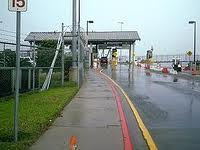
Driving through the checkpoint at Matamoros.

Driving through the checkpoint at Matamoros.

We drove back into the US, then back into Mexico. Well, I had to drive as the truck was registered in my name. We stopped at 3 places and showed our paperwork. At the first one the helpful police officer had us wait until we were sure to get the green light (no checking) before we drove up. The second, no problem. The third verified that the sticker I had obtained at the office was the same as the paperwork I had. Again, not a problem. So basically, every official is in on this little game. And everyone gets their little slice of the mordida.(bribe)

Those locks that had to be cut off came in handy when we were stopped outside of Matamoros by another customs agent. He offered us two ways to go about this. The first was to unload everything in the back of the truck for inspection. We would not have to unload the trailer because of those special locks. The second option was a discrete $200 pesos. Since it was late in the day, we handed over the mordida (bribe) and continued on our way.

I won’t say this is the same for everyone who crosses the border into México. It may have been since we had a mixed family, since I was a US citizen and my husband and my son were Mexican citizens that targeted us for this little side adventure into Mexican bribery. As I mentioned, my part, as the US citizen was pretty easy. It was the importation of household goods that was the problem.

In comparison with the experience of my sister-in-law, my entrance into México was pan comida (a piece of cake–literally bread already eaten). She and someone else drove two trucks and two trailers from Nebraska to the Mexican border. Her driving companion bailed on her at the last minute and left one trailer sitting on the U.S. side of the border in the parking lot.

My husband and her husband had driven up with our truck and were waiting on the Mexican side of the border. They loitered around for hours until finally someone asked who they were waiting for. When they described my sister-in-law D, the official said that she had been there since the morning crying and crying on the U.S. side.
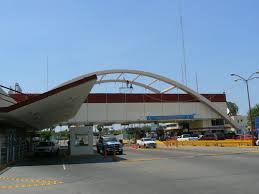
Entering México

Entering México

No bribe was offered this time around. D had to drive through customs, unload the trailer, reload the trailer, unhitch the trailer, return to the U.S. for the other trailer, unload the second trailer and reload it.

One trailer was attached to her truck and the second trailer was attached to my husband’s truck. This presented a problem a little ways down the road. They were stopped by the police (who were probably called by the customs police) and asked to show their documentation. As both trailers were registered to the truck that came from Nebraska, both must be attached to that truck, which wasn’t possible.

D, being an aggressive sort of woman, got down out of the truck while this conversation was being held. This wasn’t the appropriate thing to do and annoyed the police. (See Driving Hazards–police stops) D didn’t speak any Spanish, which further aggravated the situation. She became frustrated and even more belligerent in her attempts at explanation. Her husband didn’t help much as he kept assisting that the paperwork that they had was good. The police told M that he didn’t know how things worked in the U.S. but that they were in México now and that he’d better take control of his wife or both he and his wife would be detained. My husband took M aside and told him that he was just angering the police and to be quiet. My husband then went and negotiated a mordida (bribe).

But, apparently the police radioed ahead. Wouldn’t you know it, a second police stopped them not an hour later with the same issue. My husband negotiated a second mordida (bribe). At this point, as funds were getting low, he insisted they sell the second trailer and pile everything into the back of the truck. They parked at a gas station and asked motorists if they would be interested in buying it. Finally, someone agreed to buy it, but they would have to drive it to his house, which would risk another police stop, but as there was no other option, they did it. Then when they arrived, the buyer didn’t want to pay the price agreed upon, but again, there wasn’t much choice if they wanted to get back to Moroleón sometime in this century. Without the trailer, they were not stopped the rest of the journey. Go figure.

**********************


disclosure

1 Comment

Filed under Driving Hazards

Driving Hazards–Towns and cities

donkey in the grass

Give me country driving anytime! As you can see, country lanes are clearly marked and after the burro is done with lunch, the road will be as well.

In towns and cities, arrows are posted on the side of buildings to indicate which direction traffic is to flow, whether it is one way and which direction, or whether it is two-way traffic. Just because the road is two-way traffic for awhile, doesn’t mean it continues to be 2 way, so check the sides of the buildings often. Don’t base your assumption of traffic flow of motos, they have their own set of driving rules. And be aware that many roads have no street signs.

glorieta

This is the glorieta (traffic circle) between Moroleón and Uriangato. The conos (cones) represent spools of thread. The area is known for its textiles.

The newest fad in road construction is la glorieta (traffic circle). Technically the right of way goes to those vehicles traveling around the glorieta (traffic circle) but proceed with caution because apparently not everyone knows about that particular traffic law.

The hours to avoid driving near schools are 8 a.m. and 12:30 p.m. and again at 2 p.m. and 6:30 for the vespertino (afternoon) session. Cars are double and triple parked in no parking zones and traffic lanes to drop off students. Drivers are not in their cars since they have accompanied their particular set of students to the door to give them their bendicación (blessing) before classes begin. There are supposed to be transitos (traffic police) during these hours, but that’s not always true. There’s nothing to do but be patient.

Stopping in town is risky business. Public parking can be found, but may seem hardly worth the effort if you are just going to be a minute. It is tempting to park in those wide open areas that are designated as bus stops, but try to refrain from that. Buses have no qualms about taking your side mirrors with them as they pass. Good luck trying to collect on damages! Transitos (traffic police) also get testy if you are parked where you shouldn’t be for any length of time. They carry screwdrivers and will take your license plates right off your vehicle. You will need to go to the transit office and pay a fine to get them back. (See Driving Hazards–Police and traffic stops)

On our trip back from San Miguel de Allende, we missed our turn in Celaya and we asked for directions, which did us no good whatsoever since we couldn’t find the street we needed because it had no sign. We finally made our way back to the main boulevard and followed that to the end of the city, where lo and behold, there was our exit. So although preguntando llega a Roma, (Asking will get you to Rome) apparently preguntando (asking) won’t get you out of Celaya no matter how many people you ask.

Nine harrowing hours after we started out from Moroleón to San Miguel de Allende and back, we made it safely home. I understand completely now the custom my husband has of crossing himself and muttering a prayer before heading out on the road. I offer a prayer up myself nowadays because it really is a dangerous thing setting out your front door in México.

************************


disclosure

3 Comments

Filed under Driving Hazards

Driving Hazards–Gas and illumination

“It’s a dangerous business, Frodo, going out your door. You step onto the road, and if you don’t keep your feet, there’s no knowing where you might be swept off to.”–Bilbo Baggins

I’m an East coast girl and thus driving through major headache areas like D.C., Phili or NYC are old hat. However, nothing in my experience ever prepared me for driving in México.

Take, for instance, this last trip to San Miguel de Allende for my residency papers. (See Getting Legal-Trip 1)

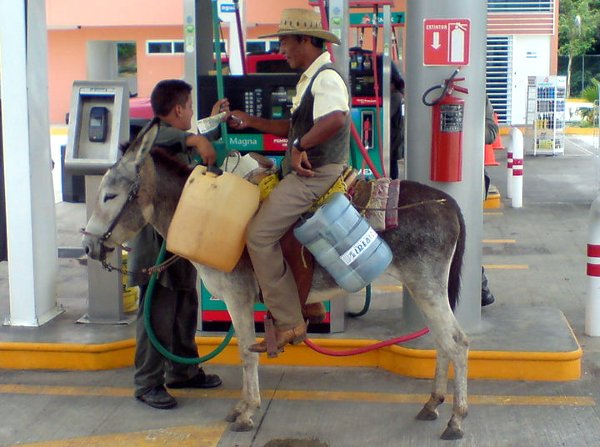
It is not uncommon to send a representative to get gas for rural communities that are not near a PenMexWe started out in the morning with a full tank of gas in the truck just in case. Gasolinera (gas stations) are not always where you think they should be. Residents in smaller towns sometimes have to go quite a distance to get gas. It’s not uncommon to send a representative to the gasolinera for several families. Various types of plastic containers are often reused as gas receptacles. I admit, one of our garafones (water jugs) has been converted to a gas container and we keep a second plastic jug (I believe it had windshield wiper fluid in it once upon a time) with a bit a gas behind the seat, just in case.

There have been occasions when we have run out of gas. (See Failing at your own business–Fruit truck) There is nothing to be done but hitch a ride to the nearest gas station and fill some sort of gas receptacle and hitch a ride back. No need to mention that this makes the trip much longer than anticipated.

Then we waited until it was nearly light to begin the trip. Driving at night is not advisable. Very few roads are lit. Cattle, horses, goats and other livestock may be tethered right next to the road for night feedings. This provides a sort of roadside maintenance as well. Bicyclists and walkers are nearly invisible as they head to work.

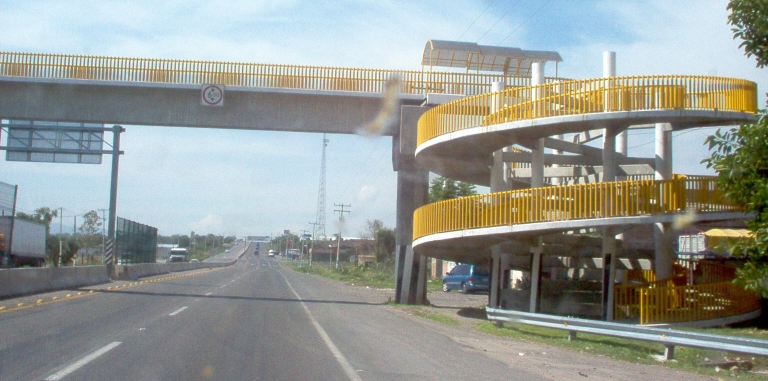
Puentes de peatones (pedestrian bridges) are not necessarily the shortest distance between two points.

Puentes de peatones (pedestrian bridges) are not necessarily the shortest distance between two points.

In the early morning, chickens, dogs and children may run wild across the road in desperate haste to get to the other side. There are puentes de peatones (pedestrian crosswalks) along high traffic areas, however, the shortest distance between two points is often not over the pedestrian bridge. So it is important to watch for those taking a “short cut” across the highway.

***********************


disclosure

2 Comments

Filed under Driving Hazards