Tag Archives: La Yacata

Insurrection in La Yacata – Letter to the Governor Part 1

Since FE Guanajuato was designed to assist rural communities in various ways, I decided it was time to ask for their advice on who we could contact and what we could ask for. The representative suggested that we compose a letter to be sent to both the governor of Guanajuato and the Mexican president, AMLO. She said these letters should be handwritten, and she would get us the correct address.

SuperPrez wasn’t as gungho as I was on this project. He felt that if it was as simple as writing a letter, everybody would do it. I wanted to give this assignment to another community member to get more individuals involved because I didn’t have the time. However, after considering the different options and their literacy level, I opted to just write it myself. 

My goal was to make the reader cry. I know that seems counterintuitive, but we had to find a way to stand out from other petitioners. If we appealed to their emotions and told a good story, that would be a good publicity opportunity since it was an election year, well, then maybe, just maybe, we’d get some assistance. 

I spent over a week on the letter’s composition. Then I sent it to Super Prez, who made some suggestions, most importantly to ensure that we did not mention or refer to the current municipio administration. Finally, I had my son double-check my Spanish, making sure I wasn’t accidentally using translated English idioms or phrases that could be misconstrued. I also told him to ranch-ify it a bit. Although it remained extremely formal, as in all written correspondence in Mexico, certain phrases were more often used in this area than others. I wanted to include as many of those as possible. 

So, to sum up, the letter provided a condensed version of how the former person in charge had defrauded and then sued the colonos de La Yacata, which you can read in glorious detail in La Yacata Revolution: How NOT to Buy a Piece of Heaven in Mexico.

Then, I highlighted the difficulties encountered by some colonos, such as health problems, poverty, robberies, and, most importantly, the lack of basic utilities in La Yacata. Next was a list of those colonos who have died without their Yacata dreams being fulfilled, like my mother-in-law, and included the Actas de Defunción (death certificates) I had on file. I told you, I wanted to make the reader cry.

The next section discussed how La Yacata had been trying to meet the standards necessary for regularización for years and included the packet of papers from the muncipio that proved that. I also emphasized that we had never asked for financial support from any organization before. Then, at Super Prez’s suggestion, I briefly outlined our water, sewer, and electricity projects.

I ended the letter with a final plea for recognition and access to whatever support was available. Super Prez and I added our names, addresses, and emails. Then, it was time to present this to the colonos and get their signatures.

****

Dreaming of a serene life in Mexico? Think again! La Yacata Revolution: How NOT to Buy a Piece of Heaven in Mexico is a gripping narrative that unveils the challenges of navigating bureaucracy, securing basic services, and facing the unexpected realities of rural living. Join the courageous community of La Yacata as they defy the odds, sparking a revolution to reshape their world. Get ready for a riveting journey of resilience, rebellion, and the pursuit of a better tomorrow. Viva la Revolución!
4 Comments

Filed under La Yacata Revolution

Signed, Sealed, and Delivered?

For the December junta (community meeting), I thought it would be a good idea to send letters to colonos to make sure we weren’t missing those who didn’t listen to the radio or hadn’t seen the sign posted on my sister-in-law’s tortillería. 

The last time we tried to rally the troops I hand-wrote addresses on flyers, and my husband delivered them. With every person averaging four names (first, middle, paternal last name, maternal last name) and every street at least four words long (Avenida Juan Jose Torres Landa), it was a very time-consuming process. 

This time, I thought I’d try to make up printable address labels so that future mailings would be easier. It was a very time-consuming process. I tried to organize the list by colonia (neighborhood) and make just one label per address if several family members had lots in La Yacata. And it was a very time-consuming process.

The final letter sent outlined what we had been doing since June, including our progress on the electricity, water, sewer, and lot registration. It also clarified that the registration process would end in January and we would be charging a fine for anyone who registered after that date (with the exception of new sales). Additionally, we would start charging a late fee for any outstanding demanda (lawsuit) money in January. This fee was assessed in 2012 in the amount of $250 pesos per lot to cover the lawyer’s defense when Chuchi sued the colonia, saying we owed him money. The letter ended up being three pages long. 

I had to buy business-size envelopes and get the 300 copies of the letter printed. It made for a hefty bill at the papeleria (stationery store). Then, there was the stuffing and the address affixation. I didn’t have adhesive labels, so I just printed it out on regular paper and taped it on. It was a very time-consuming process.

We went to the post office to see how much this would cost and the estimate was between 10-12 pesos per letter. All righty then. My husband said he would deliver them on his moto. It took 5 days and two tanks of gas, but most of them got to the right person. About 10 lived outside the immediate area, like in Mexico City or Morelia, so those did get sent via Correos de Mexico. Then I discovered another 17 in his messenger bag that he said were “duplicates” but weren’t, so that bunch got mailed as well. Just so you know, Moroleon mail delivery is done by bicycle in most areas, so I imagine those last 17 deliveries were time-consuming as well.

This massive letter also contained information on our brand-spanking new Facebook community page and my phone number as a WhatsApp contact. As soon as the letters hit the doorstep, I was getting calls. Phone calls, mind you, not WhatsApp messages. Of course, these people were calling during my online work meetings and classes, which totally stressed me out. 

So it came to me that perhaps these methods of communication (Facebook/WhatsApp/letter) weren’t the best for our community. A good portion were illiterate, which means sending text messages is nigh impossible unless they had a child or grandchild do it for them. Then the humongous letter was dense and packed with juicy informative bits that a portion of property owners could not read. Again, they would need to rely on someone else to read it to them. This literacy gap would explain why most juntas (meetings) that Chuchi (the former guy in charge) called were via radio announcement only. It also explained how he managed to bamboozle residents for so long. They weren’t able to read those documents he flaunted and believed his explanation of things. Sigh.

We rehung the message board as well.

But I have to say, this letter-sending method of communication was effective to some extent this time. Property owners came out of the woodwork. J. Trinidad called to say that he gave his lot some time ago to Pancho Flores to cover a business debt (something to do with cell phones), but Pancho died of Covid two years ago and that he didn’t know who had the property certificate now. Ma. Trinidad (no relation) called from Chicago to say that she had the property certificate with her in the U.S. and was planning on coming home in February, depending on this next doctor’s appointment to die at home. 

Family representatives came knocking with concerns about how to register lots of family members who lived in the U.S. now. Several more contacted me saying their parent had passed on and they needed to transfer ownership, so I explained the procedure to them (copy of will and/or acta de defunción to start with), and we got those registered. 

As a result of this letter-sending campaign, there were a few follows and likes on the Facebook page, but not as many as I’d hoped. Many of the colonos are over the age of 70 with a handful over the age of 90 and not tech savvy. I was hoping that the Facebook/WhatsApp information would help those who are in the U.S. keep up with our progress, but perhaps their parents (those 70-90) who couldn’t read didn’t know to pass that information on to them. 

There were also a handful of visits, before and after the junta, about different items. Some came to assure themselves that their lots were registered (most were). Others came to pay the $200 pesos we were gathering to clean out the unregistered community well and conduct water studies to see whether it not we could use it as our water source. And still, others came with certificates issued by the now-deceased Chuchi claiming property rights to lots that belonged to others. Chuchi was notorious for reselling lots when the coffers were empty. Unfortunately, now that Chuchi has gone to the great beyond, there’s not much we can do to help them recover their money anymore. 

Although I thought the letter would launch us ahead in the community organization process, it looks like the paperwork has just begun. 

**************

Read the prequel! La Yacata Revolution: How NOT to Buy a Piece of Heaven in Mexico

3 Comments

Filed under La Yacata Revolution

Up the Hill to Fetch a Pail of Water

Although we were all gung-ho to get some estimates for the sewer hookup, the powers that be in the presidencia told us that we needed to focus on the water project first. As they were willing to entertain the idea of legalizing the illegal pozo (well) that Chuchi commissioned and then sued us over, we needed to reexamine the perforation. 

After the well was closed by the water commission and the lawsuits ran their course, we made a sort of roof to cover the open hole to the abyss. This was to prevent any animals or humans from falling to their deaths and give some measure of protection to the tubes that were installed in the event we could make use of it sometime in the unforeseeable future. That was done about 10 years ago. 

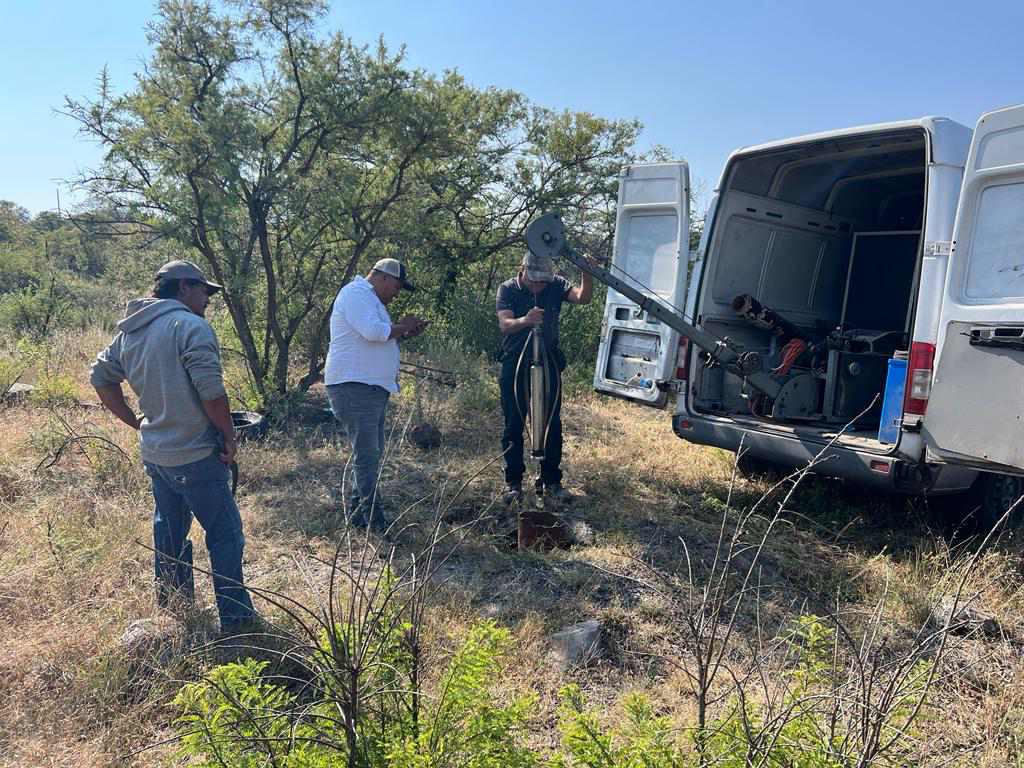
In November, we commissioned a well study that involved uncovering the site, taking depth measurements, and dropping a camera down the hole to see its condition. Unfortunately, someone deliberately threw a boulder down the well, and it was lodged about 100 feet down, so the well study company could not get accurate readings. Three guesses on who I suspect of doing the dastardly deed. 

This well study, which isn’t useable as it is incomplete, cost 7000 pesos. We’ll need someone to come out to clear the boulder and clean any debris at the bottom of the well. The estimate for that job is about 90,000 pesos. Next, a new study will need to be done (another 7000 pesos), and then a water quality and quantity study to see if the water table can handle a drain on it at that location, and that will be about another 13,000 pesos. 

The total expense would only be about 200 pesos per lot, divided equally among the property owners. However, as we discovered with the demanda (lawsuit), not even half paid the 250 pesos that saved our properties from repossession.  And as we have a small window of opportunity to take advantage of the presidencia’s offer to legalize (next year being an election year and all), we can’t wait for the grumblers and chin pullers to open their wallets and pay up.

****

Curious about how it all began? Check out La Yacata Revolution: How NOT to Buy a Piece of Heaven in Mexico.

1 Comment

Filed under La Yacata Revolution