Category Archives: Mexican Holidays

Grandparents’ Day in Mexico

Extended family is important in Mexico. Grandparents often live near their grown children if not in the same house and as a result, are part of the daily lives of their grandchildren.

IM000331.JPG

In our family, my son’s abuelo (grandfather) lives just up the road.  My husband lived with his grandmother, Mama Sofia, for a time as a teenager. We visited Papa Rique and Mama Vira regularly. Mama and Papa are the shortened forms of Mama Grande and Papa Grande which are the terms used in Cerano for grandparents rather than abuelo/abuela.

So it’s no surprise that Mexico has a day to celebrate grandparents. Most Catholic nations celebrate Grandparents’ Day on July 26 because this is the feast day of Joaquin and Ana whose feast day is July 25.  Joachim and Anne were Mary’s parents and therefore Jesus’ grandparents. But not Mexico. According to some sources, under Porfirio Diaz (which incidentally is my husband’s grandfather’s name and my son’s middle name) events and activities to honor the elderly in the community occurred during the celebration of the feast day of Agustin de Hipona on August 28. Another source credits the idea of Grandparents’ Day to Lazaro Cardenas. Apparently, he made mention that there should be a holiday to celebrate grandparents, but I wasn’t able to find any proof that he actually established a day.  A third story says that Edgar Gaytan Monzon, a radio announcer, developed the idea of Grandparents’ Day because he felt that the UN’s International Day of Older Persons excluded those who were grandparents in their 30s, 40s or 50s.  Being a younger grandparent is not uncommon in Mexico. The average age of a woman having her first child is 21.3 years, although in our area it seems the average age is about 18. So if a woman has her first child at 21 and her child has his or her first child at 21, the woman will be a grandmother at 42.  My husband’s sister became a grandmother this month. She’s 40.  The dates don’t make sense for this last one to be true.  International Day of Older Persons was established after Grandparents’ Day.

What’s more likely is that Mexico saw that the US had a day for Grandparents established in 1978 and thought it was a good idea.  Regardless of whose idea it was, since 1983, Grandparents’ Day has been observed on August 28 in Mexico.
the greats

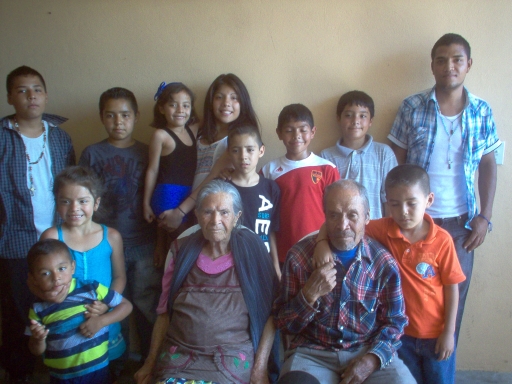
Mama Vira and Papa Rique with some of their great-grandchildren.

It’s customary for grandchildren to make a card or other small craft to give to their grandparents. Sometimes a special meal is prepared.  As with the other family holidays, the most important thing is to spend time together.


3 Comments

Filed under Mexican Holidays

Father’s Day in Mexico

Mexico has been a patriarchal society since pre-conquest times. Yet Father’s Day isn’t as popular in Mexico as Mother’s Day. Only about 50% of Mexican households celebrate Father’s Day, compared to 78% of households that celebrate Mother’s Day.  

According to Walmart, sales are only slightly higher than Valentine’s Day (El Dia del Padre no es Tan Padre). The Mexico City tourism president says this difference in spending is because the father provides the only income for the family and therefore chooses not to spend money on himself.  I don’t know about that. In our town, the women provide the main income for their families.

What I think is more likely, is that in many families, the father is somewhere else working.  One study estimates 9% of Mexican households are without a father in the house.  I find that figure extremely low. Another study says that nearly 35% of male immigrants to the US have children in Mexico under the age of 15. Again, I think that figure is too low.  There isn’t a reliable way to gather this information from undocumented workers or those that are only temporary workers (6 months in Mexico, 6 months in the US).  Those figures don’t include fathers who have gone away to work but are still in Mexico, either at the border or in larger cities.

Although, the father is still “el jefe de la familia” in the Mexican family whether or not he is living full-time under the same roof as his children there is perhaps less motivation to celebrate the holiday in his absence.  

Just like in the US, Father’s Day is the third Sunday in June. Instead of gifts, most families celebrate by having Dad’s favorite meal and letting him be to watch the afternoon soccer game in peace.

tree planting

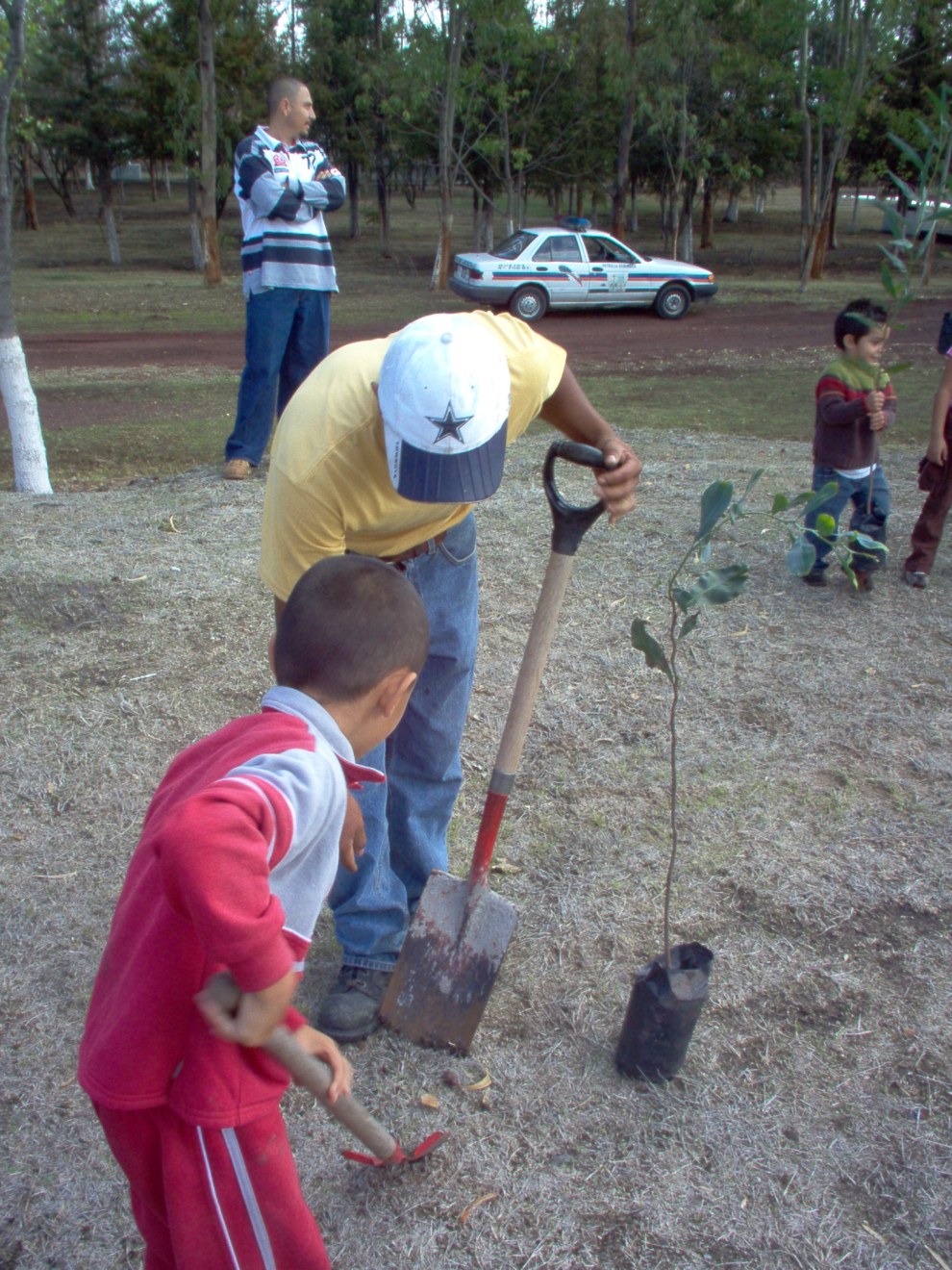
Planting a tree on Father’s Day.

Since the extremely long school year found in most of Mexico means that students are not out for summer vacation yet, most schools have a Father’s Day event the following Monday.  Activities are usually planned that are a bit more dynamic than those expected for Mother’s Day. There are sack races, father/child soccer games, tree planting excursions and maybe a little bottle of tequila in the gift bag.

What are the Father’s Day traditions where you live?

Leave a comment

Filed under Mexican Holidays

Birthday Boy

My son turned 16 in May. We opted to invite some of the family over for a cookout.  It went better than I expected. As you’ll see, Mexico does its own thing when it comes to birthdays.

In the morning, just at dawn, my husband and I crept into my son’s room to “dar el remojo” (give the soaking). Instead of birthday spankings, water is dumped on the birthday boy or girl. Way before the Catholic church arrived to baptize the indigenous people, rain was the blessing given by the gods. El cumpleaños (anniversary of completing years rather than the day you were born) deserves some liberal blessing libations, don’t you think? Of course, my son sputtered and flopped about like a drenched chicken, but a little water never hurt anyone (except the Wicked Witch of the West but she isn’t known here in Mexico).

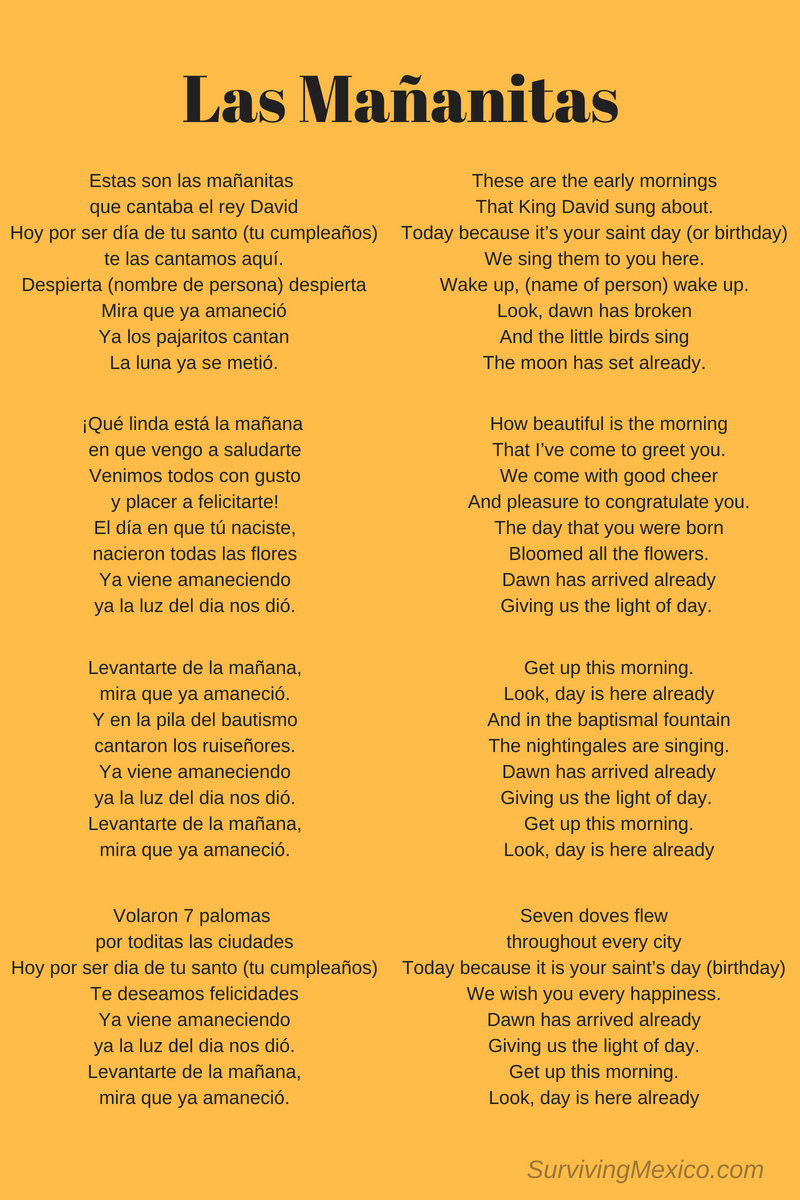
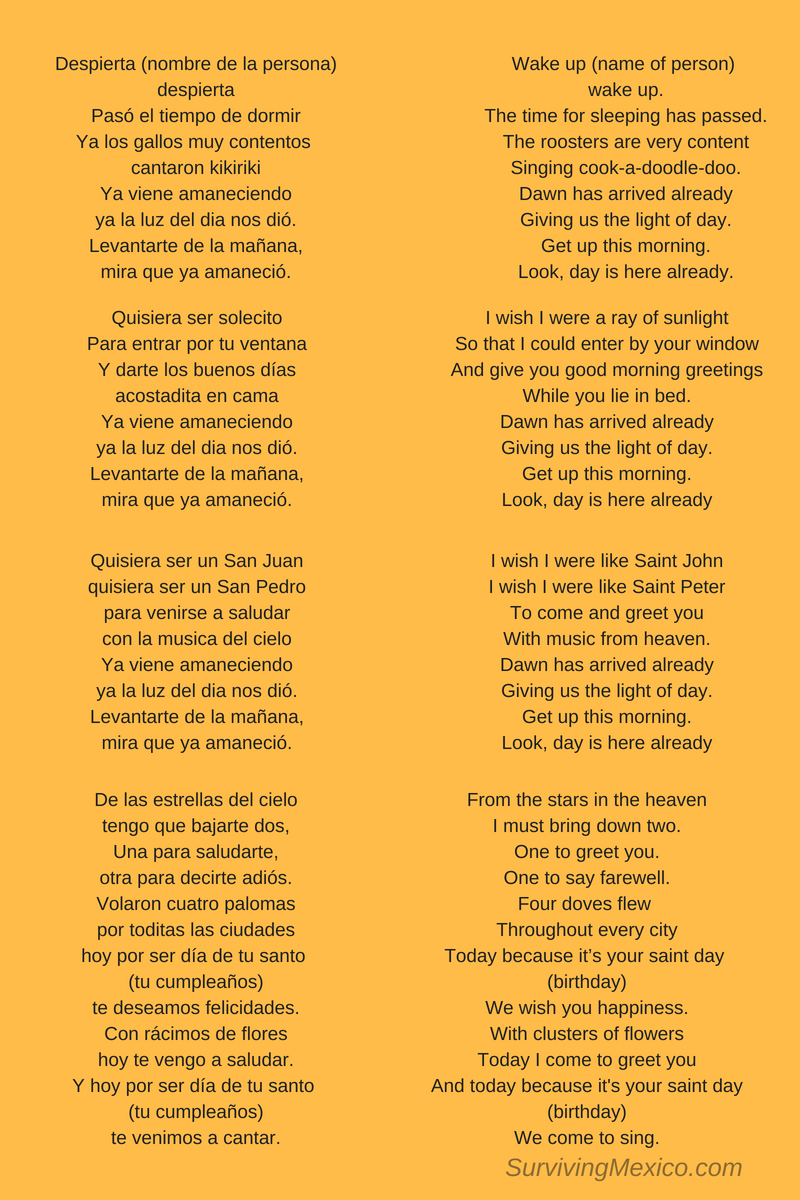
In the afternoon, after we ate all the tacos we could eat, it was time for the cake. Instead of singing “Happy Birthday” the traditional song is “Las Mañanitas” which is also sung on Mother’s Day, Valentine’s Day, the Virgin of Guadalupe’s day and saints’ days. It’s a pretty song used for serenading. Typically, only the first verse is sung at birthdays followed by a coro (cheer) “A la bim, a la bam, a la bim bom bam, (name of the person, name of the person) Ra, ra, ra.” As it’s all nonsense, no translation is needed. Remember, in Mexico, more often than not, your birthday and the day to honor the Saint for which you were named are the same day, thus “el dia de tu santo” (your saint’s day) in the song still applies although it is sometimes altered to “tu cumpleaños.”

Las Mañanitas (1)

Despierta (nombre de la persona) despiertaPasó el tiempo de dormirYa los gallos muy contentos cantaron kikirikiYa viene amaneciendoya la luz del dia nos dió.Levantarte de la mañana,miAfter the singing, the chant begins “Que le sople. Que le sople.” encouraging the birthday boy or girl to blow out the candle. The next step is “Que le muerda. Que le muerda.”  The birthday boy/girl is instructed to take a bite out of the cake which inevitably results in a face plant when someone attacks from behind. Then the chant changes to “Que le parta. Que le parta.” indicating it is time for the cake to be cut and served. 

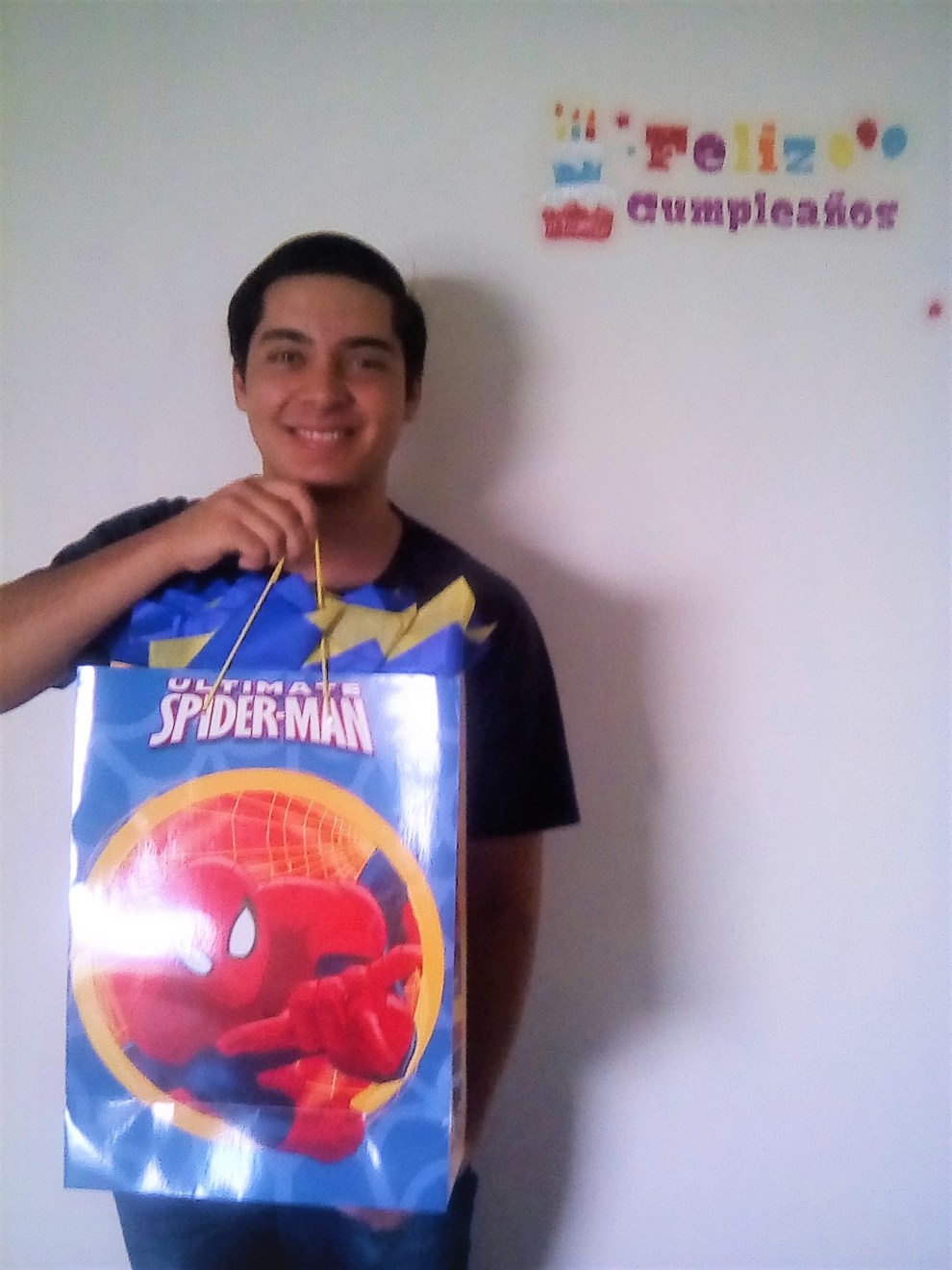
Breaking a piñata at a birthday party is typically only found at parties for the very young, and well-to-do families, or so says my husband.  Considering he came from a family with 11 children, it really wouldn’t have been affordable to have a piñata for every child’s birthday, so I can see his point. We have had piñatas in the past, but not this year. For the same reason, giving birthday gifts isn’t one of my husband’s family’s traditions. Thus, this was my son’s lone b-day present all decked out in Spiderman, for old times sake.

IMG_20180509_144319.jpg

So there you have it–the low-key event marking my son’s 16th birthday.


2 Comments

Filed under Mexican Holidays, Parenting Challenges and Cultural Norms