Elder Care in Rural Mexico

Assisted living facilities are a relatively new concept to Mexico and mostly confined to highly concentrated expat areas. You can find private nursing homes in places like Ajijic, Lake Chapala or Puerto Vallarta in Jalisco. San Miguel de Allende, Guanajuato in the interior of the country is another expat haven. Along the US/Mexican border, the states of Chihuahua and Baja Norte are just a short drive from San Diego and El Paso, making them areas of high demand for American citizens looking to reduce their expenses when it comes time to find a place for mom and pop.

Casa Hogar para Ancianos (nursing homes for the eldery), asilos (asylums) and casas de adulto mayores (homes for older adults), are not as common outside of these expat areas. Although small towns often have at least one, usually run by the Catholic church, it may not meet the minimum standards you feel comfortable with. However, there are several other options available if you need assistance in caring for elderly loved ones in rural Mexico. 

Mexicans often live in intergenerational homes, designed to accommodate parents, children, grandparents and even great-grandparents. It’s not uncommon to find homes with separate mother-in-law casitas or a suite of rooms separate from the main house.

If your elderly relative prefers to remain independent as long as possible, there are ways to accommodate that as well. It’s customary for even the middle class to hire a cleaning lady that comes several times a week. She often takes charge of shopping and simple meal preparation for the elderly in her charge as well. Many grocery stores offer delivery service, even in rural areas, making it easier for someone up in years to keep stocked up. Fruit and vegetables trucks come right to your doorstep once a week in many rural areas. Potable water and cooking gas is delivered in the same manner. 

Several of our older residents in Moroleon, GTO.

Even when the elderly are living independently, there are very few elderly that have been completely abandoned. For example, Mama Sofia and her husband Tio Felipe lived in their own home in Cerano while Tio Felipe’s great nephew’s wife and daughter came by once a day to bring them hot meals and check on them. They lived there until Tio Felipe died at 98, then Mama Sofia’s daughter took her to live with her in Zamora, Michoacan where she died a few years later at 97.

In our town, there is an elderly couple that makes the rounds of the local businesses every morning. They are in the bottom right of the picture above. The husband is 102 years old and his wife a mere 80. She is a bit impatient with his slow gait and often is several feet ahead of him on the walk to town. They stop at a place that has coffee for a cup each, then they stop and receive 5 pesos of tortillas from my sister-in-law’s tortilleria. After that, they pass by the carniceria for some carnitas. I’m not sure of the other places they stop. All of these small businesses give them this little bit without charge. Small towns tend to take care of their own. 

In rural Mexico, the elderly often are active in the community while many senior citizens continue to work out of necessity. Our neighbor Doña Oliva is 75 and each morning she has pickled pig feet, bunuelos and other food items for sale. You can see her stand in the top right of the picture above.

Our other neighbor down below, Don Alfonso rode his bike 2 miles to tend to animals he kept in La Yacata. He is now 98 and for the last six months has been unable to make the trip, now assigned to his grandson. 

My own father-in-law is 76 and bikes daily to town to pick up some pan y leche and dog food for his two four-footed companions. His mid-day meal is prepared by his daugher T and delivered by his son B. We try and keep an eye on him as well, but he doesn’t much like hovering and sometimes heads down the opposite road so we can’t keep track of his comings and goings as well as we would like. 

When you need more help with those that have medical issues, full-time caretakers and even trained nurses can be hired. You may need to spend some time finding just the right person for the job however. Some families have opted to rent a small house and have caretakers look in on their elderly family members periodically. Others have chosen to have a live-in caretaker assume full responsibility 24/7. Mexican culture reveres those that have reached “la tercer edad” (the third age) and caring for senior citizens is not looked upon as a burden by most.

How have you found elder care in rural Mexico?

Leave a comment

Filed under Cultural Challenges, Parenting Challenges and Cultural Norms

Quarantine Project #4 — Back Porch Planters

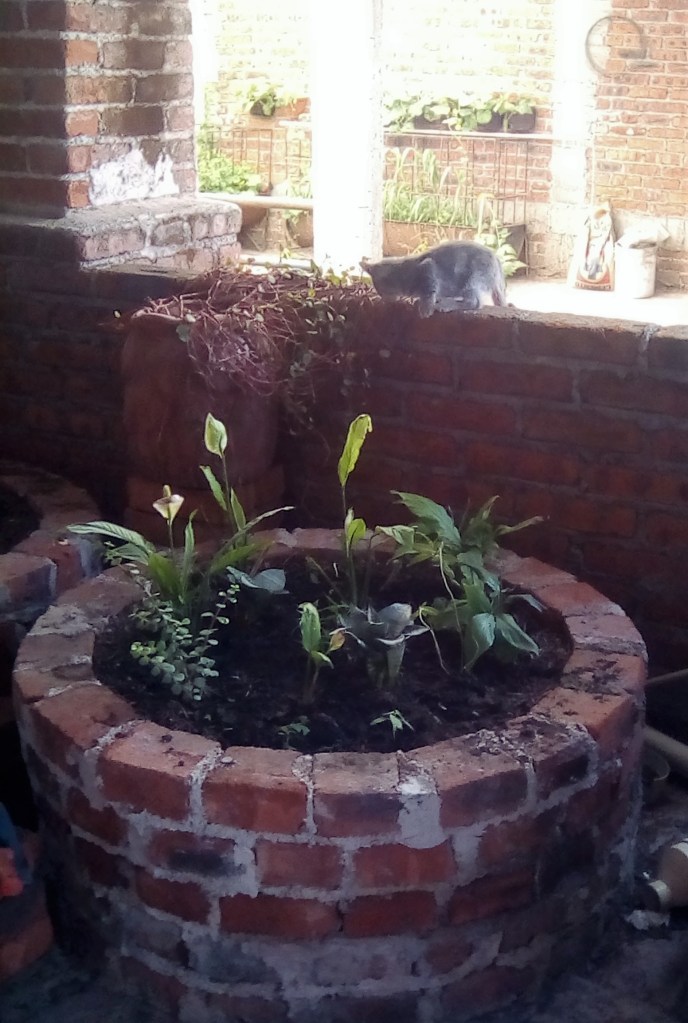
Once the tinacos were moved to the new roof, my husband started on the back porch. I wanted some additional planters and had him make them from the bases where the tinacos had been.

Since growing our own food has been a priority for some time, I used one to plant leafy greens and the other for root vegetables. 

After we got Fuzz, the planters were completely ransacked after he figured out how to climb that high. I replanted with some larger plants instead and that seems to be more to his liking. He hasn’t bothered them yet anyway.

My husband also ran a tube from one of the tinacos on the roof and attached a short hose for watering. Since we have a rain barrel there as well, there is plenty of water (at least in the rainy season). 

He hasn’t finished the patching of the wall on this section of the house either. I know it is his least favorite part of construction, so I’m sure he’ll put it off indefinitely. Meanwhile, about those tejas from Quarantine Project #1….

1 Comment

Filed under Construction

Quarantine Project #3 — Rooftop Garden

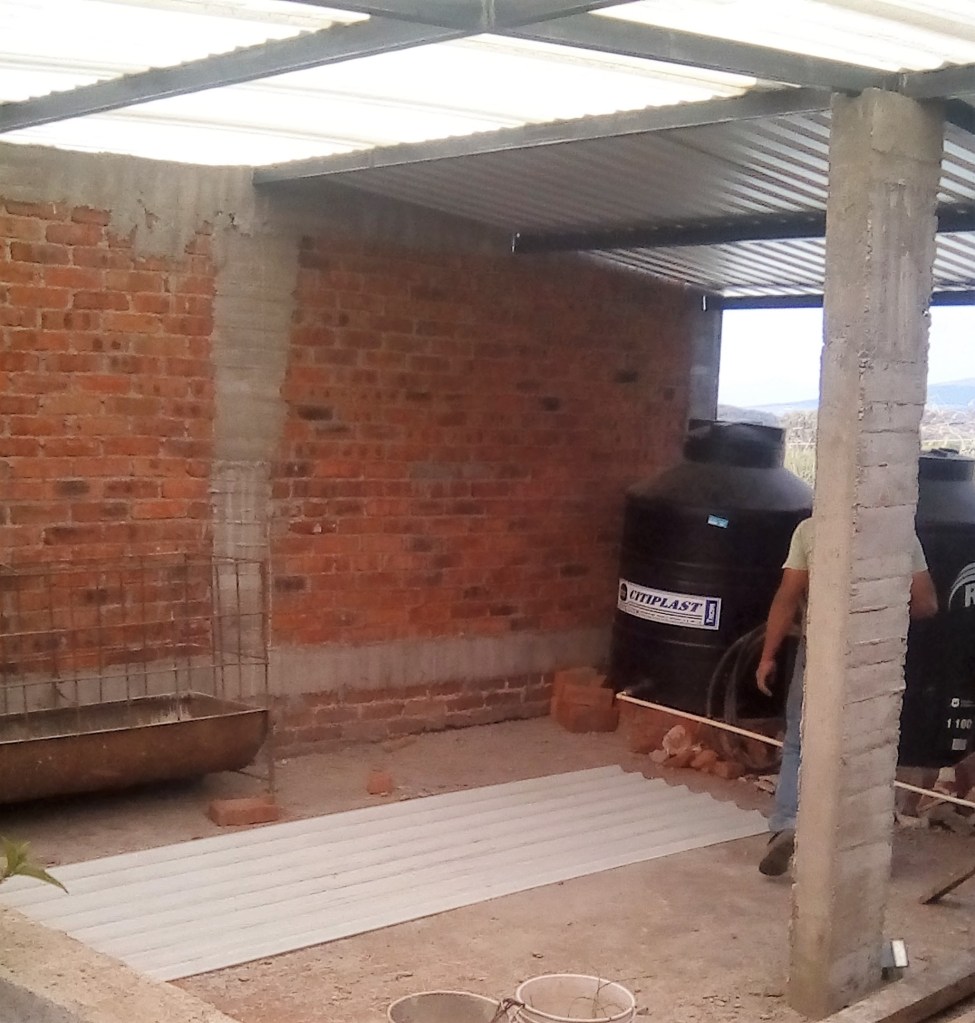
Since we now had a solid roof instead of laminas (corrugated steel roofing) over the animals, my husband decided he’d move the tinacos from the back porch to there. We are now up to six 1100 liter tinacos and a 5000 liter aljibe (cistern) for water storage. As my son says, you just can’t have too much water. 

I told my husband several times that he’d need to make the tinacos higher to account for the difference in the fall from where they were to where he put them. He didn’t pay me any mind until after the tinacos were filled when he discovered that they weren’t high enough for gravity to completely empty them. So once we used the water, he raised the bases some more before the next water shipment. 

We went back and forth on where to put the entranceway to the new area, from the front or back porch. The back porch would require an additional walkway, but I still think it’s a good idea. The entrance ended up being smack dab in the middle of my flower garden. I made him move the plants first though.

Then the wall needed to be raised. If you remember, that area was really our weakest spot when it comes to security. Anyone could hop on the neighbor’s roof and swing over into the front garden area if they really had a mind to. So up the wall went. 

We went back and forth on whether to put a transparent lamina roof or reuse the old roof or to leave it open. I thought a roof would be best, although I wasn’t sure if I’d have quite enough money to get new laminas. In order to put a roof up, we needed to get some beams for support. That cost a bit more than I expected, but we managed.

Then the beams had to be set and welded into place. Instead of having the welder guy come out and do it, my husband said he’d do it. We would just need to rent the welding machine. Just like the last time, there was an issue that we didn’t have an actual address in La Yacata but my husband talked the guy into it, signing a pagaré (promissory note) as collateral. 

I told my husband that he needed to wear the face mask to protect his eyes when welding. He thought it was too hot and cumbersome, so he popped out the little screen piece and held that up to his eyes while he welded instead.

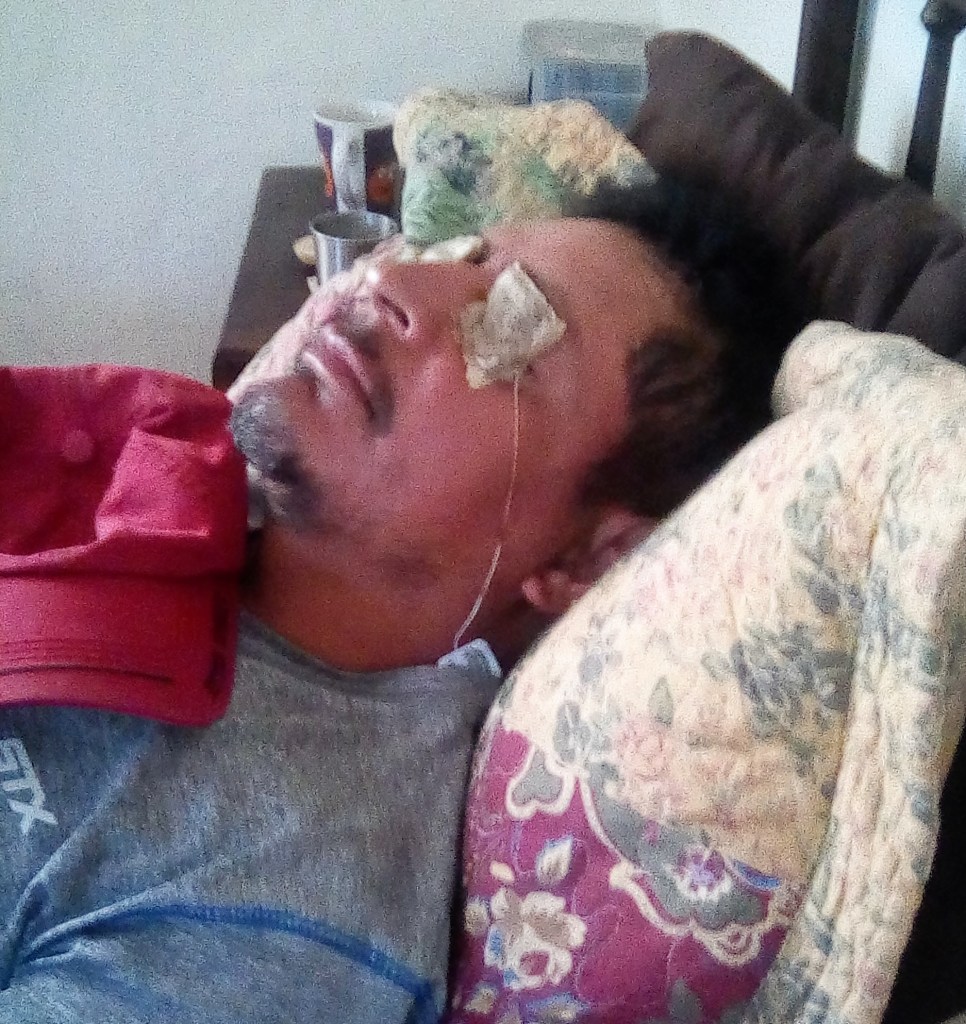
So it should come as no surprise that later that evening he had problems seeing. His eyes swelled up, became bloodshot, and were light sensitive. Since going to the doctor wasn’t really a viable option at the moment, I looked up some things I could do to help him at home. First, darken the rooms. Then I had him put chamomile tea bags on his eyes. He alternated with aloe vera gel from the plants we have outside and Vicks vapor rub–the Mexican catch all. 

Chamomile tea bags on his eyes.

My husband asked if onion slices would work–another Mexican remedy. I told him no, but that potato or cucumber slices would be better. We didn’t have any cucumbers but we did have some potatoes. He spent the next day in the dark with his eyes closed using these treatments. 

By the third day, he was up and around again, although he said that things were blurry. 

We ran into a hitch in the project procession because by now it was Semana Santa and the lamina place was closed. So it was yet another week until the laminas could be purchased. 

The money budgeted for this project wasn’t enough to buy all the transparent laminas that we needed. So one section of the roof reused the laminas that had been there before. It cuts down on the sunshine some, but not a lot. 

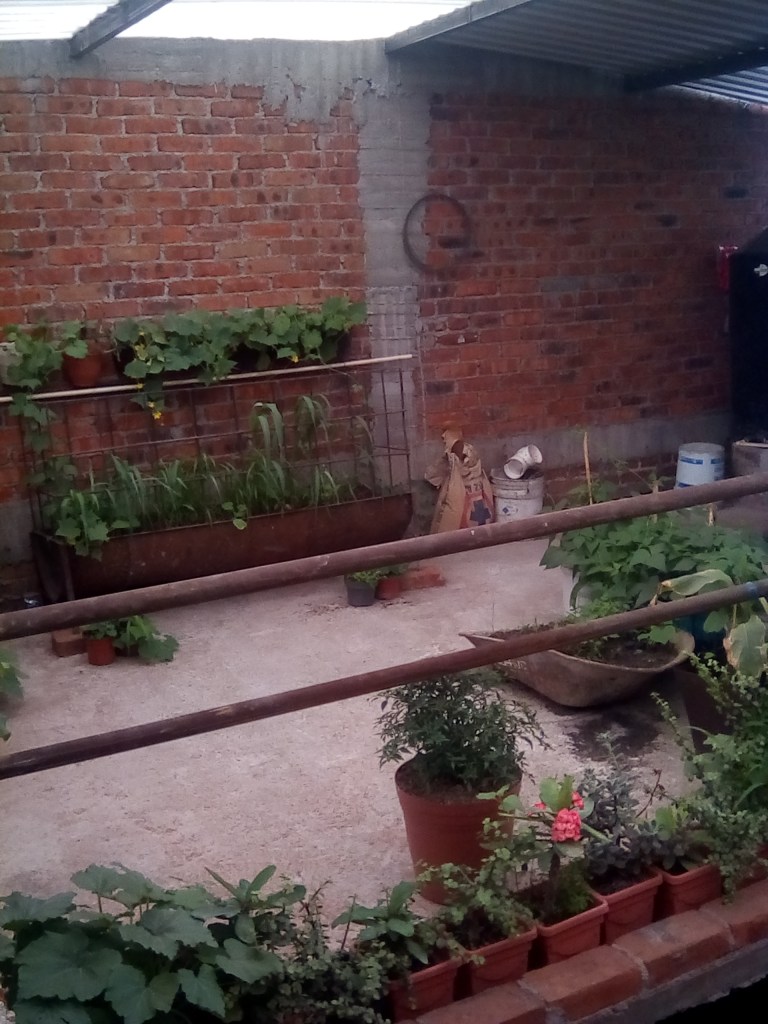
I badgered my husband into giving up two animal troughs for plants. He wasn’t using them anyway. They were just taking up space. I bought a few more flower pots, took possession of several buckets that were cracked and couldn’t hold water anymore, and a section of old wheelbarrow.

I wasn’t really happy that the roof just ended somewhat abruptly. I lobbied for a metal fence. My husband said he was going to make me a wooden one with the pallets he was using to keep Jolina out of the food. I also pointed out that he would be able to make a small brick wall there too, since we already had the material. 

The pallets he used to section off an area of the corral for food after he made Lady’s new stall. So instead, he used some metal bars to create a sort of fence. It’s only partially completed, although we have all the materials he needs. 

He also didn’t take the time to patch the wall with cement before he hung my planters, so there’s that to finish too. I suppose eventually he’ll get around to it.

Leave a comment

Filed under Construction