
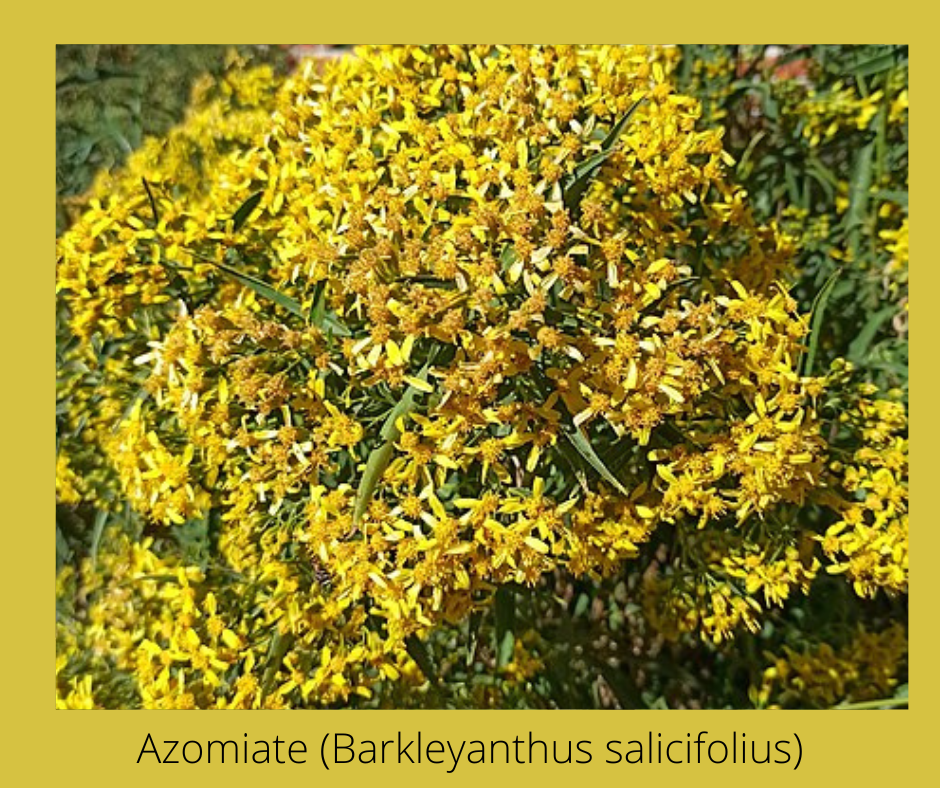
Photo credit: Juan Carlos Fonseca Mata
Azomiate, Barkleyanthus salicifolius has the botanical synonym of Senecio salignus and is native to Mexico and Central America. Common names include chilca, jarilla, izcatzoyatl (faja de algodón) or necheloli (para recoger la bilis) in Náhuatl, it oksini in Purhépecha, ra-yhotitha in Otomí, baldag shi ingol in Zapotec, alzumihatl in Oaxaca and willow ragwort in English.
Azomiate is classified as a cold plant. The leaves are boiled to make a mouthwash. In Sonora, azomiate is prescribed for gastritis, sores, wounds, laryngitis, and vomiting. In Chiapas, it is utilized as an insecticide. For back pain, a wash is made from fresh leaves. For acne, crushed leaves mixed with mezcal are applied to the blemishes.
In Puebla, it’s prescribed as a way to combat fever through a confortativo (relief) placed on the stomach. Crushed leaves from aliso (Alnus jorullensis subsp. jorullensis), lengua de vaca (Rumex crispus), and azomiate are placed on the stomach as a poultice. Another fever confortativo consists of azomiate leaves and petals from rosa de castilla (Rosa gallica) that are applied to the stomach and covered to keep it in place for three hours. The remedy is affected when the herbs appear cocidas (cooked), having absorbed the fever’s heat.
Another confortativo combination is made for diarrhea. Azomiate leaves, rosa de castilla (Rosa gallica) petals, tomillo leaves (Thymus vulgaris), orégano mexicano leaves (Lippia graveolens), a clove of ajo (Allium sativum), slices of cebolla (Allium cepa), mirto leaves (Loeselia mexicana), mastranzo leaves (Mentha rotundifolia) and hierbabuena leaves (Mentha spicata) are chopped and added to alcohol with a few drops of vinegar. This mixture is placed at the base of the stomach and wrapped to keep it in place for at least six hours.
The most common use for azomiate in central Mexico is in limpias (cleansings). Ailments known as mal de ojo (evil eye) caused by mirada fuerte (hexing), mal aire (bad air), espanto (sudden fear), and coraje or bilis (excessive rage) are diagnosed when the affected has diarrhea, fever, nausea, restlessness, weeping, and pérdida del alma (spirit loss). Mal aire is believed to be caused by stepping into a space a spirit is already inhabiting or the area where someone has died. The malignant air the remains can move into a body, causing illness. Confirmation of mal aire is made by surrounding the patient with copal incense. If the smoke eddies, then mal aire is the diagnosis. Another way to diagnose the illness is the limpia con blanquillo (egg cleansing). An egg is rubbed over the ailing person’s body and then cracked into a glass of water. If the yoke has air bubbles or looks like a remolino (swirls), then treatment for mal aire beings. Treatment consists of brushing the affected person with branches of azomiate, ruda (Ruta chalepensis) pirú (Schinus molle), and retama (Cassia tomentosa), which are then disposed of outside so that the spirit doesn’t transfer to another person.
A tincture for rheumatism is made from crushed leaves marinated in tequila for three weeks and applied daily for one or two weeks before bed. For digestive pain, the tincture is massaged on the upper portion of the stomach twice a day. A poultice is made for from a branch with leaves soaked in alcohol and rubbed on bruises. A wash is made from the infusion of leaves and used to clean wounds, then a poultice of leaves is placed over the area. Irritated skin is treated by rubbing fresh azomiate leaves over the area.
Studies have demonstrated that azomiate has anti-inflammatory, antioxidant, and antifungal activities.
Note: Many Senecio species are toxic. There’s no evidence that azomiate (Barkleyanthus salicifolius) is dangerous. However, all the remedies cited call for its topical use rather than ingestion.
****
Interested in natural remedies? Uncover herbal remedies from traditional Mexican sources for healing and wellness in the Exploring Traditional Herbal Remedies in Mexico series.

 Surviving Mexico
.jpg)