Tag Archives: Mexican politics

Echoes of History

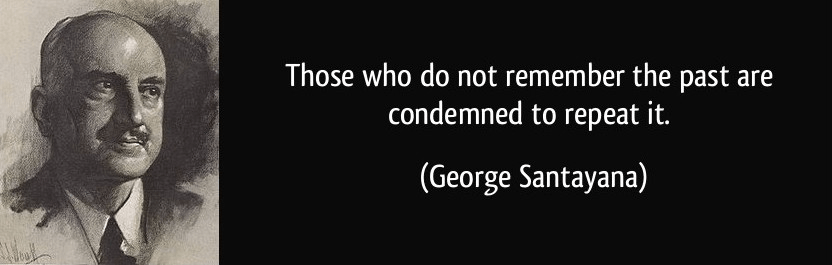
Every morning when I read through the headlines, I become more and more concerned about the direction the US is heading and wonder how the new authoritarian regime will affect my life in Mexico and my loved ones’ lives still in the US. Doing a little historical digging, here are some of the things that concern me most.

Cracks in the Democratic Foundation

Recent analysis describes the U.S. displaying disturbing similarities to Weimar Germany: political polarization, declining institutional trust, extremist rhetoric, socioeconomic anger, and media fragmentation may be pushing democratic erosion, or worse. 

Stanford democracy scholar Larry Diamond sees an accelerating global decline in democratic norms, with slow authoritarian creep in many nations, including the U.S., often underpinned by inequality and disinformation. 

Personal Powerusurpation and Legal Erosion

The pattern of executive overreach in America mirrors pre-WWII Germany. Both invoke “emergency” powers to skirt democratic checks. In Germany, the Reichstag Fire Decree and Enabling Act dismantled civil liberties and legislative authority. In the U.S., critics point to an uptick in executive rulings, including invoking obscure laws to detain or deport without full due process. 

Another hallmark of rising authoritarianism is institutional capture, where courts, law enforcement, and agencies are stacked with political loyalists. The U.S. has seen growing politicization of the judiciary and federal agencies, echoing Germany’s purge of independent institutions. 

Scapegoating, Propaganda, and Cults of Personality

Scapegoating has long been a potent tool for authoritarian regimes, used to unify a majority by targeting marginalized groups. In 1930s Nazi Germany, Jewish people, communists, Roma, and others were falsely blamed for Germany’s troubles and were framed as existential threats to the “Volksgemeinschaft.” Today in the U.S., similar patterns emerge: immigrants, asylum seekers, and religious or racial minorities are increasingly portrayed as threats to national identity or security.

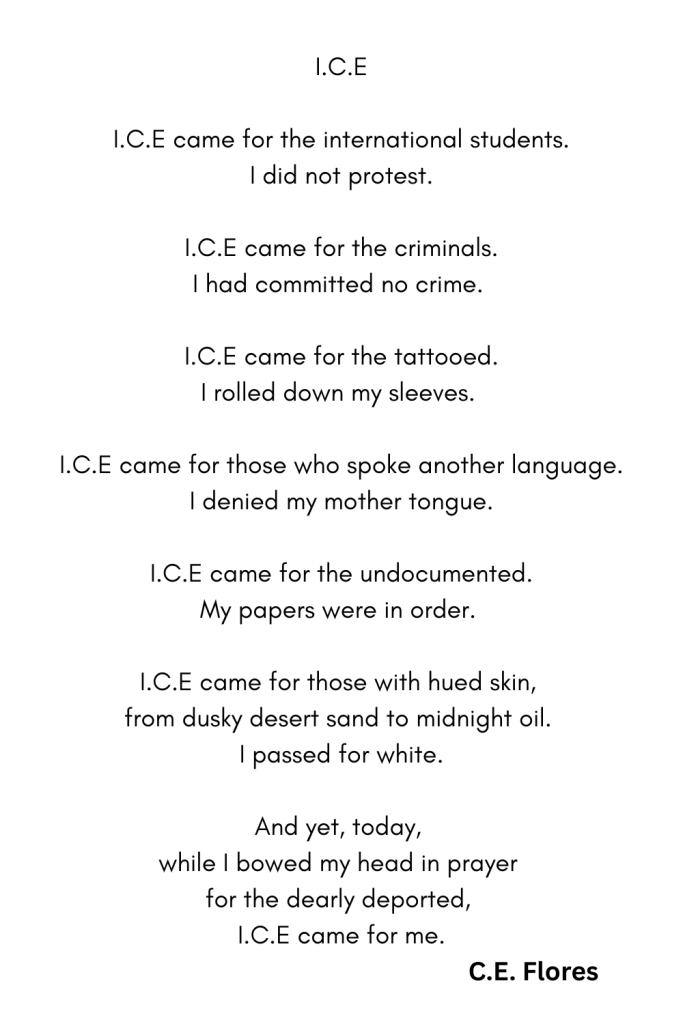
This narrative is reinforced by a vast network of ICE detention centers, now resembling a modern internment system. In 2025, internal planning documents reveal ICE’s intention to nearly double its inmate capacity from 50,000 to over 107,000, which involved adding 125 facilities, including mega-detention and soft-sided “tent” structures, with major private prison contractors like Geo Group and CoreCivic set to profit massively.

First-hand reports reinforce these concerns. Many facilities are described as overcrowded, unsanitary, and neglectful, with detainees forced to sleep on concrete floors, lacking adequate food, water, or medical care. In a harrowing account, a detainee likened conditions to something worse than prison, describing moldy cells and denial of basic needs, while lawmakers seeking oversight have repeatedly been blocked from entering these centers.

The expansion of these detention systems echoes the Japanese American internment camps of World War II. During that era, over 120,000 U.S. citizens and residents of Japanese descent were forcibly relocated and incarcerated without due process, which was justified under wartime hysteria and xenophobia, and later condemned as a grave constitutional violation. Today, the toll of expanding ICE custody, including detaining non-criminal individuals and asylum seekers, is strikingly similar. One report notes that the proposed doubling in detainees would bring numbers “close to the number of Japanese Americans kept in internment camps”.

Beyond physical repression, propaganda plays a crucial role in normalizing such abuses. Just as Nazi Germany used state media and mass rallies to build cults of personality around Hitler, modern political media in the U.S. idolize certain political figures and delegitimize dissent. This framing enables the gradual erosion of democratic norms, painting detention centers as necessary for security, rather than as sites of human rights violations.

All this underscores a brutal truth: once a society normalizes the detention of “undesirable” groups under the guise of security, it erodes the very foundations of rights and protections for all. The U.S. risks repeating historical mistakes unless public scrutiny, media vigilance, and legal oversight intervene.
What This Means for Me as an Expat in Mexico

Mexico as a Historical Haven but Not a Utopian Escape

For decades, Mexico has provided refuge for Americans fleeing political repression and ideological persecution. From anti-war activists of the 1960s–70s to self-exiled journalists, Mexico has been a sanctuary and, increasingly, a destination for U.S. expatriates seeking relative safety or an affordable life. As of 2022, there are an estimated 1.6 million Americans living in Mexico, including retirees, digital nomads, students, and families.

Still, Mexico, while historically hospitable, is not without its challenges. A Los Angeles Times column notes that affluent American expats may unintentionally insulate themselves from local realities, living in privileged bubbles that shield them from poverty, violence, or corruption. “Expats are immune to that… playing the game of life on someone else’s server with cheat codes.”

A major flashpoint has been the sudden rise in anti-gentrification protests in Mexico City’s trendy neighborhoods like Roma and Condesa. In early July 2025, residents marched through long-time urban communities facing skyrocketing rents and cultural displacement triggered by foreign arrivals, often labeled as “digital nomads.” Protesters carried signs reading “Gringo: Stop stealing our home” and “Housing to live in, not to invest in!” criticizing both Airbnb-driven short-term rentals and government-promoted tourism strategies.

Furthermore, Mexico faces its own authoritarian pressures: centralization of political power, weakening of institutions, and militarization of governance. Some analysts argue the country may be drifting toward “competitive authoritarianism.” Executive overreach, judicial reforms, and suppression of dissent muddy the promise of stability for longtime dissidents.

Moreover, political violence, particularly assassinations connected to organized crime targeting candidates, continues to threaten democracy at the local level, complicating political life for both citizens and exiles.

Final Thoughts

Living in Mexico, I’ve crafted a life I genuinely enjoy, built on community, cultural richness, and personal freedom. Despite the challenges, this country has become a place I call home. 

Yet, I can’t ignore that the political climate is shifting here as well. Mexico has increasingly shown a willingness to kowtow to U.S. pressure in politically sensitive areas, a dynamic that could strain its autonomy and indirectly affect those of us who have built our lives here.

  • In August 2025, Mexico extradited 26 alleged cartel members to the U.S., a move many analysts regard less as a sovereign governmental decision and more as a maneuver to appease U.S. leadership and stave off economic sanctions tied to the fentanyl crisis. This bypassed the typical judicial process, suggesting the extraditions were influenced by Washington’s pressure.
  • Earlier this year, Mexico deployed 10,000 National Guard troops along the northern border under Operation Frontera Norte, directly responding to U.S. threats of tariffs linked to migration control, which was a decision seen by critics as reactive compliance rather than proactive defense of national sovereignty.
  • Most notably, Mexico is now pursuing constitutional reforms to explicitly protect against possible U.S. military incursions or interventions, an ominous signal that such threats feel plausible enough to require legal reinforcement.

Whether democracy will crack, stabilize, or rebound is unpredictable, making my life in Mexico feel even more precious and fragile. It’s not perfect, but it might be all there is before too long.

*****
Considering a Move to Mexico?
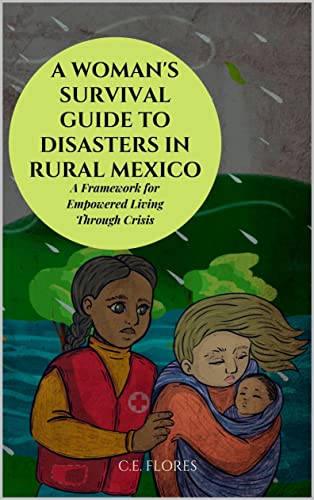
The Woman’s Survival Guide to Disasters in Rural Mexico: A Framework for Empowered Living Through Crisis

In uncertain times, preparation is power. This guide is written for women navigating life in rural Mexico, offering hard-earned lessons, crisis strategies, and resources for building resilience in the face of political, social, and environmental instability. If you’ve ever wondered how to protect yourself, your family, and your future in an unpredictable world, this book gives you the framework to act now.

2 Comments

Filed under Politics, Safety and Security

Politicking

This wooden instrument makes an incredible noise.

This wooden instrument makes an incredible noise.

Finding that we weren’t being heard by the current powers-that-be, lead me to becoming involved in their replacements in the hopes that the new powers-that-be would take La Yacata into account.

2012 was a big election year here. The president of México was elected, his term is every 6 years. The governor of Guanajuato was elected, his term is every 6 years too. The president of Moroleón was elected, his term is every 3 years. The president of Moroleón is really an alcalde (mayor) but they think much of themselves here and I guess the term president sounds more important than alcalde (mayor).

The election campaigning begins May 6th, after Méxican labor day (May 1) and The battle of Puebla (May 5) and lasts until midnight of election day (July 1). It can be compared in no way to election campaigns in the U.S.

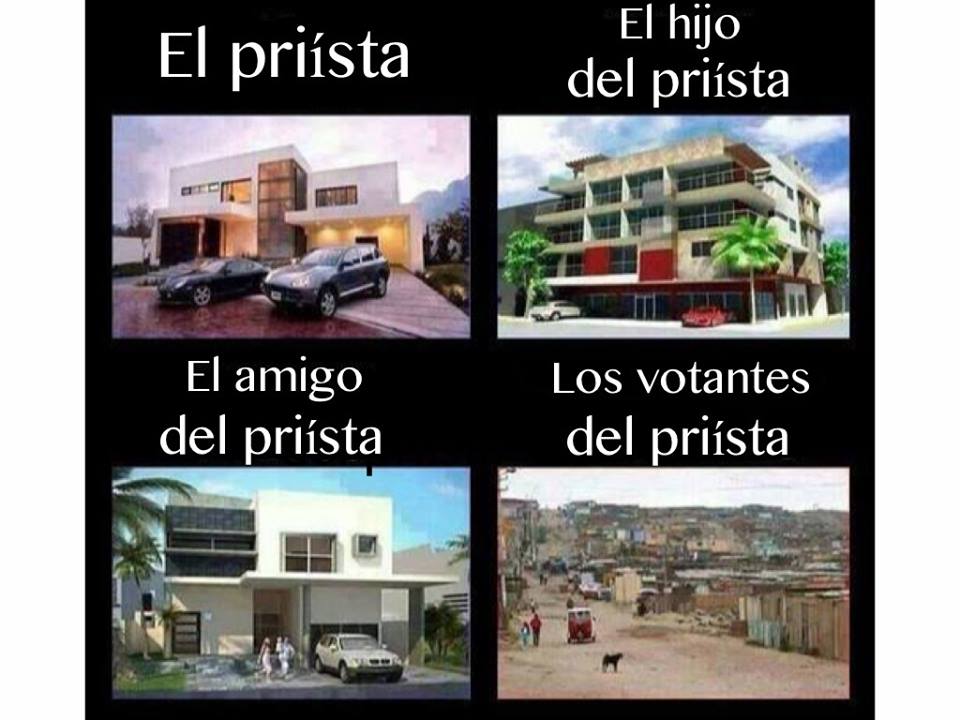
pri cartoon

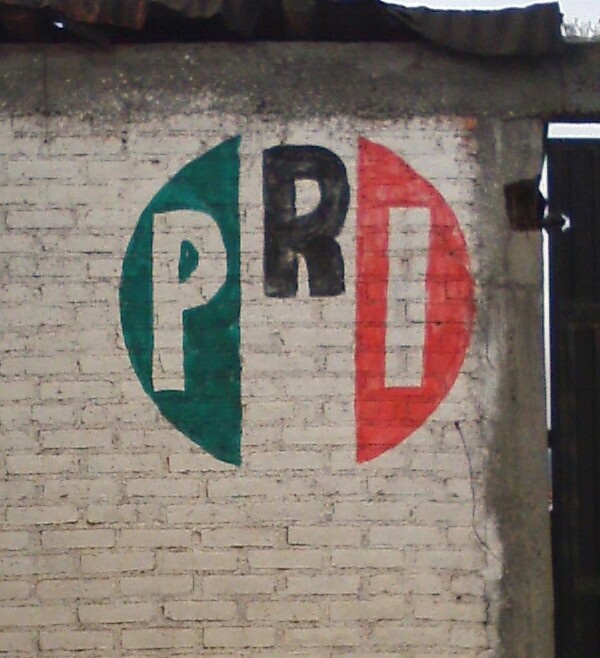
The political parties that were represented in Moroleón’s local elections were: PRI (Partido de la Revolución Institucional), PAN (Partido Acción National) PRD (Partido de la Revolución Democrática) PT (Partido de Trabado), PVEM or more commonly known as el Verde (Partido Verde Ecologista de México) and Nueva Alianza.

pri

PRI has a bad reputation as a political party nationally as they were in power so long (71 years). PAN is known as the party of the people with their slogan ‘algo DIFerente.’ PAN has various DIF (Desarrollo Integral de la Familia) programs, such as ‘un techo digno’ that provides roofing materials for those who need it, ‘una casa DIFerente’ that provides building materials for families in need to construct their own houses and other worthy programs providing becas (scholarships) and ‘dispensas para la tercer edad’ (food packet handouts for the elderly). Locally, there isn’t much support for the other parties, although PRD came out strong in Moroleón this year. Nueva Alianza is the party of the teacher’s union here in México, but I don’t know much about the other parties, except that the PT candidate for president for Moroleón was Chuchi. I didn’t understand how someone of such questionable character could run for president. When I asked, no one seemed to think that he would win, but said that the candidates are all given money for their campaign, motivation to run even if there is no chance of success. That made me angry. Here he was getting money for doing nothing and I was doing all sorts of activities and not getting paid for any of them. Which one of us was the taruga (blockhead) anyway?

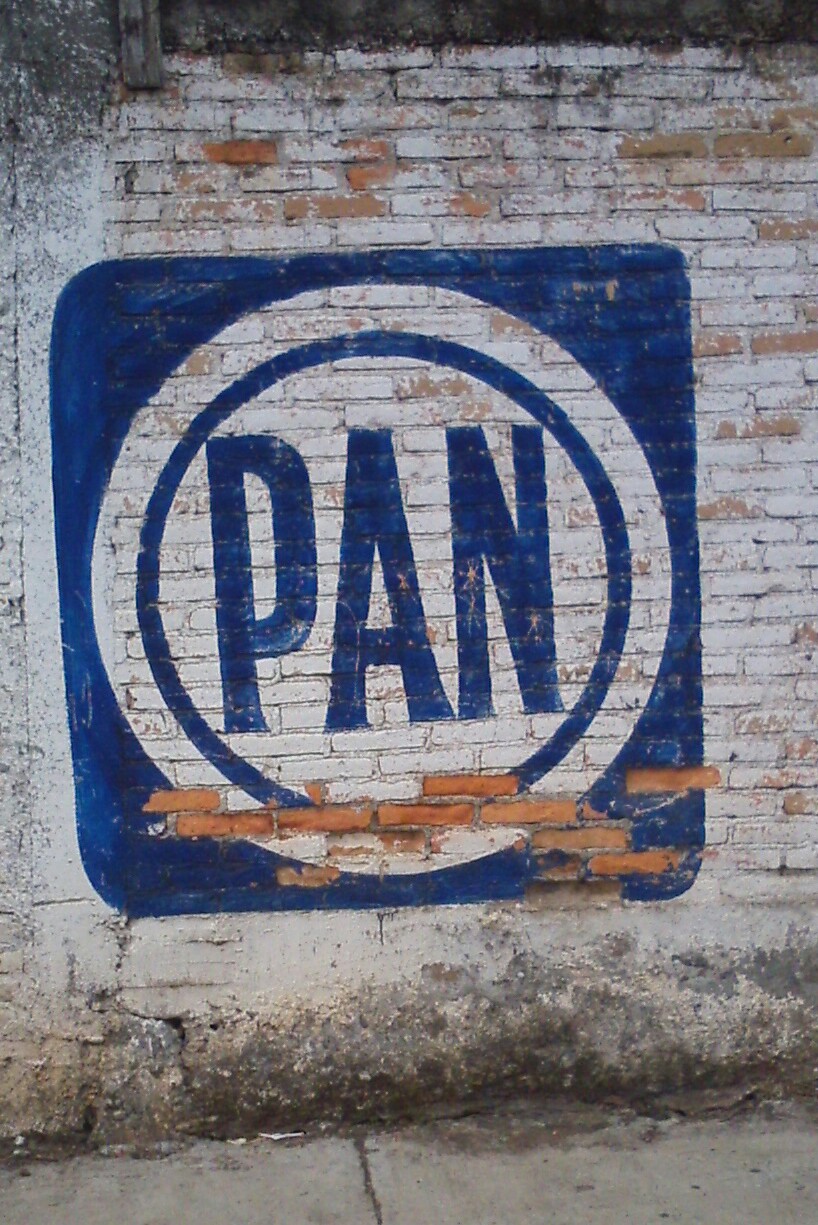
pan

My mother-in-law was a staunch support of PAN in previous years and it served her well. She was able to get a cushy job at Los Areas Verdes (the local zoo park) cleaning the bathrooms and charging for their use (3 pesos per person) when R2 was the PAN president several years ago. When R2 finished his term, she was able to transfer to another job through the presidencia (town hall) as a street sweeper. She also was able to qualify for ‘una casa DIFerente’ which my husband and my father-in-law built in La Yacata. So PAN was her party of choice.

Unfortunately, the accident with the police officer put a damper on her campaigning and I was asked to step in as her replacement. I had no idea what I was in for.

I was given 200 questionnaires to have the people of La Yacata fill out for the gubernatorial candidate Miguel Marquez Marquez. I had thought to just have the colonos (associates) just fill them out at the next junta (community meeting) however as the majority of property owners can not read or write, that wouldn’t work. So we started by sending Super Prez’s secretary to homes to see if she could get some of them filled out. Again, this was time consuming as the questionnaires asked for all family members names and relationships, occupations and problems in the community. The problems section was easy to fill out. We wrote the same on each one. We asked that we be allowed to connect to the water and sewer lines, have electricity and if applicable (meaning the property owner was a woman) be allowed to construct a DIF house. The secretary managed to get about 50 filled in. However, Marquez Marquez was coming to town so we were on a time constraint and I filled in the other 150 myself based on the information we had collected from the colonos (property owners).

The next aspect of campaigning was the rallies. This was comprised of a stroll through an assigned section of town with the local candidate, knocking on doors, giving out t-shirts, shaking hands and kissing babies. Well, I just had to stroll and the candidate did the other parts. I was given a t-shirt and hat and met up with the other PANistas (PAN supporters) at a different assigned place each night. Each party was given a different area to stroll, none of them overlapping, so that there would be no confrontations. At the end of the stroll, the leaders would be given the next day’s meeting place that we were instructed not to tell outsiders to prevent sabotage.

So my son and I strolled, in place of my mother-in-law. We strolled with 80-year-old viejitas (old ladies) in rebozos (shawls) and the one-armed bicycle rider. We were announced by sound cars with a catchy jingle for Paco (the PAN candidate), matracas (wooden noisemakers that turn on a handle), and conch shells. Yes, conch shells. You wouldn’t believe the noise they make. The first night I laughed so hard I nearly peed myself. I was sure that I had been trapped in a wrinkle in time. This was the 21st century, not the 1940s.

Another afternoon, I had to work, so I missed out on the PAN march but happened upon the PRI-Verde march. The two parties had combined their forces at the local level and backed the same candidate. What a difference! The PRI-Verde supporters were riding in the back of newer model pick-ups lead by a group of cheerleaders. It needn‘t be pointed out that nubile young girls beat crones in rebozos (shawls) any day. The streets were packed with people out to see the show.

Another day, I ran across the PRD marchers. They were mostly on foot, but their give-away shirts were awesome. Quality work and the brightest egg-yolk yellow.

And not to be left out, I accidentally came across a PT meeting as well. Chuchi was there with his 5 supporters, sitting in the park. I pointed and laughed as I passed in a form of psychological torture. I hope he had nightmares!

A third aspect of my role of campaigning was giving out t-shirts, hats, bags, stickers, and lonas (tarps) all marked with the PAN propaganda. This was the easiest. I gave them all to my husband’s family. They wore the shirts and hats. The kids pasted the stickers. They used the lonas (tarps) to shade the kitchen area. Everybody was content.

One day, coming home to La Yacata, I was astounded to find PRD propaganda painted all over La Yacata. I called Super Prez to see if he had authorized the painting. He hadn’t. I called el taxista to see if he had authorized it. He had, but only on his own cabaña (cabin), not on the La Yacata pump house. The way it was painted, under the sign Los Colonos de La Asociacion de La Yacata, A.C made it look as if the associates were all supporting PRD. Since we were to have a junta (community meeting) that Sunday, I didn’t want to cause any political disputing just when we were all getting organized, so I had the PRD section whitewashed over.

Towards the end of May, Marquez Marquez, the PAN gubernatorial candidate was coming to Moroleón. We had hoped to speak with him personally about the problems in La Yacata. So, el profe, el taxista, R and myself went to the shin-dig they put on. It was disappointing, to say the least. I hadn’t thought to have anything written up to give his secretary, so when we were presented, I didn’t have anything to leave for him to look over. Super Prez was supposed to be there as well, but he only made it to the front door and was called away by work. I was disappointed in that, because he really should have been the one to present the information, not me, however later I found out that he had been invited to the private breakfast for Marquez Marquez in the presidencia (town hall), so our case had been heard after all.

The day after this lunch, it was my turn to take the 8 pm to 8 am shift with my mother-in-law. There aren’t enough hospital personnel to care for patients, so a family member is required to be with the patient 24 hours a day. Her daughter had been there during the week, but needed some time off, so her other daughter-in-law G and I took turns over the weekend. My mother-in-law was conscious and alert for the first part of my shift and so I regaled her with what I had been doing in her stead and gossip about the other supporters. During the night, however, she took a turn for the worse and died 2 days later.

Her wake was attended by about a hundred political supporters. Of course, there were attendees from PAN, Paco and his crew. They sent a large corona (wreath) of flowers. Super Prez, R and R2 came as well. Super Prez sent a large corona (wreath) from La Yacata. R and R2 brought their condolences and papers to sign about the demanda (lawsuit) from Chuchi. The presidencia (town hall) sent a large corona (wreath) of flowers and many of her co-workers were there. The PRD candidate sent a bouquet with his name on a ribbon (which I thought a little tacky) and coffee and sugar. There were even some PRI-Verde supporters but to my knowledge no PT. I saw Chuchi when I went to buy my own flowers and gave him a mean face. It was all I could do.

June’s campaigning was more of the same, but I had little time to spare, so my participation was minimal. I went to a few meetings and agreed to be a motivadora (motivator) on election day. All official campaigning must cease by midnight on June 30. There is to be no alcohol sold either until midnight July 1, but it’s always possible to find someone that will risk imprisonment to sell beer.

verde

So my role as motivadora (motivator) involved me going to the homes of a group of people who were supposed to be PAN supporters and encouraging them to go and vote. In return for my work, I was to get $100 gas voucher. I was given a black bracelet that I was supposed to wear but told I should not wear any PAN colors or propaganda. But then, I was told that I shouldn’t even wear the black bracelet since there is to be no active campaigning on election day. Well, truth be told, I felt like I had done more than my share of campaigning. Besides, I was not even eligible to vote yet, still being in the process of applying for my citizenship. I went to the PAN headquarters in the morning, picked up my list, the bracelet, and breakfast and went back home. I wasn’t going to risk being thrown in the bote (jail) for campaigning illicitly. I did notice on the drive there that the PRI-Verde headquarters was open and had a crowd of people, so mentioned it when I got to the PAN headquarters. They called the authorities and had them close the PRI-Verde’s doors.

I went back to the PAN headquarters at in the afternoon for my lunch and was asked to stake out the voting center nearest my home for irregularities. So my son and I took our lunch and ate in the park across from the voting center (which was a kindergarten). I was supposed to report anyone who seemed to be buying votes or pressuring those in line. I was supposed to receive $100 pesos on my phone to make those calls, however, the secretary misread my phone number and someone else got my phone card. My son and I stayed until we finished our lunch and then went home.

Mexican elections

Please god, let it be June 8. I’ve had it up to here with the campaigning.

Peña Nieto, PRI, was elected México’s president. His FaceBook campaign was a success.

PAN candidate Marquez Marquez was elected governor. We had high hopes for assistance from that quarter, however, national funds have been cut by PRI, including my son’s beca (scholarship), so it looks bleak.

PRD won in Moroleón, and gave positions to Chuchi and el contratista chueco (the crooked contractor) in the presidencia (town hall). This really got my goat. I’m not exactly sure what Chuchi’s position is, however, the contractista chueco (the crooked contractor) is in charge of electricity permits in Moroleón. That will teach me to put my faith in earthly man.

*************************

disclosure

10 Comments

Filed under La Yacata Revolution, Politics