Tag Archives: Celaya

Getting Legal–Trip 3

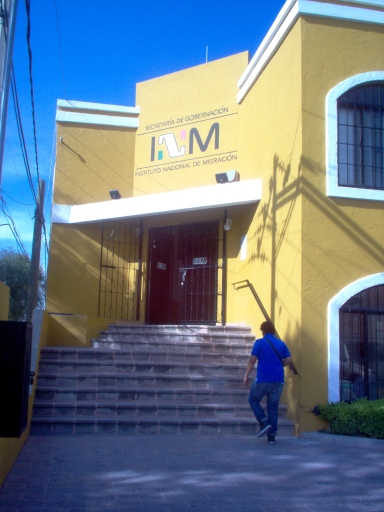
SEGOB office in San Miguel de Allende

SEGOB office in San Miguel de Allende

I had been aiming to make the third trek to San Miguel de Allende around the 13th of the month, thinking that time and finances would be better. However, my husband started worrying me about the trip, asking me when was the last day I could go and what I had to do in this next step and hence I started having nightmares that I had missed out on getting my papers by one day or that I completely forgot to go and then was thrown out of México. So I moved up the date of the trip, after having checked on the official website to see that my papers had been approved for the next step on the 10th of this month, a mere 12 days after I submitted them (See Getting Legal–Trip 2) I remembered seeing a sign in the office saying I had 30 days for tramites so just to be safe, we would go the 9th. Maybe even stop in San Pedro for some shoes.

My husband woke up and started marching around at 4 a.m. that morning, for who knows what reason. He was worried about taking care of the animals before we left. However, that whole process (taking Beauty and Shadow to pasture and moving Shrek and Fiona to a fresh grassy spot) took a whopping 15 minutes. The goats, chickens and ducks were not awake yet, so no point in throwing food at them so early as food lying about is an open invitation to ants.

So we left the house super early. Each of us said our prayers for a safe journey and we were off. Well, not quite. Our truck battery had decided to call it quits, so my son and I gave old Butch (the truck) a good shove to get her going and then we were off.

We stopped for gas as it doesn’t do to start a trip without a full tank (see Driving Hazards–Gas and Illumination) and the truck wouldn’t start again. Fortunately, at that hour, there was little traffic and we could push-start.

Having gotten up at an unearthly hour, my husband needed an extra cup of coffee, which then required an emergency pit-stop just before we got to Celaya. As the battery was still giving us fits, we had to give it another push to get going again.

We made it through Celaya without a transito stop (See Driving Hazards–Police stops) but we weren’t too worried since our verficación sticker (inspection sticker) was still good until the end of the month. (See Getting Legal–Trip 1)

We arrived in San Miguel de Allende at 8:30 and parked in the bus stop area near the immigration office because it was on a slight downhill slant. My husband stayed in the car in case transitos (traffic police) came cruising by and I went to stand in line.

The office opened at 9 a.m. and I marched myself to the little window for a number. I was #6, so it was only 9:30 or so when it was my turn. The business tycoon in front of me gave the girl a hard time about his papers not being ready and I was feeling smug about how my papers were all in order until she told me that although I had been approved for processing, the next step was to make the payment of $3815 pesos.

What??? I thought the next step was to leave my fingerprints to send to D.F. for approval and then the 4th step was the payment and told her as much. About this time, my husband came in (I expect to check on me) and said that it wasn’t the girl’s fault, so I shouldn’t take it out on her. I thought I was calm about it–ok, so deep down I knew I had transformed into the type of annoying ex-pat that I feel superior to when he or she starts in on the inefficiency of the Mexican immigration process. But I couldn’t help it.

So my husband took over. He asked when the last day was that I could process my papers. She looked it over and said I had about a month. She also said that it might be possible to process my fingerprints the same day as the payment so that I would not have to make another trip. She was helpful and polite. However, my blood pressure had already risen and I was having some problem getting ahold of myself.

I had canceled all my classes for the day for this trip. I had spent money I didn’t have to spare for gas for this trip. I had been awake since 4 a.m. for this trip. I didn’t have the money to make the payment today. Yaddy-yaddy-yah.

My husband took hold of my arm and escorted me from the building. He pointed out that being upset wouldn’t change a thing. Since when has he been the paragon of virtue in the patience department? I certainly didn’t need any lessons from him. So I sat in silence and stewed in my own juices until we got to Celaya in mourning for my new shoes.

In Celaya, of course, there was a traffic stop for verification stickers, but we breezed through without incident. I started to calm down a bit. We stopped in San Pedro as we had planned. I didn’t see any shoes I liked, so I felt a little better about that loss.

Then we went to the roadside buffet we liked, but again I was out of luck. Usually, I get rice, beans, and huevos rancheros or nopales, but today everything was pork. Pork in mole. Pork in tomatillo salsa. Pork in red sauce. Blah! So just beans and rice for me thank you. Disappointing. Then the pushing of the truck took longer since there was no incline and my son and I huffed and puffed nearly 1/8 of a mile until it started, but it did start and we made it home safely.

I suggested that next time we pray for a safe journey and successful completion of the task at hand. Perhaps we had not been specific enough in our prayers. I was so tired and down that I took an afternoon siesta that afternoon. Maybe the next trip would be better.

***************

disclosure

2 Comments

Filed under Getting Legal

Driving Hazards–Towns and cities

donkey in the grass

Give me country driving anytime! As you can see, country lanes are clearly marked and after the burro is done with lunch, the road will be as well.

In towns and cities, arrows are posted on the side of buildings to indicate which direction traffic is to flow, whether it is one way and which direction, or whether it is two-way traffic. Just because the road is two-way traffic for awhile, doesn’t mean it continues to be 2 way, so check the sides of the buildings often. Don’t base your assumption of traffic flow of motos, they have their own set of driving rules. And be aware that many roads have no street signs.

glorieta

This is the glorieta (traffic circle) between Moroleón and Uriangato. The conos (cones) represent spools of thread. The area is known for its textiles.

The newest fad in road construction is la glorieta (traffic circle). Technically the right of way goes to those vehicles traveling around the glorieta (traffic circle) but proceed with caution because apparently not everyone knows about that particular traffic law.

The hours to avoid driving near schools are 8 a.m. and 12:30 p.m. and again at 2 p.m. and 6:30 for the vespertino (afternoon) session. Cars are double and triple parked in no parking zones and traffic lanes to drop off students. Drivers are not in their cars since they have accompanied their particular set of students to the door to give them their bendicación (blessing) before classes begin. There are supposed to be transitos (traffic police) during these hours, but that’s not always true. There’s nothing to do but be patient.

Stopping in town is risky business. Public parking can be found, but may seem hardly worth the effort if you are just going to be a minute. It is tempting to park in those wide open areas that are designated as bus stops, but try to refrain from that. Buses have no qualms about taking your side mirrors with them as they pass. Good luck trying to collect on damages! Transitos (traffic police) also get testy if you are parked where you shouldn’t be for any length of time. They carry screwdrivers and will take your license plates right off your vehicle. You will need to go to the transit office and pay a fine to get them back. (See Driving Hazards–Police and traffic stops)

On our trip back from San Miguel de Allende, we missed our turn in Celaya and we asked for directions, which did us no good whatsoever since we couldn’t find the street we needed because it had no sign. We finally made our way back to the main boulevard and followed that to the end of the city, where lo and behold, there was our exit. So although preguntando llega a Roma, (Asking will get you to Rome) apparently preguntando (asking) won’t get you out of Celaya no matter how many people you ask.

Nine harrowing hours after we started out from Moroleón to San Miguel de Allende and back, we made it safely home. I understand completely now the custom my husband has of crossing himself and muttering a prayer before heading out on the road. I offer a prayer up myself nowadays because it really is a dangerous thing setting out your front door in México.

************************


disclosure

3 Comments

Filed under Driving Hazards

Driving Hazards–Police and Military stops

Transitos are the traffic cops in México and are not armed.

Transitos are the traffic cops in México and are not armed.

Then there are police checkpoints to contend with. Arriving in Celaya, on our trip from Moroleón to San Miguel de Allende (See Getting Legal–Trip 1) we were stopped by the transito (traffic police) because our truck didn’t have a current verficación (inspection) sticker. I put my head down and pretended to be invisible while my husband negotiated the mordida (bribe). On the way back, we were stopped yet again by the same group of transitos (traffic police). Being tired and cranky, my husband made the mistake of complaining that we had already paid our dues in the morning. The transit cop had him get out of the vehicle and then gave him a dressing down for being chismoso (a tattletale) before sending us on our way with his mordida (bribe) of course.

Bribery is called mordida (bite) as in a bite of an apple.

Bribery is called mordida (bite) as in a bite of an apple.

To bribe or not to bribe, that is the question to consider.

Transitos are open to bribery. However, whether you offer a bribe or not depends on who you are. If you are female, typically no bribe is offered and no ticket is given, you may not even be stopped. Unless, of course, you are an aggressive female, then you are treated like any male in this machismo power play. (See Driving Hazards–Crossing the Border) If you are a non-Mexican male, you must understand this an alpha male thing and if the phrase “se puede reglar esto” (this can be resolved) is used by the transito (traffic police), discretely hand over $200 pesos. Transitos (traffic police) will stop you for missing inspection stickers, missing or out of state plates, for the driver not wearing a seatbelt, for anything that might be not working on your vehicle, like a tail light or just because. They will ask you for your license and tarjeta de circular (permission to use the vehicle in the country), so it pays to have both current. A transito (traffic police) can take either card or your placas (license plates) and hold them for ransom until you go and pay the fine.

Los estados are the state police in México and are always armed.

Los estados are the state police in México and are always armed.

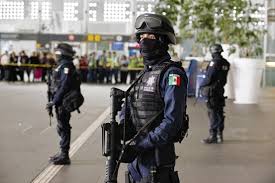
The next level up is the random inspection typically done by the state police. These officers wear large pistols, and are sometimes masked, so are not to be confused with the transitos (traffic police), who do not wear guns and never wear masks. Los del estado (state police) may stop you for having out of state plates, for vehicle identification number (VIN) verification to see if you are driving a stolen vehicle, for a license or tarjeta de circular (permission to drive in the country) check, for driving a nice vehicle, or whatever other reason occurs to them. The mordida (bribe) is much higher and trickier to negotiate. They may take your vehicle or any other items that aren’t permanently attached as part of the “inspection.” It doesn’t to any good to go and file a complaint. (See On Safety and Security).

Los federales are national guard in México and are always armed.

Los federales are the national guard in México and are always armed.

Los federales (federal police) cruise around looking for vehicles to confiscate. High risk vehicles are newer cars and chocolates (vehicles that have U.S. plates because they were never legalized at the aduana (customs)) We had more problems when we had a newer truck, but now that we drive a Mexican national that we like to call Butch (Chevy circa 1980) they stop us less. When stopped, the feds ask for the paperwork for the vehicle issued by the aduana (customs). Know that only the registered owner or direct relative may drive a vehicle that has been imported into México. We have had to show our marriage certificate along with the other paperwork to prove that my husband is permitted to drive the truck since it was registered in my name to facilitate border crossing.

Los militares are the miltary police in México and are always armed.

Los militares are the military police in México and are always armed.

Then there are los militares (military police). This is a complete barrier stop for all vehicles. All motorists are subject to search and all vehicles are inspected, for guns or drugs. Civilians do not have the right to bear arms in México, but many have guns. It just isn’t prudent to carry them in your vehicle, even for personal safety. We carry a machete in our vehicle, which is not illegal, and can also be used to cut grass along the side of the road for our animals when the occasion presents itself.

The guns these guys tote are eye-popping big. You can determine whether it is a legitimate inspection or not by whether the police are wearing their cappuchis (masks) or not. A legitimate inspection is done by unmasked military and nothing is removed from your vehicle. Well, the other type, it’s best to just grin and bear it and not give too much information about yourself or risk being marked as a prospective kidnapping target. (See On Safety and Security).

Fortunately, only the transitos (traffic police) stopped us on that first trip. (See Getting Legal-Trip 1)

*************************


disclosure

6 Comments

Filed under Driving Hazards, Safety and Security