
Category Archives: Parenting Challenges and Cultural Norms

Babywearing with rebozos in México

babywearing

When we arrived in México, my son was 4, and he no longer wished to be carried about.  However, my husband’s family introduced me to the rebozo, and I sent some to all my friends that had babies to wear.
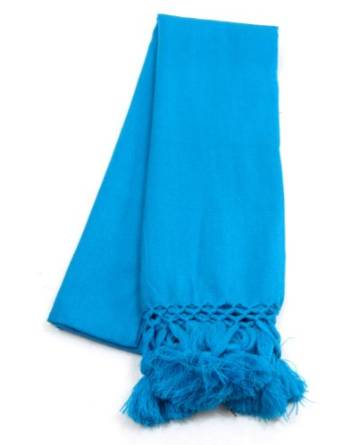
Babies are an integral part of life in this Catholic nation, where birth control is still considered a sin and contraception tough to come by in rural areas.  These two factors create a childbearing age that begins at about 15 and ends in the late 40s.  Most women do not have any choice but to take the smallest of their broods along with them for the daily trip for tortillas or while minding the store.  In rural areas, babies also may be taken out to the fields, all snuggly encased in the rebozo.
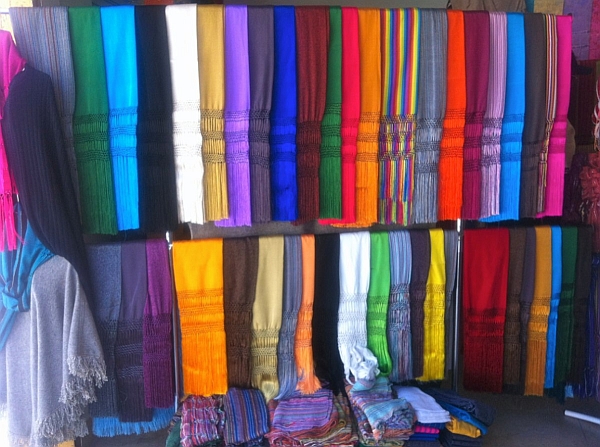
rebozos color

Rebozos come in a variety of fabrics and colors.

A rebozo is a staple in a traditional Mexican woman’s wardrobe.  Young girls wear them as shawls to add color to their outfits.  Mothers wear them as baby slings and nursing covers.  Older women wear them to shade their heads from the blistering sun.
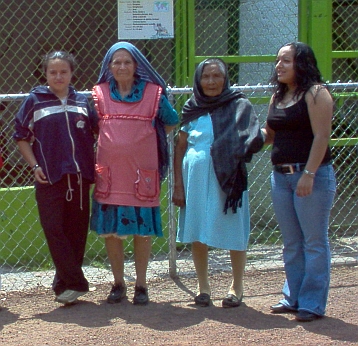
still wearing rebozos

Mama Vira and Mama Sofia still wear rebozos in their 80s.

They come in all colors and materials, but the most common pattern in our area is a simple black and white.
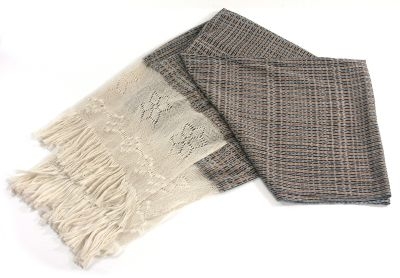
The most popular choice for a rebozo in our area is a variation of black and white design.

The most popular choice for a rebozo in our area is a variation of black and white design.

I have seen indigenous women wear their babies on their back as they come through town selling fresh cut flowers, but most women here wear their babies face to face.
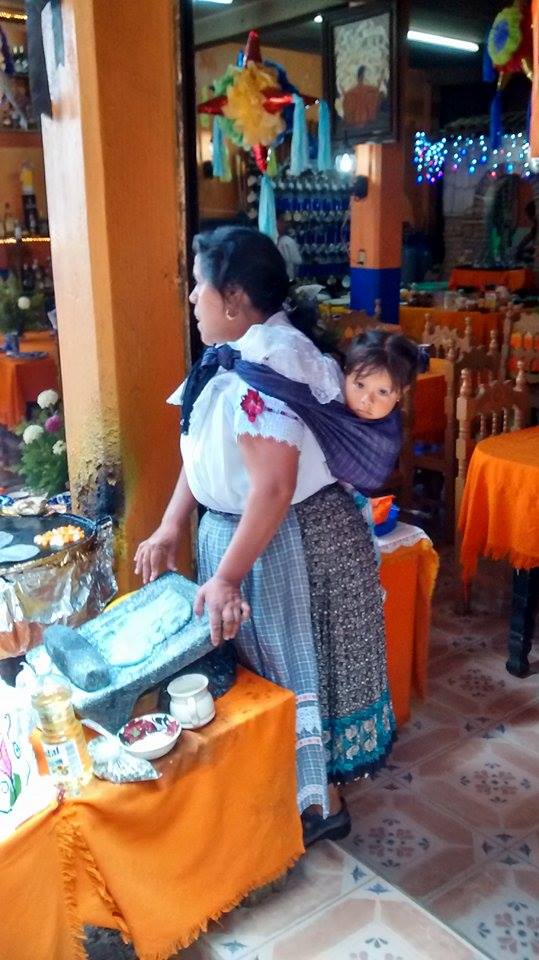
rebozo

Janitzio, Patzcuaro Michoacán

The rebozo loops about the baby securely and allows the mother to use both hands, although, with heavier babies, one hand is braced underneath for additional support.  The extra material is then used as a blanket to cover the baby’s head, either from the sun or cold or with newborns especially, from the evil eye.

Read more about rebozos here: Sliding a rebozo through a wedding ring

****************************************************

disclosure

11 Comments

Filed under Carnival posts, Parenting Challenges and Cultural Norms

Parenting Challenge–Teaching Reasoning


Children should be brought up, too, to perceive that a miracle is not less a miracle because it occurs so constantly and regularly that we call it a law; that sap rises in a tree, that a boy is born with his uncle's eyes, that an answer that we can perceive comes to our serious prayers; these things are not the less miracles because they happen frequently or invariably, and because we have ceased to wonder about them.

Children should be brought up, too, to perceive that a miracle is not less a miracle because it occurs so constantly and regularly that we call it a law; that sap rises in a tree, that a boy is born with his uncle’s eyes, that an answer that we can perceive comes to our serious prayers; these things are not the less miracles because they happen frequently or invariably, and because we have ceased to wonder about them–Charlotte Mason

Once upon a time, our family lived in a culture where it was not necessary to employ reason in our daily actions because there were laws that dictated our actions.  For example, a person would not kill his or her neighbor because there were a set of consequences that would result, not necessarily in a moral conscious twinge for taking a life, but laws that would punish and protect.  Then we moved to México and here discovered that laws do not guarantee reasonable behavior. (See On Life and Liberty)
Therefore children should be taught as they become mature enough to understand such teaching that the chief responsibility which rests upon then: as persons is the acceptance or rejection of ideas presented to them. To help them in this choice we should afford them principles of conduct and a wide range of fitting knowledge.–Charlotte Mason
So how can I, as a mother, provide these principles of conduct and a wide variety of fitting knowledge when the culture we live within is not my own?  Should I insist on the behavior of my own culture from my child?  Should I negate the culture surrounding us?  Should I compromise rules of conduct because the cultural norms of both cultures are not mutually exclusive?  The answer is:  it depends.
One example I mentioned before is that of the culturally permissible practice of lying in México.  (See Parenting Challenge–Telling Truths).  Lying is on my list of cardinal sins, but is so commonplace here that nothing spoken (or written) can be believed at full face value.  So we compromise.  Within our family, the rule is that we do not lie to one another, however outside the family circle, it is up to each member’s own reasoning ability whether to lie or not.
Then there is the touchy subject of religion.  México is predominantly Catholic.  The laws are made by Catholics for Catholics.  Anyone else outside that carefully maintained circle must fend for him or herself.  This includes nearly universal instruction de la fe (of the faith or more specifically Mexican Catholic faith) that the majority of private schools include as part of their regular curriculum.  Public schools have after-hour Catechism now because technically there is a separation of church and state by law, if not by practice.  All of my son’s classmates at the public school he attends, also attend Catechism in preparation for their first communions.  My son does not. (See Homeschool Variation).  If his remaining unbaptized in the Catholic faith makes him like the animals (as his grandmother repeatedly told him) then so be it.  He and I are animals.
Conventional religious instruction should not be confused with faith which can include any number of religions.  We talk in our family openly about faith and what it can and can not do and how it is different from religion.  So how do we navigate these tricky waters?  By taking them one issue at a time.  (See Parenting Challenge–When someone dies).  Each unexpected disaster, each surprising wonder is an opportunity for us to discuss as a family what it means to have faith and what faith looks like, for us and for those around us.  (See Carnival, Lent, Pilgrimages).
Each discussion teaches us anew that … .there is no single point upon which two persons may reason,––food, dress, games, education, politics, religion,––but the two may take opposite sides, and each will bring forward infallible proofs which must convince the other were it not that he too is already convinced by stronger proofs to strengthen his own argument.–Charlotte Mason.  (See Politicking)
So my task as a mother and educator for my son is to develop his reasoning abilities through a broad spectrum of lessons and experiences. (See Parenting Challenge–Creating an Atmosphere for Education)  Beyond the English grammar worksheet in the morning and the Mexican history lesson in the afternoon, there are other lessons to learn.   Sometimes these lessons are through his own studies (See Parenting Challenge–Education as a Discipline) and sometimes they are incidental. (See Parenting Challenge–Conformity and Education, Parenting Challenge–Cultural Apathy).  And I continue to work at this because I firmly believe that the function of education is not to give technical skill but to develop a person; the more of a person, the better the work of whatever kind; and who doesn’t want his or her child to become a whole person?
It is my hope, that even though the laws in this country prove without a doubt that no wrong thing has ever been done or said, no crime committed but has been justified to the perpetrator by arguments coming to him involuntarily and produced with cumulative force by his own reason that my son can develop his own reasoning to find his own way as he travels through life.  Since once we are convinced of the fallibility of our own reason we are able to detect the fallacies in the reasoning of our opponents and are not liable to be carried away by every wind of doctrine or custom.
********************
disclosure

1 Comment

Filed under Carnival posts, Parenting Challenges and Cultural Norms

Parenting Challenge–Conformity and Education

The other day I was asked what secondary school my son would be attending. As he is only 11, I hadn’t thought much about it. This person, with good intentions, began listing the attributes of different schools in the area. I started to get stressed. Maybe I should start investigating? Maybe I should start visiting the schools to see what they offer and what the facilities are like? Maybe I should start planning for my son’s future? Then I had to take a deep breath and get ahold of myself. I had to remind myself why we sent my son to school in the first place.

What the traditional classroom does not teach our children

What the traditional classroom does not teach our children

My son attends a Mexican public school 4 hours a day, 200 days a year. We made the decision to send him to school, not because we thought the school system here was adequate for life learning, but because we realized that in order for him to one day integrate into our community, he would need skills that neither I, as a foreigner, nor his father, who never went to school, could teach him. (See Homeschool Variation) We wanted him to learn the habits and customs of the region, along with the language, so that if he chose to remain here, he could do so with moderate to extreme success. With those reasons, who cares what school he goes to???

Mexico is no different than the U.S. in their educational methods. They employ a curriculum based on service to self rather than service to the world. Students have been taught to do as they are told, become successful to buy more things, pay their taxes, run the maze, never mind that isn’t enough to truly be. As we do not want my son to be like most men who… .go through life without a single definite act of willing. Habit, convention, the customs of the world have done so much for us that we get up, dress, breakfast, follow our morning’s occupations, our later relaxations, without an act of choice.–Charlotte Mason — our daily activities are often at odds with the culture we find ourselves in. (see Forcibly Green–Obligatory Organic ) This way of life has caused some angst on the part of my pre-teen son. (see Parenting challenge–cultural apathy). Sometimes he just wants to do what everyone else does. I admit, at times I feel the same. It’s so hard to always be at odds with those who live around you, to not know the socially correct response in a given situation. When I start feeling this way, I have to remind myself that I made the conscious choice to live life as a field mouse rather than a lab rat and, therefore, this social discomfort is the price I pay. Teaching this ‘will’ can only be done through indirect means rather than a series of planned lessons. (see Parenting Challenge–Creating an Atmosphere for Education) Mostly it comes down to demonstrating through actions, the difference between what is and what could be, that there are no right answers, only more questions, and that there always, always is a choice and those choices always, always have consequences.

This service of man (or as Charlotte Mason says, service of God) is a difficult path to be sure. I’d like to give up, especially after being hammered with lawsuits (See Demanda 1 Demanda 2) for getting in the way of another’s service to self. But as I stand as an example for my son, my actions, whether I wish it or not, are observed by him; my decisions, intentionally or not, affect his life; so I can not in all good conscience throw in the towel. But as for being stressed out over sending him to a good school? Bah. The best school is the one you make for yourself as you travel through life.

Freethinkers are not formed in a standard classroom setting.

Freethinkers are not formed in a standard classroom setting.

********************


disclosure

3 Comments

Filed under Carnival posts, Education, Parenting Challenges and Cultural Norms