Category Archives: La Yacata Revolution

Downed Lines and New Connections

We hadn’t had electricity for a month when we had our first outage. Fortunately, it was localized to just one house, but still, I couldn’t help thinking–this was why we didn’t have nice things in La Yacata.

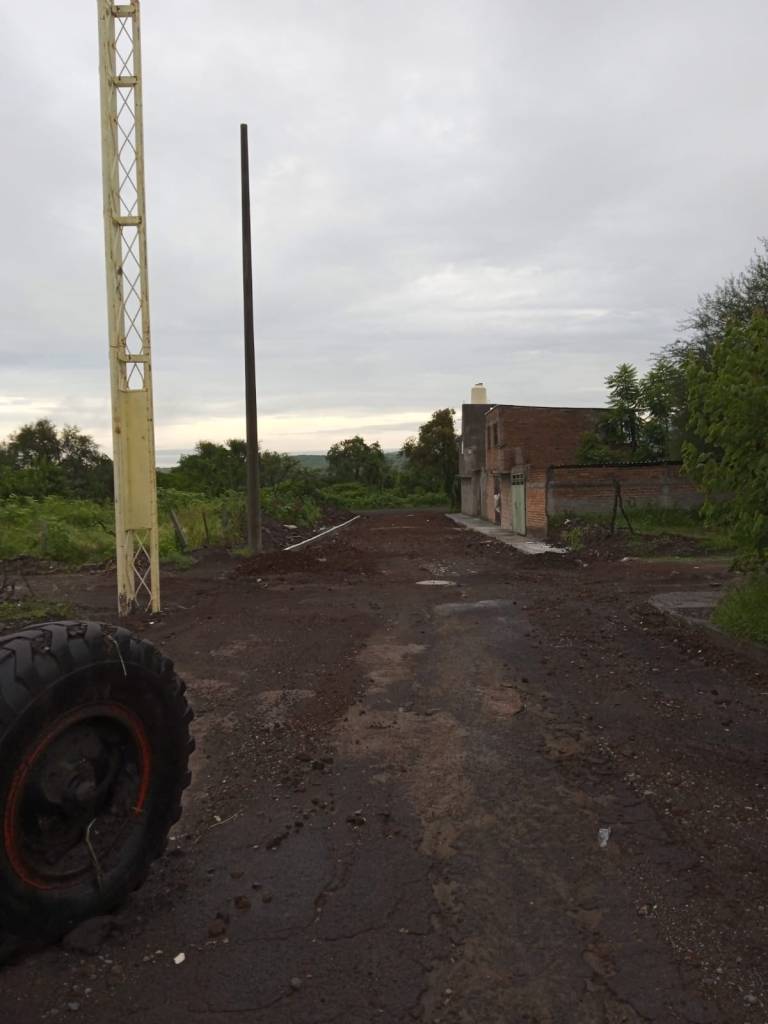
What happened, according to the neighbor was a large remolque (dump truck) was going up the hill and caught on the wire connecting to the main line to the house. The damage was bad. Fortunately, it didn’t tear down the main line, just the connecting wire, so there’s that, but still. 

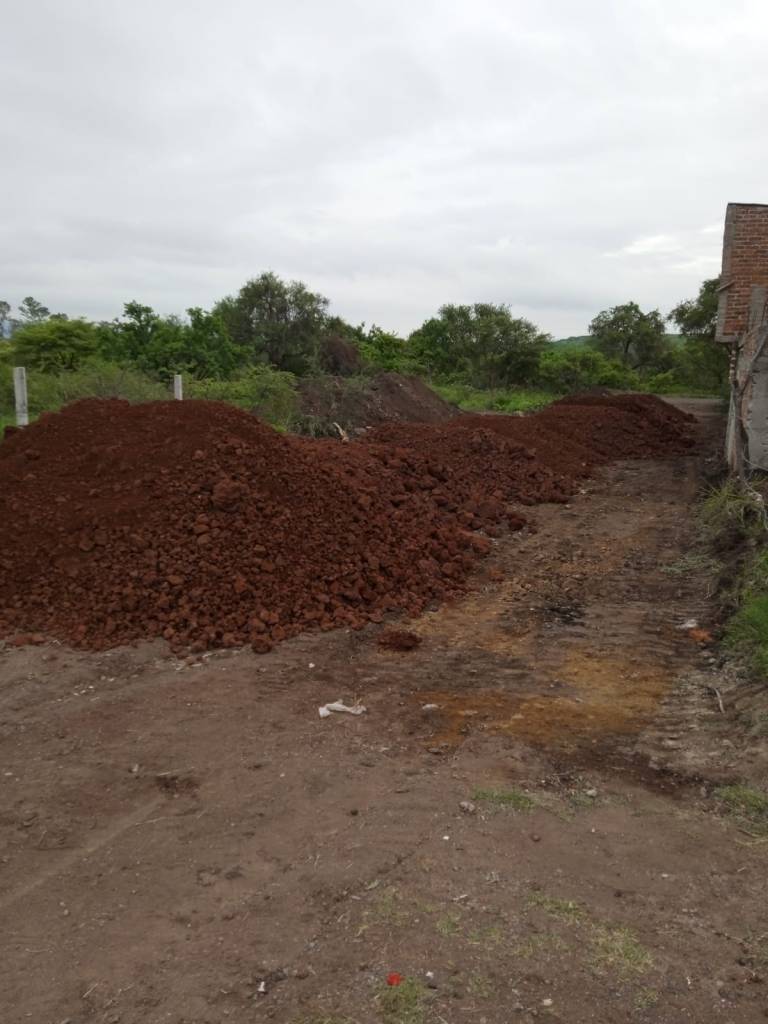
I moseyed up the road to take some pictures and sent them to Super Prez, who made a report to CFE. CFE assured him they would be out in 24 hours to fix it. Super Prez also called the owner of the house, who isn’t living there currently, to let them know about the issue.

24 hours, 48 hours, 72 hours….came and went—no sign of the CFE repair crew. Two weeks later, the owner called and asked me if I could get Super Prez to follow up. Every time she called CFE asked for a copy of the electricity receipt, which we hadn’t gotten yet. So I sent a message to Super Prez, and he called. 

Not an hour later, a CFE truck zoomed by the house. Sadly, they disappeared into the horizon and did not stop to check the line. Later that evening, or the next, I forget which, a CFE truck was driving up and down the roads and finally stopped to ask for directions. Super Prez happened to be here with an update on other matters and got them orientated. However, since the entire pole had been mangled, it would need replaced and they didn’t have that on hand and it would have to be ordered. 

While we waited for repairs, the owners of two of the five houses that weren’t included in the original CFE project because of their location approached us to ask about getting the electricity connected. Measurements were taken and considered. Technically, they both were just under the 50-meter maximum from the last installed post. The problem was that the line would need to cross a road and that might cause CFE to say no to their connections. But, nothing ventured, nothing gained. 

So, both owners went to CFE to ask about it, but both were refused. They came to me with the new requirements, which I reviewed and sent to Super Prez. 

Requirements for Contracting:

  1. For Tenants:
    • Mandatory submission of:
      • Copy of the lease agreement.
      • Copy of the INE (official ID) of both the landlord and the tenant.
  2. Power of Attorney:
    • If the owner cannot be present to sign the contract:
      • Submit a simple power of attorney signed by two witnesses.
      • Copies of the INEs of the witnesses.
  3. Ownership Documentation:
    • Valid proof of ownership issued by the local delegate (applies to rural communities).
    • Copy of the current property tax receipt.
    • Valid proof of the official property number.
  4. Official Identification:
    • Copy of a valid INE, passport, or professional license (both sides).
  5. Tax Identification and Fiscal Status:
    • RFC with homoclave or current tax status certificate (issued within the month prior to contracting) when service invoicing is required.
    • Mandatory for businesses.
  6. Contact Information:
    • Email address and phone number with national area code.
  7. Technical Preparation:
    • Printed photographs of:
      • Electrical connection box (mufa).
      • Base.
      • Grounding rod.
      • Circuit breaker.
  8. Visibility of Official Number and Meter:
    • Printed photo of the official property number visible on the facade and/or meter base.
    • Photo of the nearest neighbor’s meter number.
  9. For Legal Entities:
    • Copy of the certificate of incorporation.
    • Copy of the INE of the legal representative.
    • Copy of the notarized power of attorney.

As we are neither an officially sanctioned independent community nor part of the municipio, the collection of documents was a bit hodgepodge. These included the new application, a copy of the property certificate, which served as the valid proof of ownership issued by the local delegate (Super Prez), a copy of the INE (official ID) of the owners, a copy of the articles of incorporation, a copy of the INE of the legal representative (Super Prez), a copy of the power of attorney, a copy of the current property tax receipt, and printed photographs of the electrical connection box, base, and the meter number of the nearest neighbor.

I organized this packet of paper into individual folders for the applying colonos and had them come and pick it up along with the photos of the various items requested in the list. One colono served as the guinea pig and took it to the CFE office where they were told that in addition to the paperwork turned in, he must present the número oficial vigente (official address number), which we didn’t have. 

Our application for those numbers had already been given to the presidencia and they were sitting on the paperwork. So, Super Prez went to the CFE office in Salvatierra to find out if there was a workaround.

The downed line did eventually get fixed, but little did we realize that this was just the beginning of our issues with CFE.

****

Need to catch up on our first failed attempts at modernization in La Yacata? Then La Yacata Revolution is where you should start!

1 Comment

Filed under Electricity issues, La Yacata Revolution

Convivio without CFE

A week after the official power inception, the CFE supervisor was back doing some final checks. He asked for, and I handed over the solicitud (application) for the last murete (meter post) that was installed and connected. I asked him if he had a date that he and his supervisors would be available to plan the convivio (community gathering). He said that week he was busy, but perhaps Monday or Tuesday of the following week.

Super Prez got a confirmation for Thursday between 2-3, and preparations began. R. bought a borrega (sheep) and a chiva (goat from my sister-in-law L. and assured us he knew just the person to have them prepared with montalay (which is a vegetable dish in guajillo sauce commonly served with birrira). R. was also in charge of the beer. My other sister-in-law, T., made 12 kilos of tortillas. C. made rice to accompany the meat and montalay. Her son-in-law provided disposable plates, cups, napkins, and utensils. We asked that anyone who was attending bring a family-size bottle of soda. We rented the chairs and tables from another colono. And the best part is I didn’t have to lift a finger to organize it! Anyone who asked what they could do or bring, I referred to C. and let her handle it. 

I posted the date and time in the WhatsApp community group, which started a firestorm. Immediately, the question was how much this would cost and whether they would have to pay if they weren’t attending. I explained that the cost would be divided equally among the lots and would come out of the fees for the second semester. A few colonos said they weren’t paying a peso. Others responded that they would gladly pay their part even though they couldn’t attend. One individual reminded everyone that in the old days, a meal was an appropriate demonstration of gratitude, and it was only fitting that we offered CFE the same for the enormous benefit our community received in having electricity installed, even if only a part of the fracionamiento (neighborhood). 

I tagged Super Prez in the conversation, and eventually he swooped in to smooth ruffled feathers, pointing out that divided among the properties, the cooperacion (contribution) for the convivio would not be more than 20 pesos, and there was really no reason to put up such a fuss. That settled everyone down, and we had approximately 80-90 colonos confirm their attendance.

The day of the convivio arrived. Super Prez confirmed that the CFE delegates were still planning on attending. The tables and chairs were set up on the first road with the hope that there would be some shade. We really need a community palapa for this type of event! Everything came together, and the tortillas, meat, and beer were delivered almost at the same time the rice was ready, which was seriously some sort of miracle. At just about 3 pm, colonos began arriving, and the serving table was set up.

Then Super Prez got a call from the CFE supervisor saying they could not make it. Apparently, his boss had just been fired, and the office was in a major upheaval. Hmmm, we’d have to look more closely at that situation, but not this day.

We went ahead and had our community gathering without them. The food was yummy. I had my husband haul the speaker we bought for the juntas (community meetings) down to the corner and got some tunes playing. The feeling was decidedly pleasant, and I enjoyed myself immensely. 

The sun disappeared behind the house, leaving a chill around 5 pm, and we started winding down. Attendees helped fold the chairs and tables and pick up trash. And that was that.

****

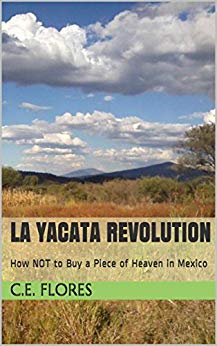
Want the background to our little community adventure? Check out La Yacata Revolution: How NOT to Buy a Piece of Heaven in Mexico! Available on Amazon.
Leave a comment

Filed under La Yacata Revolution

Night Rainbows and Zoning Permits

We’d been waiting for quite some time to hear back from the powers that be in the presidencia about whether the application to change La Yacata zoning from agricultural to residential was approved. At the last meeting, the board said they wanted to wait for the well-study results. So once we turned them in, we were hoping for a speedy response. But then, I don’t know what we were thinking. This is MEXICO, after all, and nothing is speedy. 

Super Prez, somehow or other, was there at a regidores (board) meeting when La Yacata came up, although it didn’t seem the meeting had been called specifically for that. One of the committee members got up on her soapbox to oppose the change in zoning because La Yacata was full of pre-hispanic artifacts. She said that whenever someone plowed up a field, they found arrowheads, pottery shards, and other trinkets, remnants of an ancient civilization. Super Prez and the guy from Desorrollo Urbano looked at each other in disbelief. 

So later, Super Prez asked me if I’d ever come across any of these artifacts in the 18 years that I’d lived in La Yacata. My husband has been involved with building at least 10 structures here and has sharecropped another several hectares. We have NEVER found anything like what the self-elected defender of the culture described. 

When I asked my husband if he knew of any pre-conquest artifacts found by others, he said that the guy who kept his herd of cows in the section above La Yacata reported “night rainbow” sightings on his walks home at twilight. These glimmering lights are believed to appear where treasures, such as buried gold or money, were hidden underground, left by their owners to be retrieved later.

I asked for more information on this phenomenon, and he told me that even if a person is granted the “night rainbow” vision, guardian spirits may prevent them from retrieving the treasure if it is not destined for them. Only those for whom the treasure is meant will be able to find it.

I had a sinking feeling hearing this story and decided I wouldn’t be the one to share it with los Regidores because then they’d never grant the zoning change. 

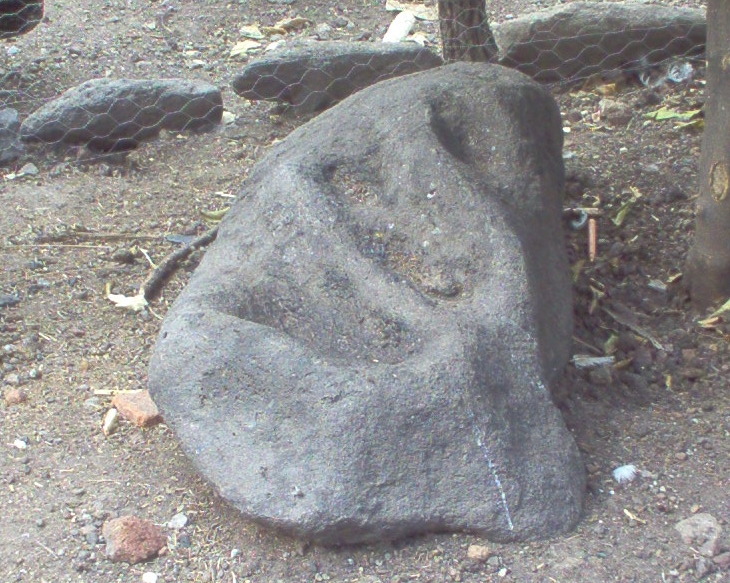
But back to the archeological finds, the only thing that we found remotely interesting was this dinosaur foot imprint. It has both the impression and the relief on the opposite side. There are other rocks scattered about out there that also have fossiled impressions, which weren’t as neat, so we’ve left them be. This one we dragged back to the house and used it as a garden ornament. There is also some neat-looking pumice stone in La Yacata, indicating that this area was an active volcano site at one time. Geologists and paleontologists may be interested in these finds, but not archeologists. 

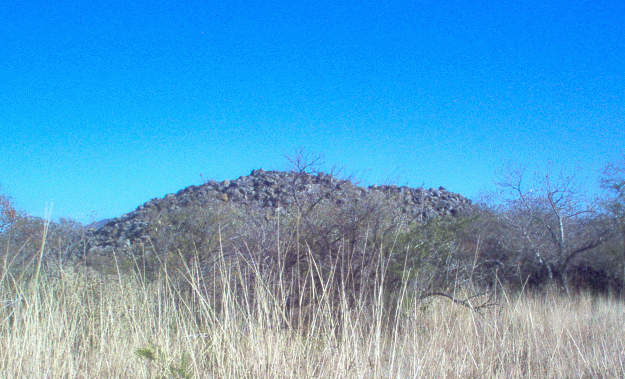
What we do have in the way of archeological interests is La Yacata, and I’m all for preserving it as it stands. One year, the school I worked at brought students here to see this structure on a field trip. Las yacatas were stone mounds built by the Tarascans as watchtowers. The hollow center at the top would have been filled with wood. The wood would be lit as a signal when there was an attack. Our yacata could be seen from La Barranca, a town on the cliffside, and the lookout would light another fire there, passing the message along over the mountain. The Tarascans were one of the few tribes that were never defeated by the Aztecs, in large part due to their organizational defense, including the series of las yacatas found in the region. 

The man whose family owns several hectares above La Yacata once had a smaller yacata on his property. He says he hired some workers to remove the mound and that when he came to inspect the site, there seemed to be an area that might have held a body. There were probably some funerary or ceremonial items surrounding the body, which was most likely a sacrifice. The workers had taken whatever items they uncovered, and the owner knew nothing more about them.

After doing a bit of research, I found that the Tarascans practiced human sacrifice, but not on the same scale as the Aztecs. Sacrifices were deeply tied to their religious beliefs and thought necessary to appease the gods, ensure agricultural fertility, and maintain cosmic balance. The Tarascans performed sacrifices during specific religious ceremonies, often involving war captives. These rituals were usually conducted by priests and were accompanied by prayers, offerings, and other religious rites. 

I’d bet my bottom dollar that at least one war captive was sacrificed and buried beneath each military outpost yacata and that if we’d a mind to dismantle the yacata in our neighborhood, we’d find a body and some ceremonial objects. I have no interest in seeing that happen, though. If that happened, we would not be granted the zoning change!

Super Prez and I talked about having an expert from Guanajuato City inspect the area, including the yacata, if need be, to prove that there were no archeological sites in the areas that were designed for human habitation. We decided to wait to see what the regidores’ next meeting would determine.

When that meeting finally came about, archeological obstacles to the change in zoning were not mentioned again. Instead, we received a letter acknowledging our request and a list of requirements. 

These included: 

  • Solicitud elaborada, firmada por el propietario o representante legal (Completed application, signed by the owner or legal representative)
  • Resolutivo de Impacto Vial emitido por la Jefatura de Movilidad (Traffic Impact Resolution issued by the Mobility Department)
  • Resolutivo de Evaluación de Impacto Ambiental emitido por la Jefatura de Medio Ambiente (Environmental Impact Assessment Resolution issued by the Environmental Department) 
  • Visto Bueno de Protección Civil (Approval from Civil Protection)
  • Constancia de Suficiencia de Servicios emitida por SMAPAM (Certificate of Service Sufficiency issued by SMAPAM–this is for the water and sewer)
  • Levantamiento topográfico del predio (Topographic survey of the property)
  • Confirmación de un 12% del área total como área de reserva (Confirmation of 12% of the total area designated as a reserve area)

Now that we had the go-ahead to apply, we’d need to obtain these items and then turn them into Desorollo Urbano for the cambio de uso de suelo. We already had the topographic survey and the designated área de donación. Super Prez submitted the applications to la Jefatura de Movilidad, la Jefatura de Medio Ambiente, and Protección Civil for their review in October. He also submitted an application to SMAPAM (the municipal water department) for us to be declared independent when it comes to utilities, which means we won’t need to ask Moroleon to run water and sewer lines to La Yacata. Instead, we would provide our own well (which we completed water analysis studies in early 2024) and waste treatment facility (which has yet to be planned). 

So much to do yet!

***

Curious about the beginning of this saga? Check out La Yacata Revolution–available on Amazon.

2 Comments

Filed under La Yacata Revolution